Low Light, Green Light, Pink Light

There’s been a tornado watch in southern NH this evening, and when we left work the skies were dark, we could hear distant thunder, and it was raining in Concord.  A colleague had emailed me to say there was hail the size of softballs in Keene.  I got out into the garden as soon as I got home, wanting to beat any coming storm to the perennial bed I’d yet to weed this season.  And just to be sure it would rain, I watered all the new plants I’ve put in over the past few days.

But it didn’t rain, radar loops online show the storms blowing south of us, and now the light is low, feeding up from the sun below the horizon.  Just moments ago the clouds were holding the light against all the late spring vegetation and the world outside the windows was green — not scary tornado green, but a soft, growing glow.  The trees are tossing in the wind and now the clouds are catching the last bits of sun and burning pink and gold.  The air is cool and smells like rain, but there is clear sky between the clouds and the dusk is deepening, turning the tall pines black.

Haiku XCVI

This slideshow requires JavaScript.

Hydrangea blossoms
Shade pink to blue to purple
Fading to summer.

Haiku LXXXVII

This slideshow requires JavaScript.

Orchid blooms again
An annual April treat
Garden pride inside.

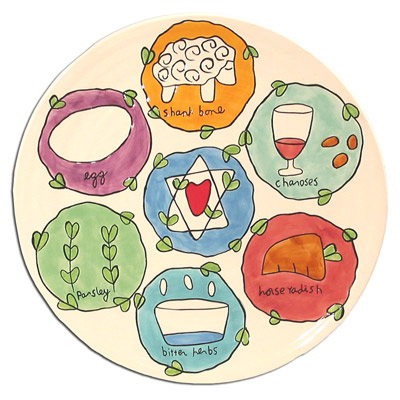
Passover

A determined robin is singing outside, the notes coming through the windows that look out on another gray day.  “April is the cruelest month,” has come to mind often in the last 24 hours.  I’d envisioned these few days off around Passover as sunny and warm, days in the yard gardening, sitting in the sun drinking coffee, gathering with friends for a relaxed Passover celebration.

I woke up to a churning gut and head yesterday, Erev Pesach, the day before the beginning of Passover at sundown.  It was cloudy and cold and windy, making work outside uncomfortable.  With cooking to do for the seder last night, I turned to inside work and tried to focus my attention on making recipes out of Joyce Goldstein’s Cucina Ebraica, a wonderful collection of Italian Jewish recipes.

But the dozens of wheels floating in the air above my head (many thanks to David for this right-on image) just keep whirring, nothing touching down and able to get traction.  When I finally sat down to have some lunch, I found tears more than anything else coming up, and when I looked behind the churning and preoccupation that I was somehow “dithering away” this precious time off, I found grief.  As I often do when I look behind whatever is bothering me.

There, as soon as I recognized it, were all the years of Passover seders with Eric, and the five Passovers he’s missed since he died.  Grief is so sneaky and unpredicable — abating for months at a time, anniversaries of numerous events going by smoothly one year, then slamming me with a “ball to the head” (and thanks to Adrienne for that right-on image) the next year.

Mostly yesterday I keep seeing Eric the last Passover he was alive.  He’d been diagnosed with the metastatic cancer by then, and we’d missed the family seder in Connecticut, and had no capacity for the big seder with friends we’d planned for that weekend.  Eric was just home from the hospital on Saturday, and we had a small seder — Eric, Adrienne and Matt, and Sam and Rachel, his then girlfriend, and me.  Eric sat at the head of the table and told stories about Passover, about the mitzvah of retelling the story every year of the Jew’s liberation from slavery in Egypt, in the same order, “seder” in Hebrew.

It was one of the last times Eric was up at the table, eating with us.  His illness was vicious and swift.  The next year his mother and I skipped Passover all together, unable to imagine the holiday without him,

Now I’m trying to create new traditions, and now there’s a grandson who’ll soon be old enough to start learning Passover stories.  Last night the seder with friends was lovely — a lively reading of the haggadah, the Passover story, friendly discussions and reconnections, delicious food.  Today I’ll go out in the grey and pull the gardening wheel out of the sky and force it onto the ground, getting some traction with earth and compost and the first seeds breaking through the soil.

Tonight David and I have decided to read each other poems as our own, second night seder.  Folding up one set of traditions, we’re unfolding new ones.

I think I’ll read the begining of T. S. Eliot’s “The Waste Land.”

April is the cruelest month, breeding
Lilacs out of the dead land, mixing
Memory and desire, stirring
Dull roots with spring rain.

Image courtesy of http://thesmartlyanonymous.com/

Haiku LXXXV

This slideshow requires JavaScript.

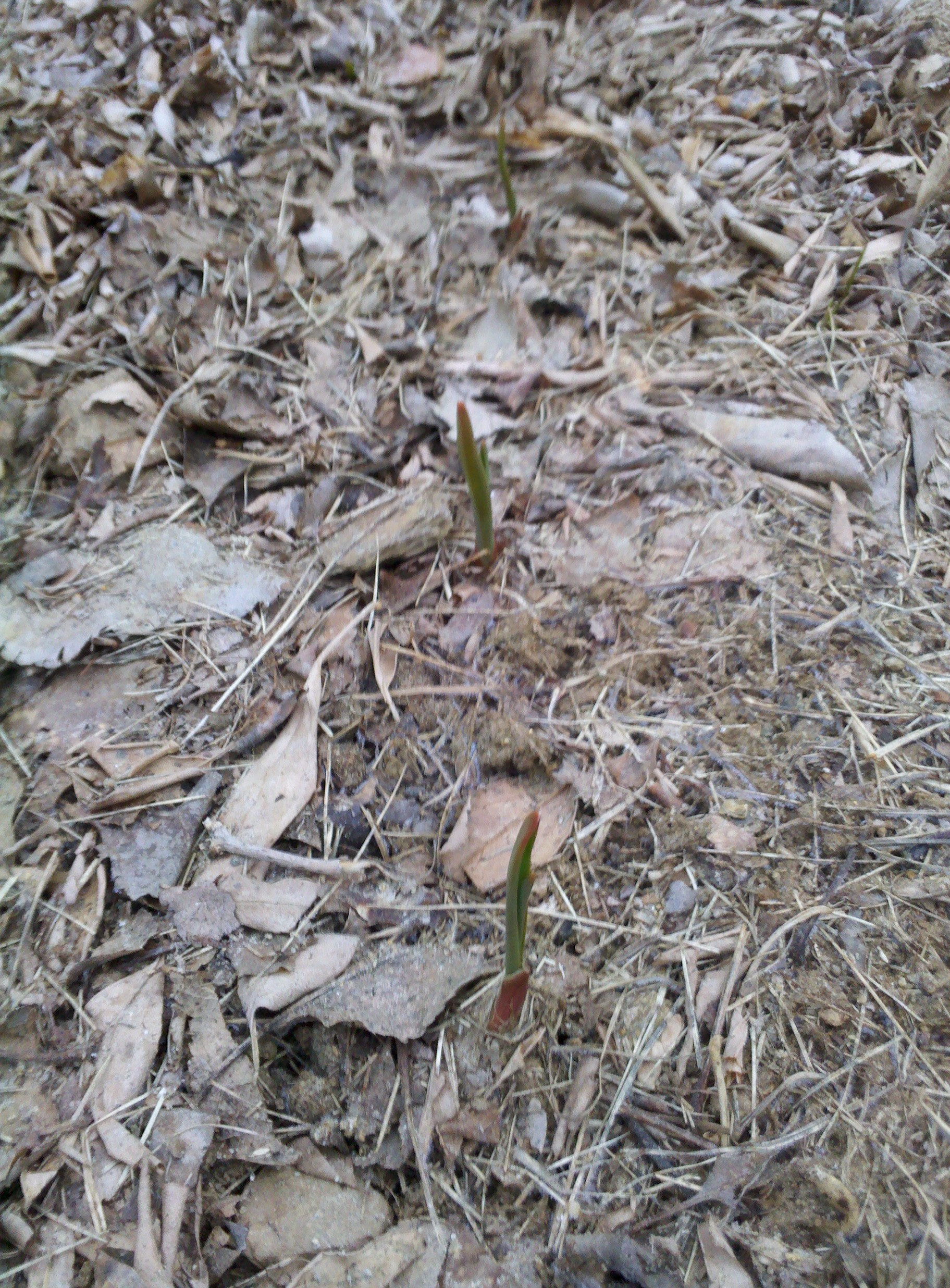
Peas spinach radish
Seeds popping first double green
So much more in store.

Helen’s Crocuses

This slideshow requires JavaScript.

I wrote this poem many years ago, but these photos, and this poem, still tell a story worth repeating about a remarkable woman.

Helen’s Crocuses

Earlier than we dare to hope
for any native color beyond
the hard buds of maples sheening
the hills with faint rose, the cupped
crocuses shoot up yellow,
purple, white —  orange hearts
studding Helen’s front yard.

Helen was a loose farmer — what bloomed
bloomed wherever; greenhouse customers
would leave a note and payment
clothespin-clipped to a board
by the broken door; eggs were sold
from an old refrigerator propped outside,
cartons stacked next to the change box.

So when the blood blossomed
in her brain as she drove to pick up
pig scraps from the restaurant,
she just pulled to the shoulder, planted
her foot on the brake and waited.
Three seasons later, hardy and startlingly
new, here again, her crocuses.

And I Shall Have Some Peace There

“Who are you going to fight with after you leave your job?” a colleague asked me at a board meeting earlier this week.  I had been talking about preparations to testify to the NH House Finance Committee, opposing the total loss of state general funds for domestic violence services.  This cut is only one of many too many the Committee is considering that would destroy critical service programs that the state’s most vulnerable citizens rely on for basic survival.  Tough times these days, which I assume had me talking tough, thus the question.

“I’m going to stay on this board and fight with you,” I answered, but with a laugh, because this colleague is a man I mostly agree with, but who can engage in a good discussion.

“You strike me as an organizer,” he went on.  “What will you organize?”

“I just organized a new writing group,” I said, and I have.  “I have a lot of identities.  Being the Executive Director of the Coalition is not all of who I am.”  Very true.  Look at my bio here on the blog — you don’t get to my career identification until the end of the list.  But this week I’ve been exploring another woman’s life-altering shift in identities, and beginning to understand that as much as I’m embracing the coming change, it’s going to be BIG!

Margaret Roach is a gardener and writer, and until 3 years ago, was a top executive in the Martha Stewart empire.  Margaret’s gardening blog, A Way to Garden, is a treasure, and her new book and I shall have some peace there is also a treat.  I went to hear her read and speak last Tuesday night, and at one point, in describing her previous, jam-packed and wildly hectic work life, she held up her hands as if warding off demons when she talked about her need for time and space and solitude in order to figure out who she really is and how she wants to be in the world.  She left her high level Manhattan career and life to live full-time at her weekend home in the country, to garden and create and write.  While I am walking away from a much different kind of career, the pace sounds similar, and so I’m reading with anticipatory curiosity.

In her first months of her new life, slowing down is not easy.  Margaret describes still being on the spin cycle in fast and furious language that rings so true.  I’m getting a helpful glimpse of what my new life might feel like, when suddenly there isn’t somewhere I have to be and something that has to be done, right now!

The book’s title is from the Yeats poem, The Lake Isle of Innisfree.  It’s worth keeping the full line close in the coming months: “And I shall have some peace there, for peace comes dropping slow.”

Haiku LXIX

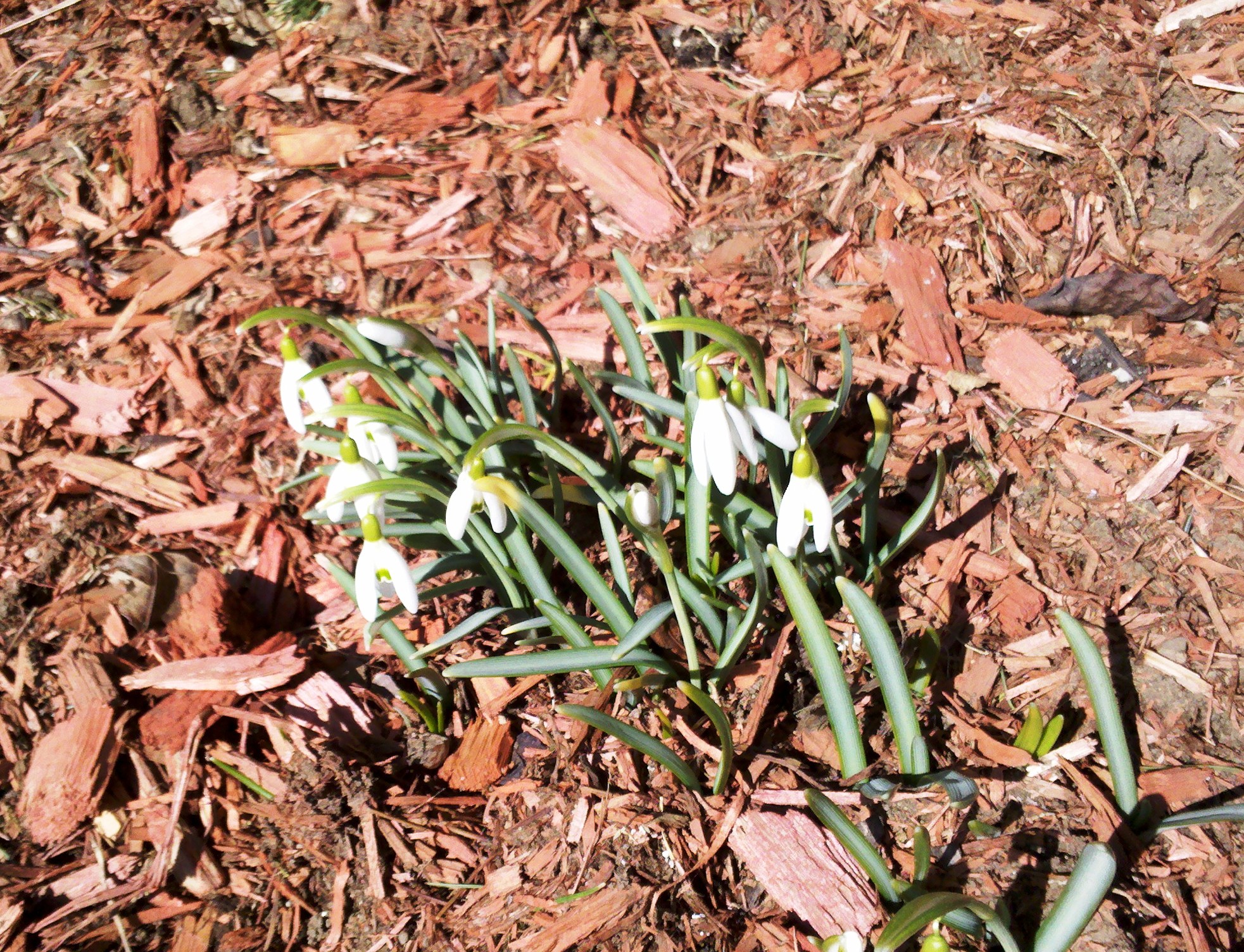
Snowdrops flowering
Clumps of blossoms on bare ground
Spring visits then flees.