Nine Bouquets

IMG_3759

Being part of the support team for someone in hospice is a hard business, but nothing that comes anywhere near what it must be like to be the one who’s dying.  I watched Eric do it, and now I’m watching my sister be taken further and further away from any control over her body and mind as metastatic cancer gets the upper hand in every measure of balance in her life.  It looks excruciating, and she’s told me as much.

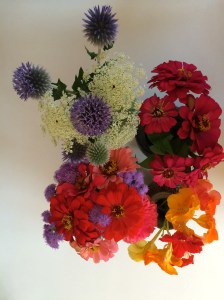
Last Friday evening I came home after another few days of being with Chris, holding her hand and talking to her, propping her head upright as my brother-in-law fed her slices of fresh tomato (which she clearly enjoyed), cooking, shopping, reorganizing photo albums that were uncovered when clearing the den to make way for a hospital bed, chatting with visitors, walking to the end of the street to a small field planted with a riot of annuals to pick a bouquet for her kitchen.  I was exhausted by Friday, and because this isn’t happening to me, or to my life partner, I could afford to take a break.

So I did.  I weeded my gardens and froze fresh peaches, grilled veggies for dinner and went kayaking, sat on the porch with David and watched rain clouds move across the sky, slept and read and visited a friend.  But the first thing I did on Saturday was pick flowers, eight bouquets for the house and the porch.
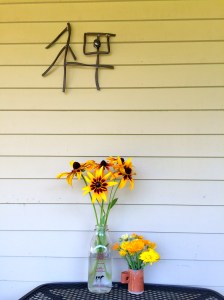
During a time of such hardness, surrounding myself with the New England summer bounty of beauty wherever I am makes a difference.  I know Chris found being in the present to enjoy flowers important, as she wrote in one of the essays on her blog:  Not knowing how long I have to live, but being warned to make my end of life decisions, my goal each day is to live in the present.  Appreciate what you can, like the foliage I planted in my deck boxes coming up with beautiful, delicate, lavender blossoms.  I didn’t even know that they flowered.  I like to go out to my front porch each day to look at the plant on my porch with so many pinkish red blossoms they are hard to count.          

Nine bouquets for both of us, though Chris will never see eight of them.       
Becoming and Being

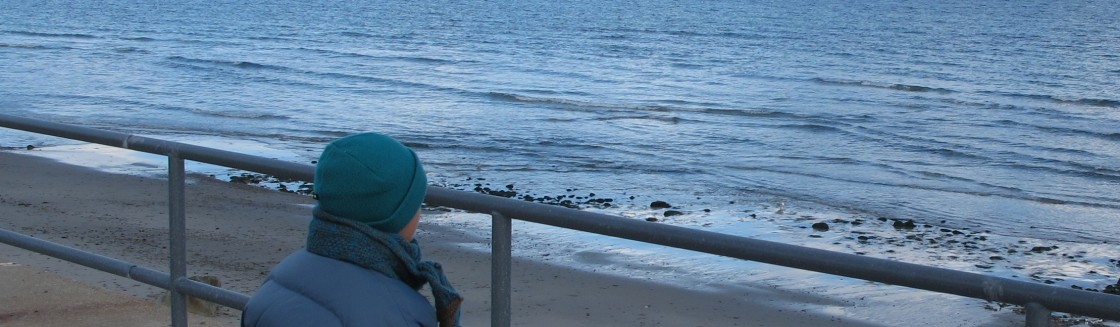
Chris Sitting On Her Memorial Bench

My sister, who I’ve introduced before through her blog, A Cancer Journey With Chris, is very sick. She hasn’t put up a new post on her blog since April because living with metastatic cancer has become more than a full-time job for her, it’s 24/7, it’s exhausting, it’s the central, all-encompassing reality for her and for those of us who love her, it’s at the point that her illness is a globe of existence we move into when we’re with her because when you’re with someone this close to the end of life, someone trying to make sense of the hard truth that soon the mystery of time is going to become a closed absolute, everything except figuring out the next meal and a trip to the doctor and helping her up and down the stairs and into the bathroom and rubbing her back while she cries drops away.  I know.  I’ve been here before.

In Chris’s last blog post she shared a piece she’d written in a journaling class — “Pay attention to the space you are in but stay open to all the possibilities to come.  It is the small things that matter.  It is the becoming that becomes the being.  Always becoming.  Pay attention to the process; that is who you are.”

The cancer in Chris’s central nervous system is creating pressure on her brain that makes her cognition fluctuate but she’s still working hard at paying attention to the process. Sometimes she can keep track of what’s going on and then she’s sad, because she understands that she may very well have come to the end of her extraordinary span of beating the odds.  Twenty four years ago, when she was first diagnosed with breast cancer, her doctors said she had a 10% chance of living five more years.  Two and a half years ago, when the cancer was found in the lining of her spinal column and her brain, her doctors told her to make her final plans.  Soon.

She spent a few months planning her memorial service, talking to her family about what was coming, writing letters to those she loves for them to read after she dies, writing an essay to be read at her service, having a memorial bench installed on the beach in Scituate, Massachusetts where we grew up.  Done getting ready to die, she then spent two years living with a close attention to what brought her joy — family and friends, colors, bright blossoms, the ocean, writing, meditation, movies, qigong.  She was becoming and being. She sat on her bench

I’ve been spending a lot of time with her and am in awe of her remarkable spirit and the full life she’s created in the face of debilitating illness.  Who knows how much time she has left.  I do know that I want to spend as much of that time with her as possible.

Nine Years

photo (47)

This morning the yoga instructor began class with a quote from Sufi Master Pir Vilayat Inayat Khan.  “It is our suffering, our broken heart, that gives us insight into the suffering of others.”

In other words, suffering gets you in the club, the club that no one wants to be in but once you’re in, your heart opens to others as they join.  Losing Eric transformed my response to people I knew who had a profound, close-to-the-heart loss.  There was a new understanding and compassion for the disorientation and searing pain of grief, an ability to be with people in their sadness without being afraid.

I’ve had the club conversation with everyone close to me who’s in the club.  A nodding of heads and a heart connection, “Yeah, I know . . . . .”  And we do know each other in that place of coming to grips with a dailiness that no longer includes the loved one and never can.  Death is so fucking irreversible.

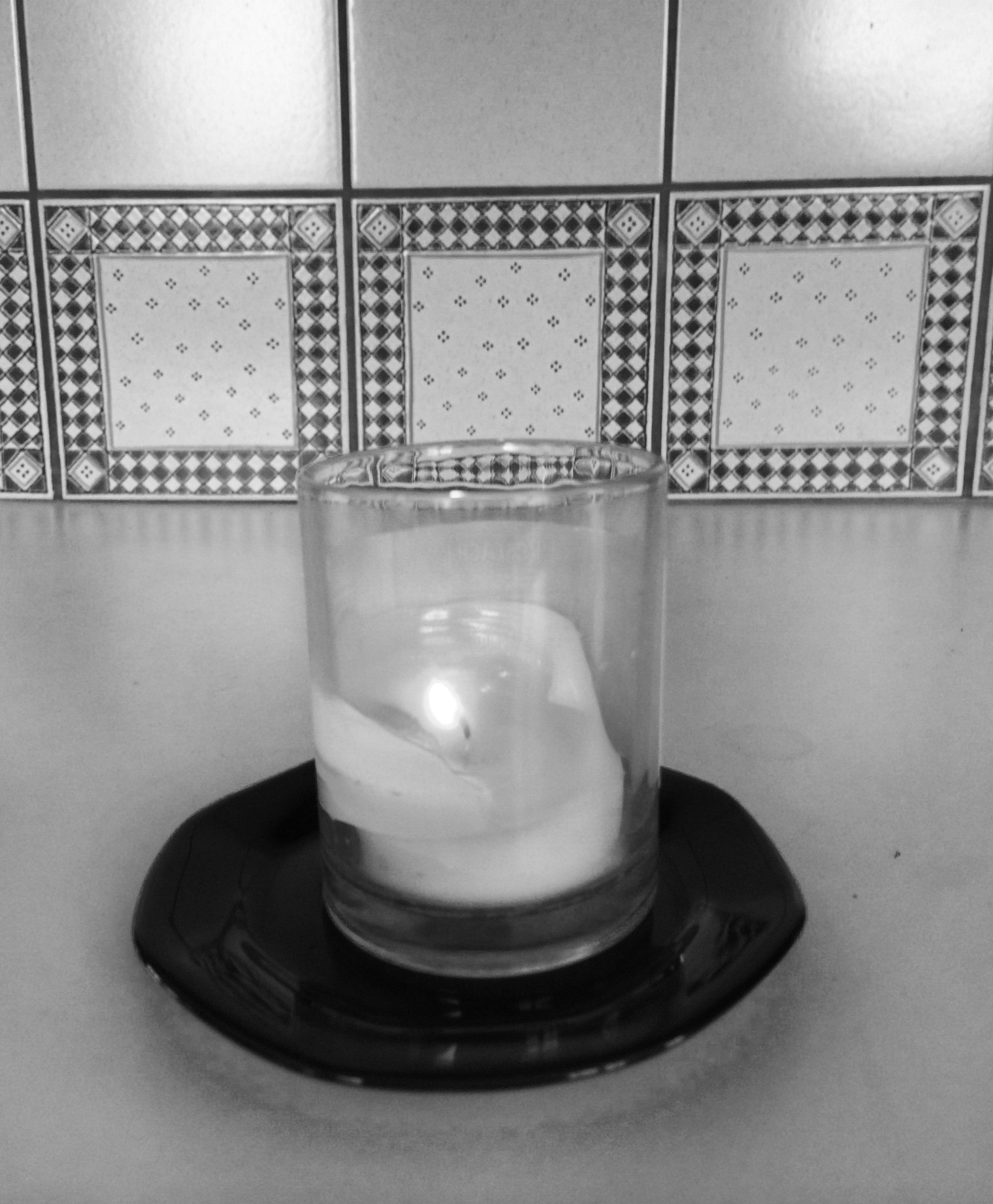
Tomorrow, Eric will have been dead for nine years and I lit the yahrzeit candle today because tomorrow I’ll be traveling.  Nine years in the club and being able to understand and support others as they come in.  It’s so cliché to say broken hearts break open, but they do if you let them, and that openness is one of the gifts of grief, that you can turn to new members of the club and welcome them with deep insight.

Birdsong

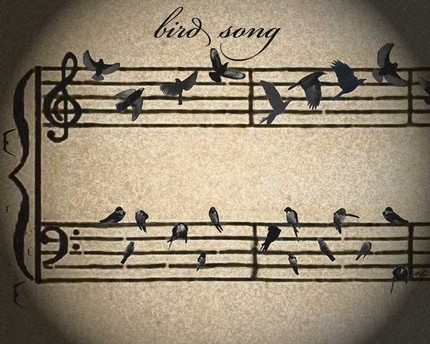
Artwork by Kenneth Rougeau

The first spring thing I notice is the birdsong when I step outside in the morning, going to bring in the newspaper. Sometime in late February there start to be chitters here and there.  In March, if I get up right at dawn, it starts as a single cheet, then escalates into trills and melodies and chatter.  Now the yard is wide awake and singing by the time I go out in the morning, and I listen to the background songs as I meditate, a constant chorus behind my mantra.

Because the rise in birdsong coincided with the rise in Eric’s cancer, though we were long in to spring before we realized why Eric was in so much pain and feeling so lousy, for the last nine years there’s been a tug of grief in the sound, another reminder.  But it’s also a reminder of the whole glorious mess that life is, with its cycles and renewals, pain and joy, gain and loss, despair and celebration.  “Life is so damn yin yang,” I said to David last night, as we drove home from visiting friends grappling with new grief.

All of which brings me to this poem, which opens The Truth About Death, as it should.

Birdsong

Now the song varies, mocking chains of notes,
the catbird flying from maple branch to fence post.
All spring I noticed the rise in birdsong
as we went out each morning, stronger chatter,
the brakes off, cells dividing and dooming themselves.
I sit in your chair, I wear your clothes, your ring.
I talk to your photographs. I watch the sky,
watch birds in the yard and realize how many flocks
I’d missed. For weeks I washed you, watched you,
lay next to you, all we could do was touch hands,
all you could do was whisper, your eyes black
morphine disks. Yet you turned back for me.

Nachas

11024736_10206368938610417_5925431246814310338_n

“You have so much nachas ahead,” the rabbi said to me when I went to see him after Eric died.  I was reading a lot by then, and death was my constant topic, whether what actually happens when we die (How We Die by Sherwin Nuland) or trying to cope with grief (A Grief Observed by C.S. Lewis), which I was learning felt like an unremittingly slow slog through the bottom of the sadness bucket which was turning out to be a really, really big bucket.  The rabbi, I assumed, would have an answer to my question of what Jewish writing would be most helpful, or most instructive anyway.

At the time I could hardly understand what the rabbi meant, because looking at the future was too painful, but he was right.  (He refered me to the Memorial Service in the siddur for the Days of Awe, which I didn’t find that useful at the time but which I continue to read on Yom Kippur every year).  The rabbi was trying to give me a glimpse of all the happy occasions to come in my life, because he knew my children and believed there would be many and there have been — weddings, graduations, jobs, family vacations, the simple pleasure of all being together on the porch on a summer evening telling stories and laughing.  Eric not being here to experience all these moments is such a given at this point it’s become a much smaller wave in my mood.

Last Friday night was a nachas moment — Ava being named in the Reform Temple of Forest Hills, where Matt’s parents Carrie and Tim are members.  Aharonah Tziporah. Aharonah for Matt’s grandfather, Aaron, Tziporah, which means little bird, because Ava was chirping as she was born and kept up a constant stream of chatter for over an hour as if commenting on all the newness — What?  What just happened? What is all this light?  And the smells?  Noise!  And wait!  Breath in my lungs?

Ava is still a chatterbox, chirping and cooing and even starting to laugh.  Like her big brother Emilio, she’s a joy magnet.  Almost nine years ago now my rabbi could look at the blessings in my life and see there were many more to come.  Given the perspective of grief, I couldn’t see it, but I hung on to that hope and it helped.

(So what is nachas?  Yiddish for joy and pride, especially from children and grandchildren.)


Kitchen Table Wisdom

MedicineHands

“Can you read,” I asked my friend.  She recently lost her life partner of 34 years and I know how searingly painful acute grief can be, how the day can feel like an impossible bag of cement blocks you have to drag around, how hard it is to feel settled enough to read even though you’re exhausted.

“I can’t really focus,” my friend said and I knew exactly what she meant.  One of the things I remember most vividly after Eric died was my inability to read.

One of Adrienne’s childhood friends, Leila, came to the shiva service for Eric the week after he died. Leila had also lost her father to cancer, about a year before, and her mother, who I knew from all of our daughters’ years of play dates and high school events and parties, sent along a book for Leila to give me.  As another member of the widow club I’d just joined, she hoped it would be helpful to me.

But I was a reading snob in those days.  I read literature, not self-helpy feel good books like Kitchen Table Wisdom: Stories That Heal.  The book, by Rachel Naomi Remen, M.D., is a collection of very short, true stories about life written from Remen’s perespective as a pioneer in the mind/body health field, and told with an invitation to the reader to “listen from the soul.”

Scanning the book I saw chapters with titles like “Life Force,” “Opening the Heart,” “Embracing Life,” and “Mystery and Awe.”  I was grateful to Leila’s mother for thinking of me, but inwardly I scoffed.  I would never read a book like this I thought, which was comical on one level because at the time I wasn’t reading anything except emails, sympathy cards and snippets from a grief book a friend gave me.

From the tiny bit of reading I’d done I knew that not being able to read is common in early grief and I mourned that loss also.  There was no book to bury myself in, just moment after moment of the ever present absence of Eric.  I craved being taken away by a good novel or memoir, a story besides the sad one I was living, but I had no capacity to read one.

A few weeks later, when the post-death visiting and attention were beginning to die down and I found myself with more quiet evenings, I thought I’d try reading again.  I found Kitchen Table Wisdom on a book case and picked it up.  The first story in the book was only three pages.  Surely I could read that much.  I did.  The next story was five pages long. I read that story and the next and the next.  Well into the first chapter I realized I was reading a book.

I began to take the book to bed with me, reading before I fell asleep, a life long pleasure I’d lost along with Eric.  And here was that pleasure again and the book I was reading wasn’t literature.  It was a book from the Self Help section of a book store, a book I would never buy and certainly wouldn’t read.  Except I was reading it and enjoying it and it was actually making me feel a bit better.  It was helping.

The memorial service for my friend’s life partner is this week and I’m going to bring the book with me.  She may not like it and I don’t think it’s her kind of book, just like it isn’t my kind of book.  Except it was and it is.


Drugs


Image by David Coursin

I take drugs. The fact that I have an anxiety disorder that is greatly helped by the right doses of medication is a cause for celebration for me, not shame.  Celebration that there are drugs that help, not that I have an anxiety disorder.  That’s been a hard thing to live with, going back to when I was a very young child.

The first episode of intense anxiety that I remember happened when I was five and a kindergarten classmate died of a heart condition.  His obvious frailty and my robust health meant nothing to my five year old brain that was busy imagining all the ways I might die, especially while I was asleep, making sleep terrifying rather than a refuge.  In third grade a class mate died of leukemia.  In high school a student in the next town died of spinal meningitis.  Life was dangerous — it ended in death.

But I didn’t need a death close by to feed by anxiety. I made up many of my fears by myself.  When I was a pre-teen it was brain tumor that was going to kill me.  One day an aunt asked me why I was always feeling my scalp and I told her I was checking to see if the lumps on my head were getting any bigger because I was afraid they were tumors.  She laughed, kindly, and told me I wouldn’t be able to feel tumors from the outside and I just had a lumpy head.  For some reason, that didn’t translate into a fear that tumors I couldn’t feel were growing in my brain, probably because that particular bout of anxiety was waning.

My acute phases of anxiety weren’t constant and usually lasted several months and then got better.  When I went through a particularly bad bout at 30, I thought back to other bad patches and realized the anxiety had peaked in six to seven year cycles since that first episode at five.  It was also when I was 30 that a doctor finally named for me what was going on and suggested medication.  I tried medication eagerly and have never regretted it.

I know there is still stigma about taking medication for mental health problems and I’m a bit of a zealot about trying to convince people to get over it.  In my professional life I watched many colleagues suffer through depressions and anxiety issues, refusing to try medication because they thought they should be able to take care of their moods and distress themselves.  Yes, I would tell them, you can take care of it, by seeing if you might be helped by medication.

It’s not always easy to find the right medication, and you have to find the right medical practitioner to work with you until you find the one or the combinations that work for you.  I feel lucky that my route to effective medication has been fairly straightforward.  I used to only need the medications periodically, when a flare up of anxiety would manifest.  But since Eric’s death I’ve only been off my anti-depressant for less than a year and needed to get back on it, and I’ve never even tried to stop taking my anti-anxiety medication.  I live with such a weight of knowledge of the pain in the world, I need the floor that the medications provide.  It gives me something to rest that weight on.

When Eric died, I admit (which is clear from reading The Truth About Death) that I turned at times to pretty hearty self-medication on top of prescribed ones.  And thus the third of the four truth-telling poems — death, drugs, sex, money.   I talk.

Drugs

I wake up drunk, I wake up hung over
on klonopin, I go for a run and hear
and then see a cardinal at the top of a spruce,
down by the lake still frozen but softening.
By now you were walking more than running
and I walked with you. I explode
inside my own brain, I want other brains
to explode, fragments hit me, I cherish
the bits, the glint of metallic memory,
the shine of light off your glasses.

Birth and Death

It’s been over a week since I posted “Sex,” a poem from The Truth About Death which was one of the four that addressed “the more universal, the more silence.”  I said I’d post the other three by the end of the week, but instead I was awakened early Thursday morning by a call from Adrienne, letting me know her labor had started.

At 9:30 that night, Ava was born, a pink package of baby life finally slipping free of the birth canal (lots of heroic pushing on Adrienne’s part) and seeming to fly up to Adrienne’s chest. I know it was the midwife who caught Ava and guided her up to Adrienne, but from my vantage, looking over Adrienne’s shoulder as I helped her hold up her head and shoulders to curl around her womb and push, it looked like a magic dance, a bright red face then chest then wormy body suddenly in the world and then snuggled against Adrienne as the cord pulsed between them.

So what does a birth and a new baby mean in the context of a poem about death, a poem written when I was entirely absorbed in the exit from life rather than the entrance?  It means it takes me over a week to write a new post, because my days have been full with being an extra set of hands for Adrienne and Matt and Emilio — shopping, cooking, cleaning up, washing and folding laundry, holding Ava, walking and rocking Ava, driving Adrienne and Ava to appointments, sleeping with Ava sleeping on my chest.  Right now she’s cuddled up against me in a fabric sling, squeaking and squealing, those tiny baby noises that come back in a flood of memory once I hear them again.  Her breath is so quick and shallow it feels like there’s a bird at my breast.

But it’s a person.  A birth.  So far from what was happening in my life when I wrote the poem “Death.”

Death

You took the crash course, and me along with you
because where else would I be except beside
you? Now I study death with the deliberate
focus you loved. People are afraid of me,
especially couples. I smoke on the porch
in your jacket, making the brown moleskin smell,
watching planes cross the dark sky as they fly
in and out of the airport to the south. I think
about quitting. What do we each know now
that the other doesn’t? And our children,
think of all they know that we didn’t.

Sex

IMG_3192

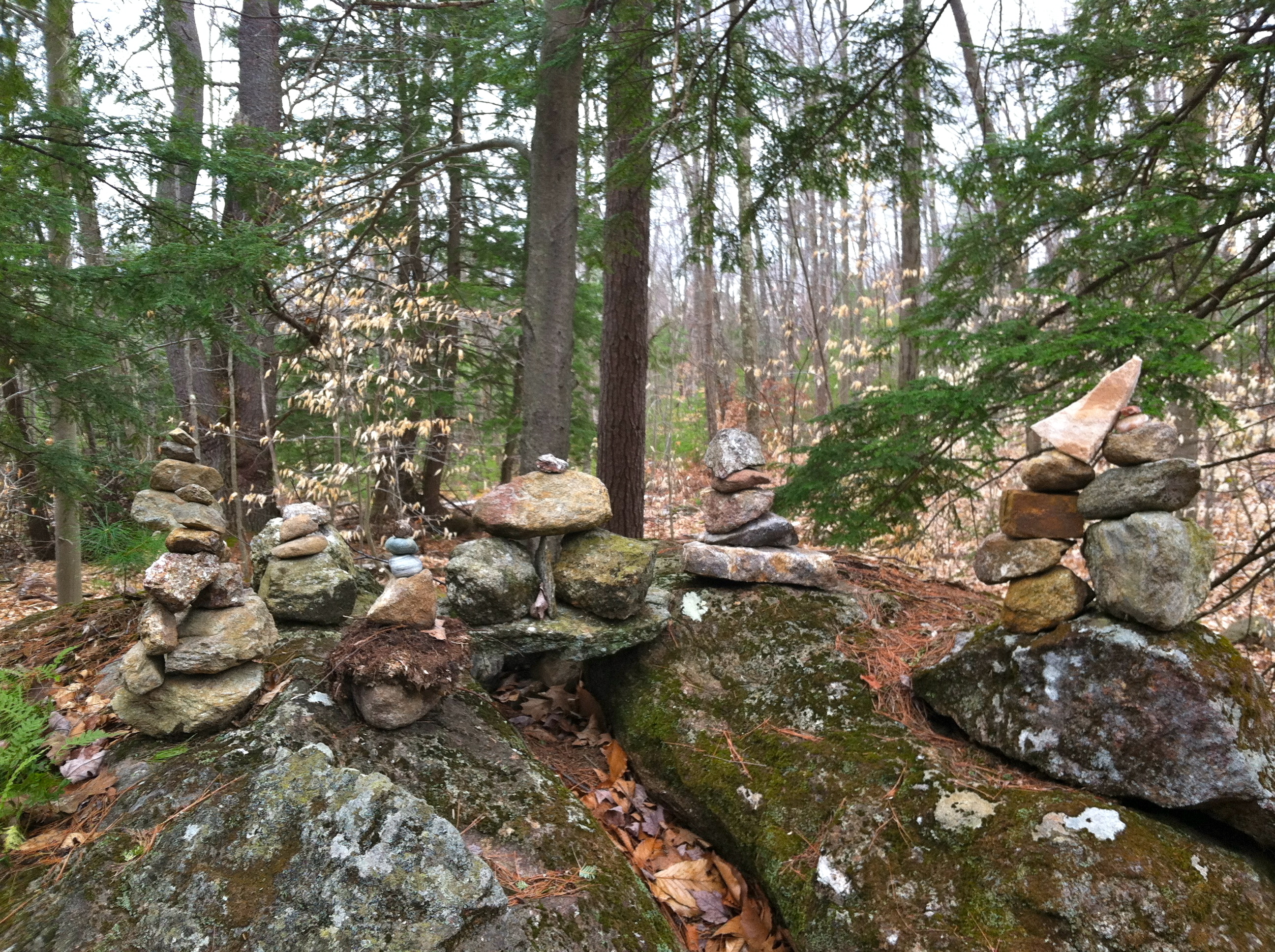
No, this isn’t a post about sex, or not exactly.  “Sex” is the title of a poem in The Truth About Death, which I thought about today because I walked out to the rock featured in the poem, the rock where I’ve built cairns since Eric died, and it was another icy day, like the day almost eight years ago when I first wrote it.

There’s a poem called “Talk” in the book with the lines:
The more universal, the more silence –
death, drugs, sex, money.  I talk.

So there is a poem for each of those topics — Death, Drugs, Sex, Money. I don’t know that anyone has ever noticed that, but it was very intentional on my part. Truth telling was my mission in writing the book and if a topic was difficult for people to talk about, I wanted to open a door to the possibility of talk that could lead to truth.

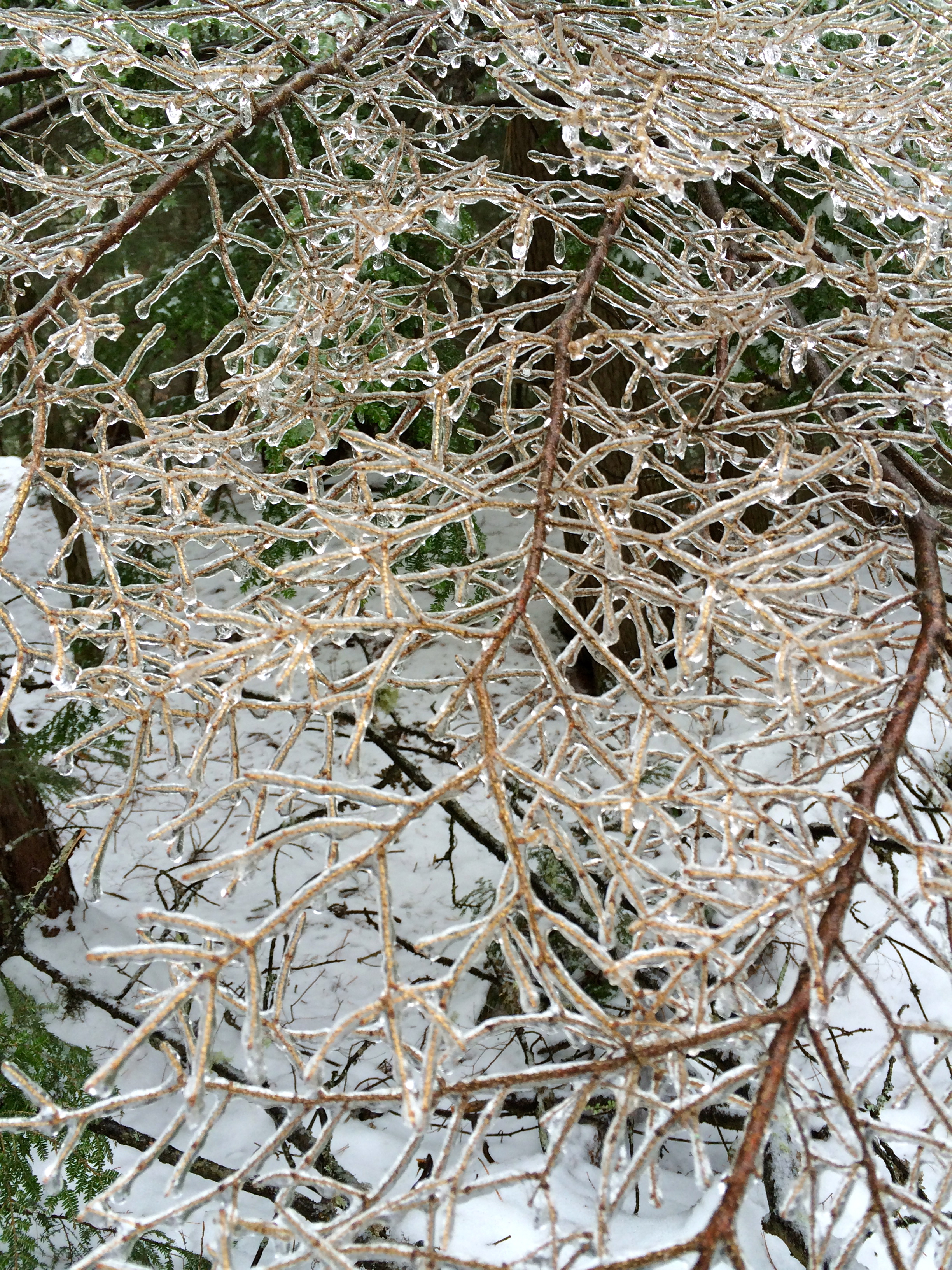
The truth about today is that the poem came to mind not because of sex, or how Eric’s absence continues to inhabit the world, especially on a day when the fog coming across the pastures like an enormous animal grazing on sleet is so thick it makes the nightlight in the hallway outside my study flicker on and off, as if it can’t decide whether it’s night time after all, but because of the ice lace on everything as I walked to the rock. Every twig, bud, bush, branch, berry, weed stalk and blade of glass sticking through the crusty snow like the white whiskers on an old man.

So, the poem. Probably the other three by the end of the week.

Sex

I walk to the rock we used in the years the house
had packs of children coming and going
in unpredictable waves and the two mile walk
across the open meadows of the ridge
and into the woods along an old road overhung
by hemlocks, rising into oaks and maples,
was just far enough, to the rock with a ledge
just the right height, a condom and tissue
in your back pocket. Today I start a second cairn,
an ice storm makes lace of the blueberry stems.

Cairn Rock

IMG_2273

“I have something I need to talk to you about,” my neighbor said, stepping out of his truck’s cab.  He’d stopped at the end of my driveway when he saw me heading out for a run this morning.  He looked upset and I was immediately worried.

“You know we’re doing a lot of logging out the road,” he said and I said of course, we see a dozen or more large trucks a day going by our house, making the sharp left turn to climb the small hill of Canterbury Road up through the fields and then into the woods. The same road I’ve written about before, the road I walk to a large set of rocks where I’ve been building cairns for Eric since he died.  The closed trailer trucks come back out the road packed with mulch; the open bed trailers with tall steel side supports roar by stacked with huge logs of oak.

David and I walk out there often and have been watching the progress of the loggers cleaning up blown down trees from the tornado in 2008, shredding them into mulch, and cutting tall oaks for lumber.   It’s the most action our street has seen since I’ve lived here.  It’s made the road surface in the woods much smoother for walking and we’ve been assuming the blockage in the road, that keeps us from getting to the cairn rock, will be cleared once all the lumbering in done.

“I told the logger I hired one thing he had to be sure to to be careful of,” my neighbor said, still looking worried through all my talking about how much work he’s getting done on his land and how much better the road in the woods is now for running.  “I didn’t want anything to happen to the rock where you make stone piles.”

“Oh,” I said, finally understanding why he looked upset.

“But there was a new young man working out there last week and he pulled trees over the rock and now everything is knocked down.  I’m really sorry.”

“That’s okay,” I said.  “I build those cairns for Eric, but I don’t mind rebuilding them.  I often have to pick up fallen rocks.  It’s fine.”

“I know the rocks are for Eric.  That’s why I really didn’t want them disturbed.  I feel so badly.  I’m going to clean out all the brush and bark that got left there and once the old road is open again you’ll be able to get to the rock and it will be all fixed.  I’m so sorry.” He was holding his hand to his heart.

“It’s really okay,” I said.  “It’s so sweet of you to be that concerned, but please don’t worry about it.  You’re completely forgiven.  I’m fine about rebuilding the cairns.”

“When I realized you were making those rock piles for Eric, I started doing it for my Dad.  He used to take me out there when I was a kid, and now it’s a place I go to remember him.”  His father died four years ago.

“It’s a good spot,” I said, nodding.

“I have photographs of it so you can see what it was like before it all got knocked down.  And I’m going to make it even better.  I’ve gotten a granite cross I’m going to put out there.”  Now I knew where the cross made of lashed together branches that appeared on the rock this spring came from.

“Oh, that’s so nice,” I said.  “You’re so kind to stop and tell me all this, but really, it’s completely fine.  It will be a pleasure to rebuild the cairns.”

Eric would be delighted by the sequence of events that have led to a granite cross marking his remembrance rock.  I’ll make a Star of David with lashed together branches and put that next to the cross.