The Fucking Firsts

Art by Adrienne
Art by Adrienne

My mother is still alive, a great blessing, though no easy thing for her.  Even healthy, being 91 takes a lot of courage — all the losses, the disobedient body that keeps getting older, the inevitable contraction of life as energy and mobility shrink.

But this is the first Mother’s Day without a mother for a number of people I love.  My kids and I called each approaching milestone in the year after losing Eric “another fucking first.”  Father’s Day, my birthday, our anniversary, the High Holidays, his birthday, Passover and then the first year was done, we were on to the sucky seconds.

The firsts are tough.  There’s all the navigation of the hole the missing person has left, “the space we leave behind” as my sister Chris said.  She asked us all to try not to miss her, to let life keep coming in to our hearts and not be worried about our love for her being pushed aside.  Because there’s room for all of it.

But there isn’t another mother for her sons, or for the baby who lost her mother just over a week ago, or for lots and lots of people I care about who’ve lost their mothers, many of them much younger than any of us think is fair.

Chris and Eric both believed fairness has nothing to do with it.  Shit happens, destructive cells get a foothold and go wild and bring down a healthy body, we lose people we love.

To all the people I love having a fucking first today, I’m sorry.  The first year can be so hard.  But you’ll get to the seconds and then the thirds and incredibly the tenth one day. And beyond, but today I’m thinking about the firsts and tenths. Ten still hurts but a whole lot less.

Onward.
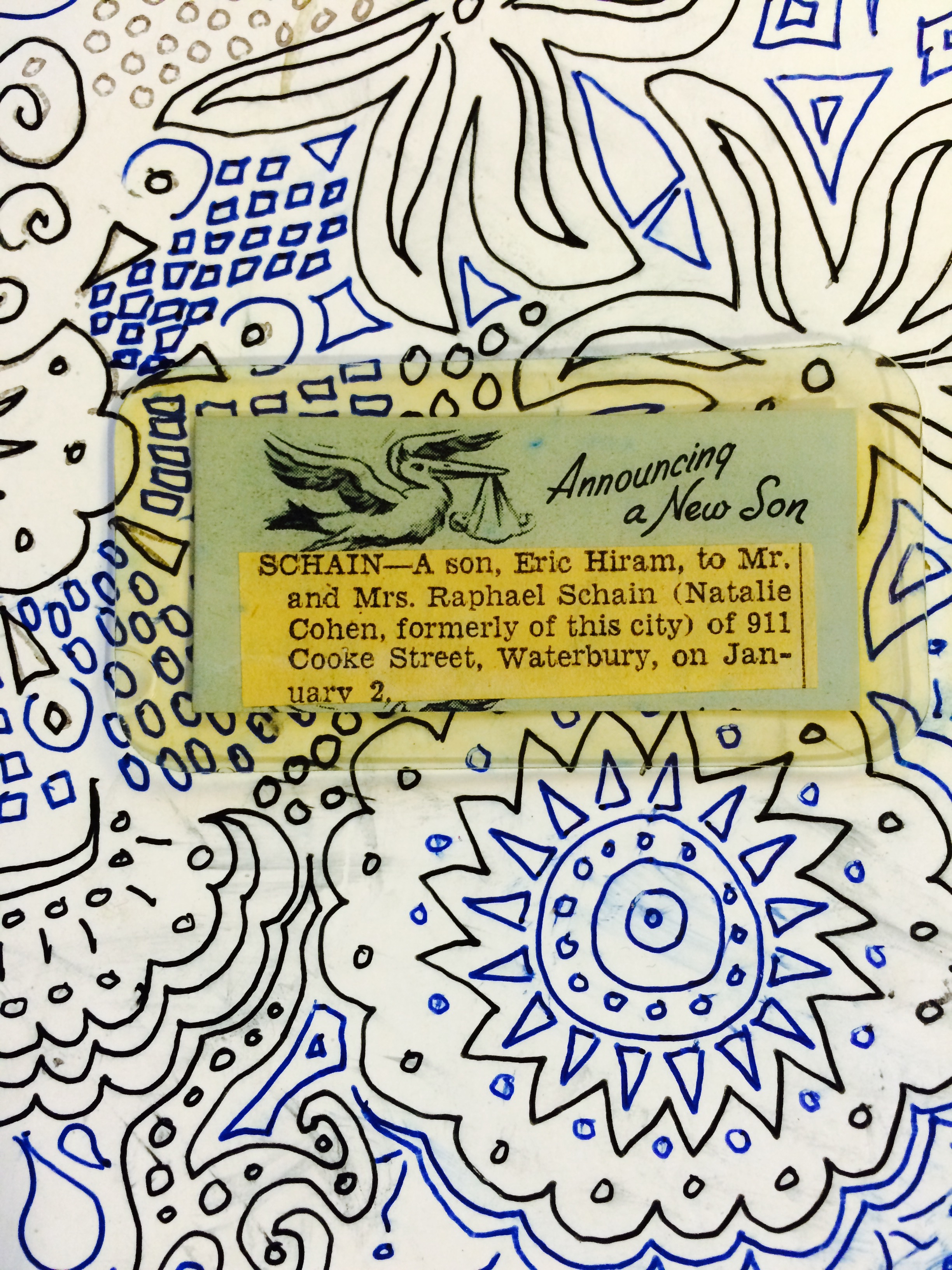
Artifacts

FullSizeRender (3)

Announcing a New Son
SCHAIN — a son, Eric Hiram, to Mr. and Mrs. Raphael Schain (Natalie Cohen, formerly of this city) of 911 Cooke Street, Waterbury, on January 2.

On the back of the thickly laminated clipping, “Thank you for giving a cerebral palsy child the chance
to walk –
to talk –
to play.
Clipped from New Haven Conn Register”

I found it in an old hutch that I moved out of my study to make way for the new desk.  The cupboard was full of VHS tapes — Adrienne’s dance recitals, Eisner Camp summers, professional trainings.  The top drawer was stuffed with napkins (Eric often ate while he watched TV in this room), paperwork and power cords from long forgotten small electronics, two ancient, fancy calculators the kids needed for high school math, one gutted to its plastic shell.

The birth announcement was in the drawer, along with a child’s tooth wrapped in a note with handwriting I’m almost positive is mine.

Dear Tooth Fairy,
Mat would like a gemstone rather than money for his tooth. Thank you.

Was my nephew Matt staying with me when he lost a tooth?  I don’t remember that but it’s certainly possible.  But why didn’t I know how to spell his name?  Do I know a Mat?  I put the tooth, wrapped back in the note paper, in the box on my bureau with my kids’ teeth. What else could I do with it?

Cleaning up clutter can be an archeological experience.  Mother’s Day cards back to the 90’s, diaries and journals that go back to 1964.  I must have taken my 1967 diary from my sister Jeanne.  Her name is written in the front and there’s a bunch of torn out pages between March 20 and April 20.  I take over on April 24th.

April 26:  Wed.  Dear Diary, Boy, am I depressed.  Paul never pays any attention to me anymore.  I was president today.  I think David likes me.  I’m sure Morse hates me. Today at play rehearsal a kid commented on my weight.  I wish I weren’t so ugly.  Oh well, I’m miserable.  Luv, Gracie

I was president?  Hot shit.  But of what?

I still had a crush on Paul in my 1968 diary.


Applesauce

IMG_4009

I pick apples, out of the trees, with a ladder now because the lower fruit is long gone, and off the ground, which is a treacherous carpet of drops that roll under my feet like ball bearings.

I fill an old woven reed basket my youngest sister Meg gave me years ago, a foot and a half across with a sturdy wooden handle and more than enough room to hold a sauce batch worth of apples.  This basket has held vegetables and fruit from my yard for decades. Lucky me.

I think about staying home for more than a few days in a row, or a week even, and I think I want to, but then don’t.  But when I am home for more than a day or two I find myself gathering apples and running them through the corer-peeler-slicer gadget that Melia brought home the weekend of Chris’s service and I’ve kept since. With an apple loaded on the pronged shaft, I turn the crank and magic happens — the apple comes out the other side of ingeniously arranged blades peeled, cored and sliced into thin rings.  The peel makes one long, looping coil.  I could dry the strings of peel, I could make jewelry or braided snacks.

I don’t.  I make sauce.  The slices go into my biggest pot then sit over a low flame for hours. The apples release their juice and then puff up into mushy versions of themselves before collapsing into a blendable pulp.  Northern Spy, Cortland, Macoun, Yellow Delicious — the different combinations create different flavors and levels of sweetness.  David and I taste the batches, like tasting wine. “This sauce isn’t quite as complex as the last.” “Yeah, it’s a little more flat.”  It’s all delicious.

I wondered, when I  came home in mid-September, how I was going to transition back into my own life, my own pace and schedule.  Applesauce never crossed my mind as the path that would lead me back, but I should have suspected, given how much of the little free time I had this summer I spent freezing local fruit — strawberries, peaches, blueberries.

As I clamp the peeler-corer-slicer to the counter with its vacuum base, I feel like I’m securing myself, grounded, my feet on my kitchen floor, looking out the windows at the now brown oak leaves that keep falling.  There are ten quarts of applesauce in the freezer and always at least a pint in the refrigerator.  Tomorrow I’ll probably make more.

Then go away again.

A High Bar


IMG_3961

I wear my sister’s socks and shoes, her jeans and a heathered purple Ibex hooded wool sweatshirt, a perfect layer for these cooler days.  Other women around my sister have taken scarves, sweaters, jackets, hats, gloves, shoes, socks, shirts and boots and they’re wearing Chris’s clothes too.  Pieces of her scattered across the eastern U.S.  It’s a comfort.

I’m not sad and surprised at my not-sadness and then I’m sad.  Today.  The bright trees, saturated orange and scarlet, russet leaching into the oaks, swatches of yellow that make tunnels of light in the woods, pull at me whenever I’m outside so I go outside a lot.

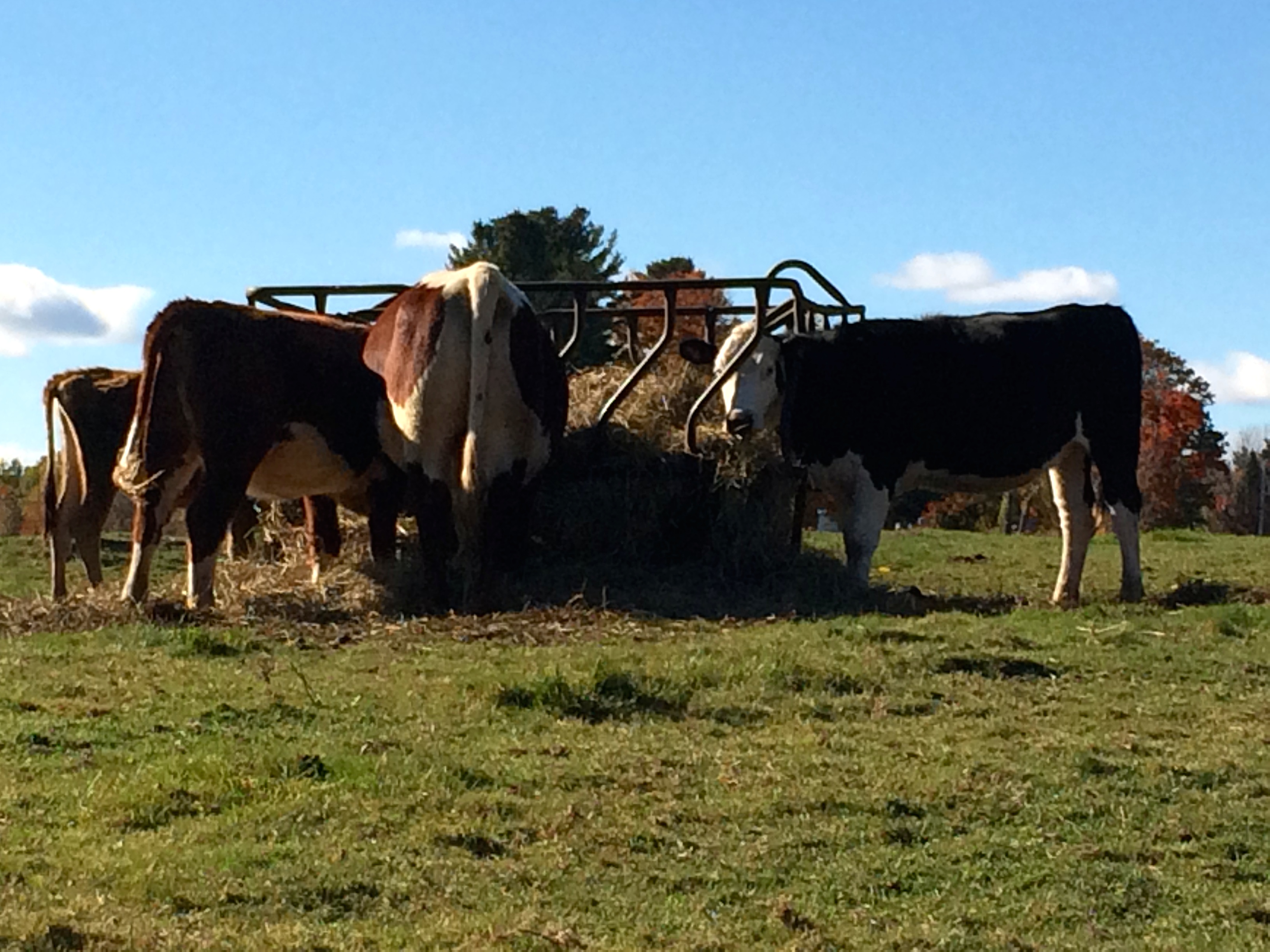
The farmer across the street has moved the hay feeder to the corner of pasture across the small dirt road from the house so I watch cows most of the day, right out my window or off the porch.  In the evening when the cows hear the tractor leave the barn with a new roll of hay they start to scamper and then gallop towards the feeder, two of the smaller ones butting heads.

“It’s weird, isn’t it,” my friend said to me last night at a poetry reading.  We were talking about readjusting our lives after loss — her mother died not long before Chris.  “We have more time now because someone is dead.”

True.  She doesn’t have her mother to visit everyday, trip after trip to rehab then the nursing home then hospice.  I don’t go to Stow for several days every week.  Being with Chris was the organizing principle of my life for months and I surrendered to it.   Helping the body of someone you love get to the end is so immediate and profound nothing else matters.

So what matters now?  I’m reevaluating what I used to think counted in light of certain death.  Because it is certain for each of us.  I’ve been right up next to it again and it’s a high bar.  What do I want to haul over?

Memorials

photo (51)

Chris died on Thursday evening as the family gathered around her, including David and I, took turns reading aloud from the Tao Te Ching.  We got home Friday afternoon, just before the long-planned arrival of Carol, my friend who lost her beloved life companion to cancer last winter.  As she came in to the kitchen Carol asked, “Are sure you’re ready for company?” and I said, “I’m ready for you,” because I knew we could both dive right in to talking about death and dying and grief and how do we move on in the face of sorrow and the absence of someone we love dearly.

Our friend Deb arrived the next day and we kept talking and cooking and crying and eating and coloring in my Crazy Paisley coloring book.  Yesterday morning we went for a walk out to the rock where I’ve been building cairns as a memorial for Eric since he died.  I told Carol and Deb the story, which I’ve told here on this blog, about the cairns accidentally being knocked over while the woods around the rock were being logged last summer, and how badly my neighbor who owns the land felt about that.  He erected a stone cross as a way to continue my ritual of using the rock as a memorial site, and also because he’d begun to use the rock as a place to remember and honor his father.

As we walked Carol told me she was looking for large, flat rocks to use in the memorial garden she’s creating for Steve in her yard in Delaware.  She’d shown us pictures earlier of the mosaic sculpture that sits among plantings of perennials and shrubs.  I started looking down as we walked, hoping to find stones she could use.

When we reached the rock with the cross and the beginnings of cairns being rebuilt by me, I stepped up on the top to put a couple more layers on the cairns.  From that vantage I could see that many of the rocks from the previous cairns had fallen in to a cleft in the middle of the rock, piled in a jumble waiting to be reassembled into towers.  There were a half-dozen that were large and flat, some speckled with tiny flakes of mica.

I asked Carol if she wanted any of the flat rocks for her memorial garden and she loved them all. So Deb, David, Carol and I walked back out of the woods carrying rocks, heavy but manageable.

Now Carol has taken rocks from Eric’s memorial cairns back to Delaware to become part of Steve’s memorial garden, and I’m carrying memories of Chris as I help make the arrangements for her memorial service.

It was a sad and glorious weekend, with striking blue skies and sharp air, gusty wind and sunshine glinting on the leaves of the trees, beginning to rattle with autumn dryness.  We looked at photos of Steve and Carol and me and my sisters and talked, talked, talked.

Getting ready to build again.  I’m going to start a cairn on the rock for Chris.

Zinnias & Sisters

IMG_3797
Zinnias with garden spider

Bold and bright, sturdy and upright, zinnias have long been a favorite in my garden. They’re simple to grow, add splashes of magnificent color and vary in their design — from a single row of petals surrounding a protruding center of yellow stigma florets, to a dome of overlapping petals making a smooth surface of blossom.  These very different shaped flowers often come from the same plant, which is puzzling but delightful.

Zinnias are so not fussy and so satisfying.  White, chartreuse, orange, scarlet, peach, pink, fuchsia and lilac and too many shades in between to name.  Every year at least half my flower bed is devoted to them.  The summer Adrienne and Matt got married I grew extra. The table decorations at the reception were glass globe vases of zinnias, and there was at least one zinnia from my garden in each bouquet, a sweet touch. My sisters and I put the bouquets together the morning of the wedding, pulling stems from the florist’s buckets, and then one or two from my supply.  Jeanne, Chris, Meg and me, working together to decorate a happy day.

It was time for our family to have a happy day.  Eric had died two years before and Adrienne, quite wisely, had resisted my pleas those two years before to get married right away, have a baby, make something good happen.  As it turned out, everything happened exactly when it seemed it should, following the natural cycle of sorrow and recovery and beginning to understand how life flows on in its unrelenting dailiness, marked again at some point with bright days of joy, splashes of zinnias in a garden.

Yesterday I was home again from several days with Chris and her husband Jon.  Jon has been sorting through decades of photographs and gave me a picture of my sisters and me from a happy day several years ago, the four of us in a clear frame with the word “sisters” in varied fonts inscribed in silver around the photo.  I propped the photo in my study so I can see it from my desk, and went out to pick bouquets for the house.  Zinnias first.

IMG_3801

Why?  Zinnias pull me into appreciation.  This summer has been tough for my family, and a whole lot more than tough for Chris’s sons and their partners and Jon and my parents. I’m there to help as often as possible and home soaking up the colors of flowers when I can, remembering the bouquets I made with my sisters.  A room full of zinnias, a garden of bright blossoms, tables with joy in the center.

Becoming and Being

Chris Sitting On Her Memorial Bench

My sister, who I’ve introduced before through her blog, A Cancer Journey With Chris, is very sick. She hasn’t put up a new post on her blog since April because living with metastatic cancer has become more than a full-time job for her, it’s 24/7, it’s exhausting, it’s the central, all-encompassing reality for her and for those of us who love her, it’s at the point that her illness is a globe of existence we move into when we’re with her because when you’re with someone this close to the end of life, someone trying to make sense of the hard truth that soon the mystery of time is going to become a closed absolute, everything except figuring out the next meal and a trip to the doctor and helping her up and down the stairs and into the bathroom and rubbing her back while she cries drops away.  I know.  I’ve been here before.

In Chris’s last blog post she shared a piece she’d written in a journaling class — “Pay attention to the space you are in but stay open to all the possibilities to come.  It is the small things that matter.  It is the becoming that becomes the being.  Always becoming.  Pay attention to the process; that is who you are.”

The cancer in Chris’s central nervous system is creating pressure on her brain that makes her cognition fluctuate but she’s still working hard at paying attention to the process. Sometimes she can keep track of what’s going on and then she’s sad, because she understands that she may very well have come to the end of her extraordinary span of beating the odds.  Twenty four years ago, when she was first diagnosed with breast cancer, her doctors said she had a 10% chance of living five more years.  Two and a half years ago, when the cancer was found in the lining of her spinal column and her brain, her doctors told her to make her final plans.  Soon.

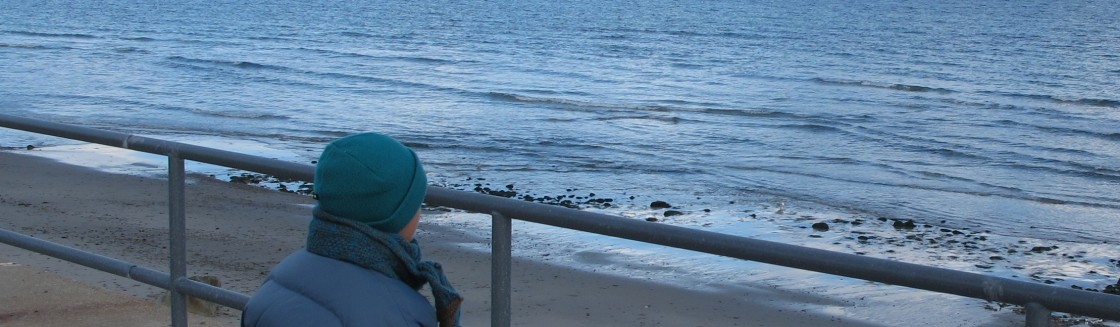
She spent a few months planning her memorial service, talking to her family about what was coming, writing letters to those she loves for them to read after she dies, writing an essay to be read at her service, having a memorial bench installed on the beach in Scituate, Massachusetts where we grew up.  Done getting ready to die, she then spent two years living with a close attention to what brought her joy — family and friends, colors, bright blossoms, the ocean, writing, meditation, movies, qigong.  She was becoming and being. She sat on her bench

I’ve been spending a lot of time with her and am in awe of her remarkable spirit and the full life she’s created in the face of debilitating illness.  Who knows how much time she has left.  I do know that I want to spend as much of that time with her as possible.

Birdsong

Artwork by Kenneth Rougeau

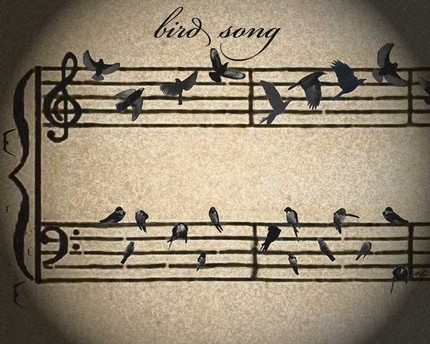
The first spring thing I notice is the birdsong when I step outside in the morning, going to bring in the newspaper. Sometime in late February there start to be chitters here and there.  In March, if I get up right at dawn, it starts as a single cheet, then escalates into trills and melodies and chatter.  Now the yard is wide awake and singing by the time I go out in the morning, and I listen to the background songs as I meditate, a constant chorus behind my mantra.

Because the rise in birdsong coincided with the rise in Eric’s cancer, though we were long in to spring before we realized why Eric was in so much pain and feeling so lousy, for the last nine years there’s been a tug of grief in the sound, another reminder.  But it’s also a reminder of the whole glorious mess that life is, with its cycles and renewals, pain and joy, gain and loss, despair and celebration.  “Life is so damn yin yang,” I said to David last night, as we drove home from visiting friends grappling with new grief.

All of which brings me to this poem, which opens The Truth About Death, as it should.

Birdsong

Now the song varies, mocking chains of notes,
the catbird flying from maple branch to fence post.
All spring I noticed the rise in birdsong
as we went out each morning, stronger chatter,
the brakes off, cells dividing and dooming themselves.
I sit in your chair, I wear your clothes, your ring.
I talk to your photographs. I watch the sky,
watch birds in the yard and realize how many flocks
I’d missed. For weeks I washed you, watched you,
lay next to you, all we could do was touch hands,
all you could do was whisper, your eyes black
morphine disks. Yet you turned back for me.

Nachas

11024736_10206368938610417_5925431246814310338_n

“You have so much nachas ahead,” the rabbi said to me when I went to see him after Eric died.  I was reading a lot by then, and death was my constant topic, whether what actually happens when we die (How We Die by Sherwin Nuland) or trying to cope with grief (A Grief Observed by C.S. Lewis), which I was learning felt like an unremittingly slow slog through the bottom of the sadness bucket which was turning out to be a really, really big bucket.  The rabbi, I assumed, would have an answer to my question of what Jewish writing would be most helpful, or most instructive anyway.

At the time I could hardly understand what the rabbi meant, because looking at the future was too painful, but he was right.  (He refered me to the Memorial Service in the siddur for the Days of Awe, which I didn’t find that useful at the time but which I continue to read on Yom Kippur every year).  The rabbi was trying to give me a glimpse of all the happy occasions to come in my life, because he knew my children and believed there would be many and there have been — weddings, graduations, jobs, family vacations, the simple pleasure of all being together on the porch on a summer evening telling stories and laughing.  Eric not being here to experience all these moments is such a given at this point it’s become a much smaller wave in my mood.

Last Friday night was a nachas moment — Ava being named in the Reform Temple of Forest Hills, where Matt’s parents Carrie and Tim are members.  Aharonah Tziporah. Aharonah for Matt’s grandfather, Aaron, Tziporah, which means little bird, because Ava was chirping as she was born and kept up a constant stream of chatter for over an hour as if commenting on all the newness — What?  What just happened? What is all this light?  And the smells?  Noise!  And wait!  Breath in my lungs?

Ava is still a chatterbox, chirping and cooing and even starting to laugh.  Like her big brother Emilio, she’s a joy magnet.  Almost nine years ago now my rabbi could look at the blessings in my life and see there were many more to come.  Given the perspective of grief, I couldn’t see it, but I hung on to that hope and it helped.

(So what is nachas?  Yiddish for joy and pride, especially from children and grandchildren.)


Kitchen Table Wisdom

MedicineHands

“Can you read,” I asked my friend.  She recently lost her life partner of 34 years and I know how searingly painful acute grief can be, how the day can feel like an impossible bag of cement blocks you have to drag around, how hard it is to feel settled enough to read even though you’re exhausted.

“I can’t really focus,” my friend said and I knew exactly what she meant.  One of the things I remember most vividly after Eric died was my inability to read.

One of Adrienne’s childhood friends, Leila, came to the shiva service for Eric the week after he died. Leila had also lost her father to cancer, about a year before, and her mother, who I knew from all of our daughters’ years of play dates and high school events and parties, sent along a book for Leila to give me.  As another member of the widow club I’d just joined, she hoped it would be helpful to me.

But I was a reading snob in those days.  I read literature, not self-helpy feel good books like Kitchen Table Wisdom: Stories That Heal.  The book, by Rachel Naomi Remen, M.D., is a collection of very short, true stories about life written from Remen’s perespective as a pioneer in the mind/body health field, and told with an invitation to the reader to “listen from the soul.”

Scanning the book I saw chapters with titles like “Life Force,” “Opening the Heart,” “Embracing Life,” and “Mystery and Awe.”  I was grateful to Leila’s mother for thinking of me, but inwardly I scoffed.  I would never read a book like this I thought, which was comical on one level because at the time I wasn’t reading anything except emails, sympathy cards and snippets from a grief book a friend gave me.

From the tiny bit of reading I’d done I knew that not being able to read is common in early grief and I mourned that loss also.  There was no book to bury myself in, just moment after moment of the ever present absence of Eric.  I craved being taken away by a good novel or memoir, a story besides the sad one I was living, but I had no capacity to read one.

A few weeks later, when the post-death visiting and attention were beginning to die down and I found myself with more quiet evenings, I thought I’d try reading again.  I found Kitchen Table Wisdom on a book case and picked it up.  The first story in the book was only three pages.  Surely I could read that much.  I did.  The next story was five pages long. I read that story and the next and the next.  Well into the first chapter I realized I was reading a book.

I began to take the book to bed with me, reading before I fell asleep, a life long pleasure I’d lost along with Eric.  And here was that pleasure again and the book I was reading wasn’t literature.  It was a book from the Self Help section of a book store, a book I would never buy and certainly wouldn’t read.  Except I was reading it and enjoying it and it was actually making me feel a bit better.  It was helping.

The memorial service for my friend’s life partner is this week and I’m going to bring the book with me.  She may not like it and I don’t think it’s her kind of book, just like it isn’t my kind of book.  Except it was and it is.