Back At It

IMG_3124

Returning from long travels, there are many ways in the last three weeks that I’ve thought about being back at it.  Back at my desk, writing.  Back in the yard and garden, pulling out wasted plants and tidying the beds.  Back in the car, going to visit with family and friends. Back on familiar streets and dirt roads as I continue training for the NYC marathon.

And back to the always surprising beauty of autumn in New Hampshire because the trees are back at it too.  My favorite is running down a road transformed into a tunnel of color by the crowns of trees, yellow and orange and red, leaves knocked loose by wind showering down around me.  Even though I know this pocket of glory means the trees will soon be bare and I’ll be back in a gray world, with little light and color, I relish it while it’s here.  Maybe even more so because I know it’s passing on.

Here’s a poem from 15 years ago, which makes it clear I really am back at something I’ve written about before.

Center

The bluejays are busy
in the diminished sunflowers,
flopping over bent heads,
flapping as they gorge
on blisters of seed. Crows

cross the yard, ceaseless
feeders. Cricket shrill
encases the globe of air
where we sit, trees
in their revised colors

ringing this kernel
of glory. We stay still
for many moments, daring
to let time pass, to let
what unfolds also uncrease.
Sisters

2013-09-17 15.09.51

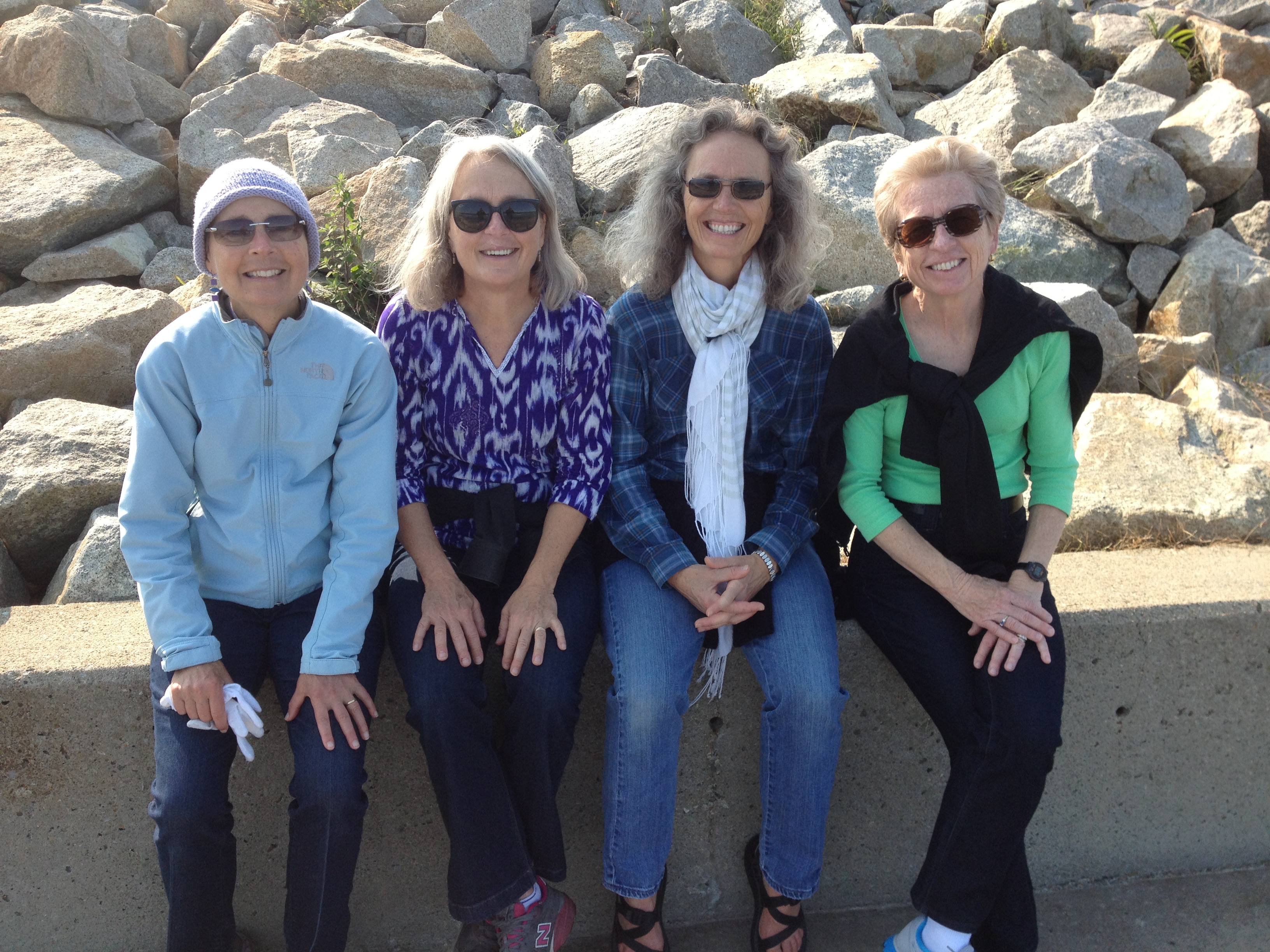
I feel lucky to have three sisters, and even luckier to have just spent three days at the beach with them.  The one day of clouds didn’t seem to matter in balance with the glorious sunshine and clear air of the other days.  The cottage Chris was renting looks over the marshes of the South River and it’s a short walk to the beach.  We were surrounded by the best of being on the water — the snaking blue of a tidal river contrasted by green marsh grass, and the hiss and tumble of waves breaking white on the sand.

Spending time with my sisters walking along the beach and the river, sitting on the deck or the porch talking, cooking and eating and cleaning up, playing Catch Phrase and talking about books and movies and memories and writing, I experience only the blessings of having sisters I’m close to and can connect with.

But I guess I didn’t always feel this way, or was willing to explore other experiences of my sisters, or was just expressing the usual adolescent angst when I wrote the poem below. It was among the treasures in the album and box of old photos and papers my parents gave me last weekend.  If I remember correctly, I wrote this in junior high school.  Maybe I’ll write an update today.

To My Lovely Sisters

Down by the telephone
Lovely and fair
Sits Chrisie my sister
Covered with hair

From the tip of her nose
To the crown of her head
It hides all her beauty
And makes her look dead

And up in the bedroom
As fair as the first
Sits my next sister
Jeanne the cursed

She yells and she screams
Til her throat must be sore
And continues to prove
She’s an obstinate bore

And then there’s dear Meggie
As fair as the rest
Who’ll run from her work
At that she is best

She cherishes her candy
Which she eats all alone
And if someone takes some
She lets forth her loud groan

And then there is me, too
Of all I’m the best
I’m kind and I’m loving
And never a pest

So now you have met
All my great sisters three
But kindest and loveliest
Is the great me.

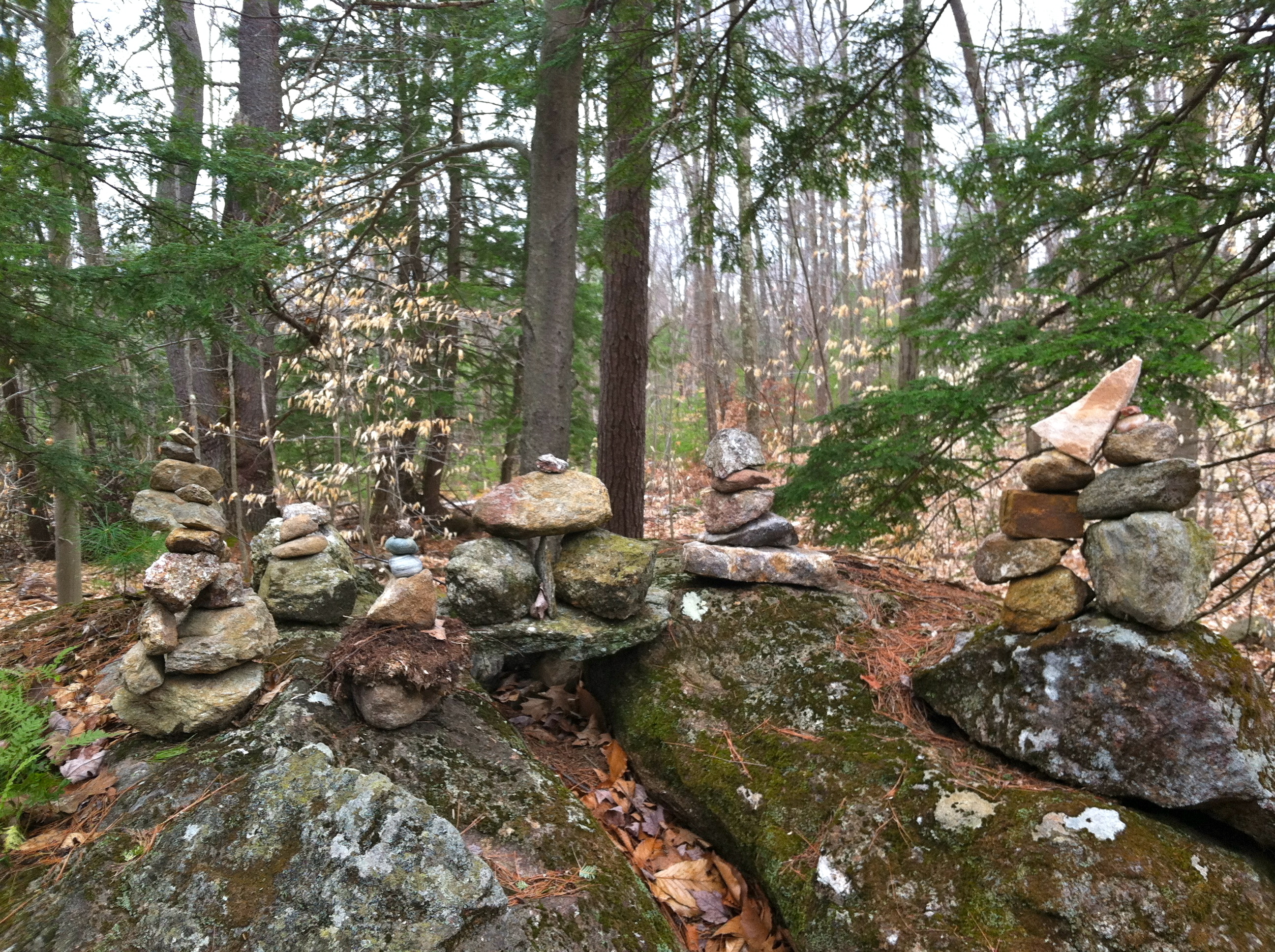
Tending the Cairns


IMG_2273

Tending the Cairns

Rain begins as I do but I keep walking, only
showers, sure I have time to get to the rock

two miles out the road into the woods,
climbing slowly to a ridge it never reaches.

Here is where my husband walked with me
his last time, in this season when we recount

liberation in order to count, the Passover meal
served after we eat bitterness and tears,

after we remember how we arrived
at this table. Winter walks hid what fell,

pillars of freeze and melt, how weather
broke the cairns I’ve built for him for years.

Now I reach the rock, my shoes muddy,
my hair a moist frazzle but no rain yet,

time to gather fallen stones and rebuild
balance, adding one stone I chose today, one

each visit. I bow, I tell him stories we told
last night then turn for home, running in rain.

Bearers of Distance

bod_front_cover


A year ago, the day after the Boston Marathon bombing, Massachusetts Governor Deval Patrick and Boston Mayor Thomas M. Menino created The One Fund with the purpose of helping those most affected by the bombings.  The Fund collected and distributed nearly $61 million  to over 230 individuals in just the first few months.

Shortly after the bombing, two poets, runners and editors decided they wanted to contribute also, and conceived the idea of an anthology of poems by runners, with half the profits from sale of the anthology going to The One Fund.  Martin Elwell and Jenn Monroe put out a call for poems, and a few months later published Bearers of Distance. The book includes nearly 50 poems written by runners and poets of all ages, backgrounds, and abilities, poems that aren’t necessarily about running but inspired by running.  Besides the usual poetry bio for each contributor, there is also a running bio. 

I was honored to have the poem below selected for inclusion in the anthology, and especially today, as we all think back to that grim afternoon a year ago, I’m happy to have been a tiny part of one effort to bring healing to those affected.  

Naming

Don’t name the color. Let the dawn
on snow be the last finch flapping
out of my sleep and drawing me

into the morning ice air sharp
against my cheeks. Yesterday’s
footsteps lead into the street,

the robin that haunts the buried garden
waits at the end of the road. Desire
twitches its tail, lungs feed my heart,

my blood carrying memory, a lover’s
arm that wrapped my waist as I slept,
the sun gold, snow on fire.

Visiting Poet

CareCenter reading

“I would like to invite you to be one of our guest poets here at The Center, where we have a lively visiting author program.”  Here was the email I’d been expecting since a friend had told me she’d recommended me as a visiting poet.  “We have hosted poets such as Naomi Shihab Nye, Martín Espada, Junot Díaz, Marilyn Nelson, Joy Harjo, and many more.”  “Wow,” I thought, and “Yes,” I said.

The Care Center is an educational program in Holyoke, MA for pregnant and parenting teens who have dropped out of school.  After studying the country’s most successful prep schools to learn what creates motivated and successful learners, The Care Center developed a curriculum that encompasses the arts, humanities and athletics and provides ongoing support for students.  GED plus plus.  The program works, with up to 85% of graduates going on to college.

A very popular component of the curriculum is the poetry program.  “Care Center students soon discover that poetry is a kind of self-expression that can take many forms. The most important thing is that it express something authentic about the writer’s life, perspective, or perceptions.” The visiting poet is a popular part of that program and that was me on Tuesday.

The students had studied The Truth About Death before my visit and were ready, after my reading, with insightful and direct questions which led to the liveliest post reading discussion I’ve ever experienced.  “You have a poem called ‘Drugs.’  What kind of drugs were you doing when you wrote this book?”  “In the poem ‘Sex’ you walk miles out into the woods to get it on.  Why would you do that outside?”  “How did you chose the art for the cover?”  “You said you were possessed by a demon while writing the book.  What did the demon feel like?”

I answered as honestly and directly as their questions, and there was laughter and a lot of knowing nods.  The straight forward story of grief, confusion, struggle and a yearning to stay connected to a meaningful life that The Truth About Death tells was a story these young women could understand.  It was a powerful morning of connection, and a reminder to me of how effective poetry can be in keeping us grounded in what is most essential in life — truth, honesty, and a willingness to risk expressing whatever is inside. And it was great fun.

Small Stones #24, 25, 26

IMG_2136

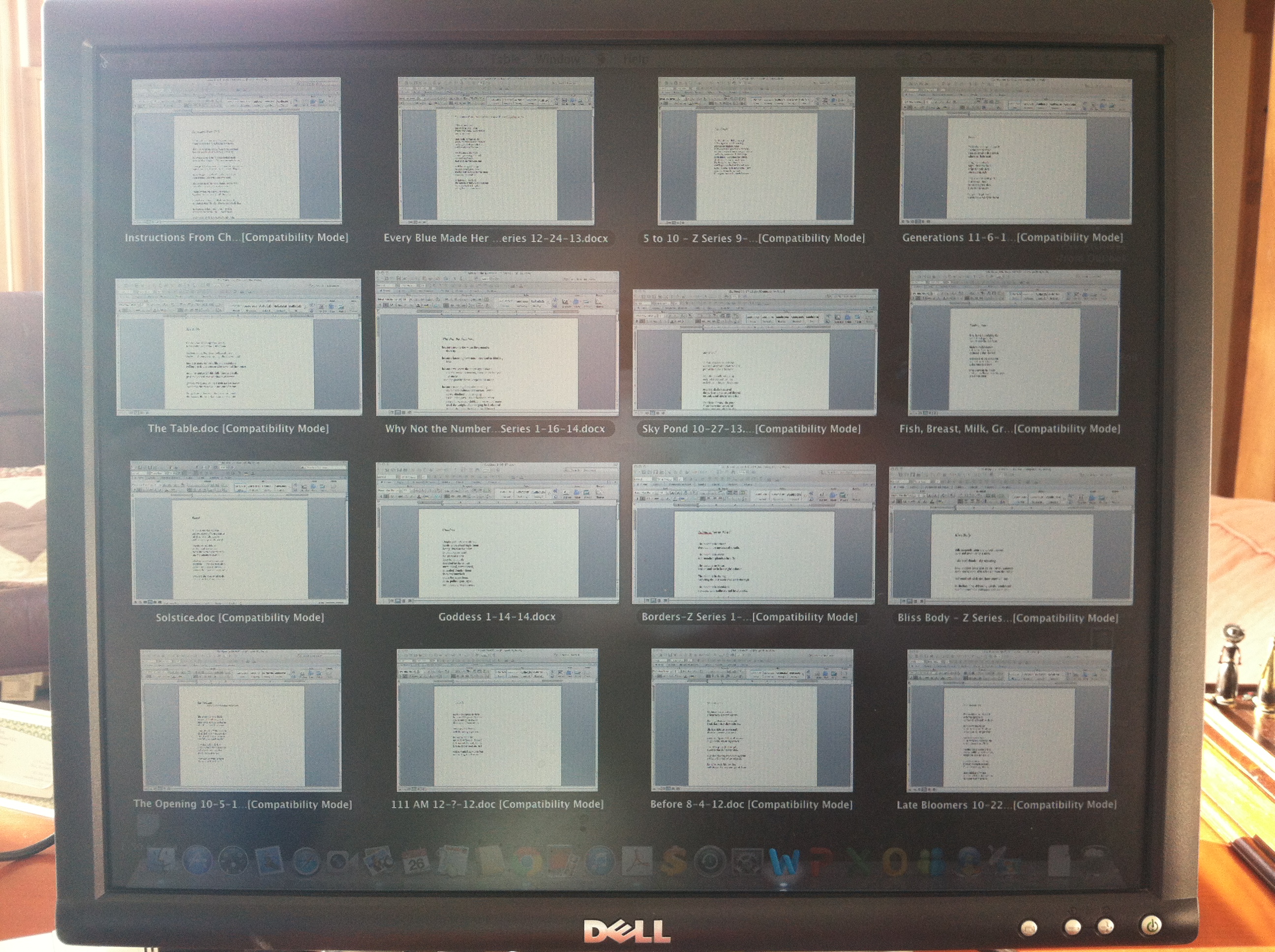
Where do three days go?  There were so many moments, in the three days of the Mindful Writing Challenge that I missed, when I did pay proper attention to something, and even did some writing of those small stones in my mind, but I never got any of them written outside my head.  So have I failed the challenge?  Does it count that I spent almost all of Friday working on poems, with so many files open I had to keep pulling them all up on my screen to figure out what poem to jump to next, and reading poems, and celebrating the online publication of two of my poems in the new issue of Petrichor Review? (Yes, please, do go check them out.)

IMG_2135

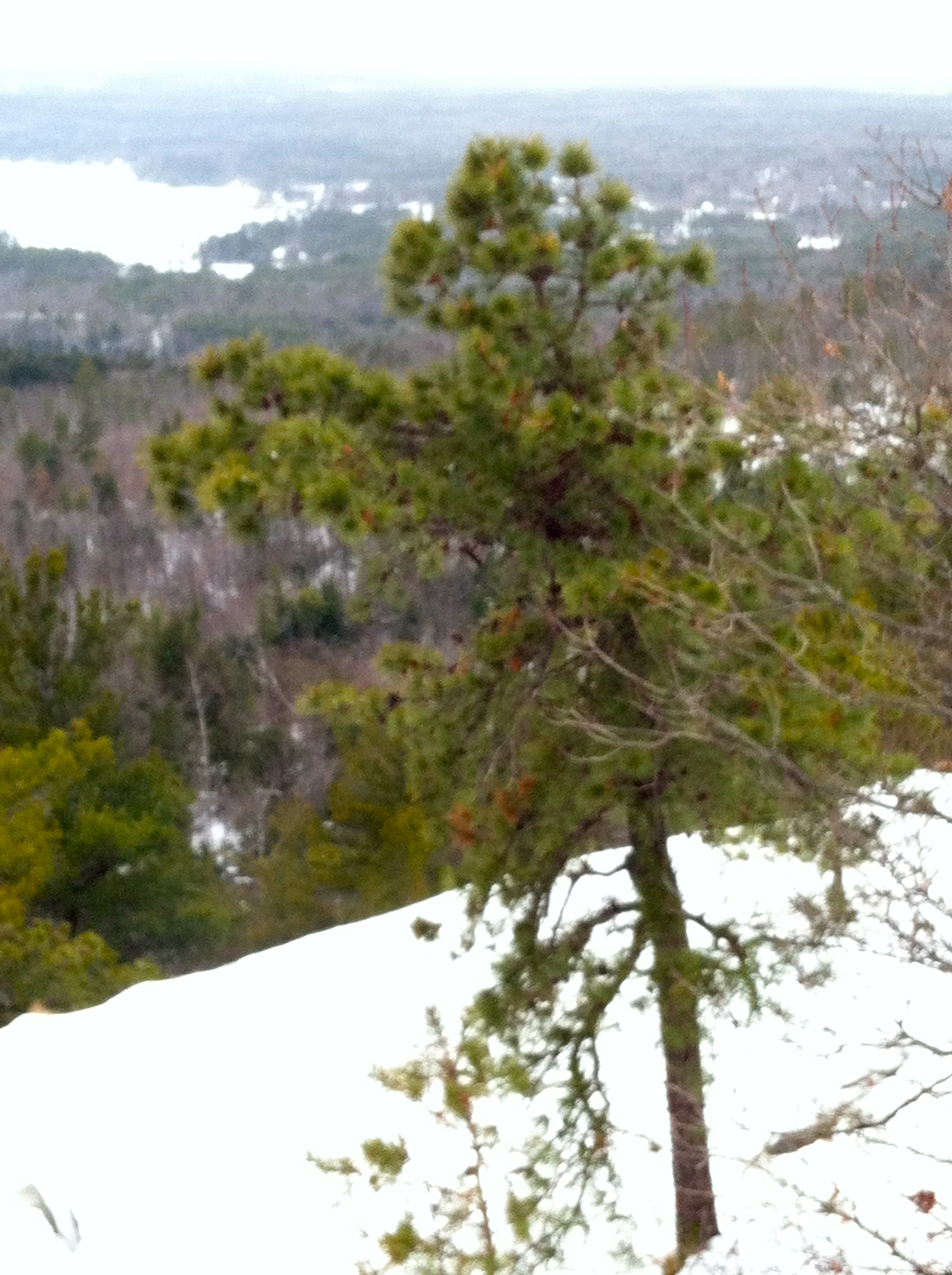
Then yesterday David and I met our new New Year’s intention of hiking above tree line, or at least to a 180 degree view, at least once a month, by climbing Parker Mountain. Standing on the cliffs overlooking Bow Lake, with a wide view to the cloudy horizon of ocean to the east, was a moment that got lots of my proper attention.  But then we got home and had phone calls to answer and food to prep for a dinner and wood to stack in the barn and then it was time to go out and then time to sleep.

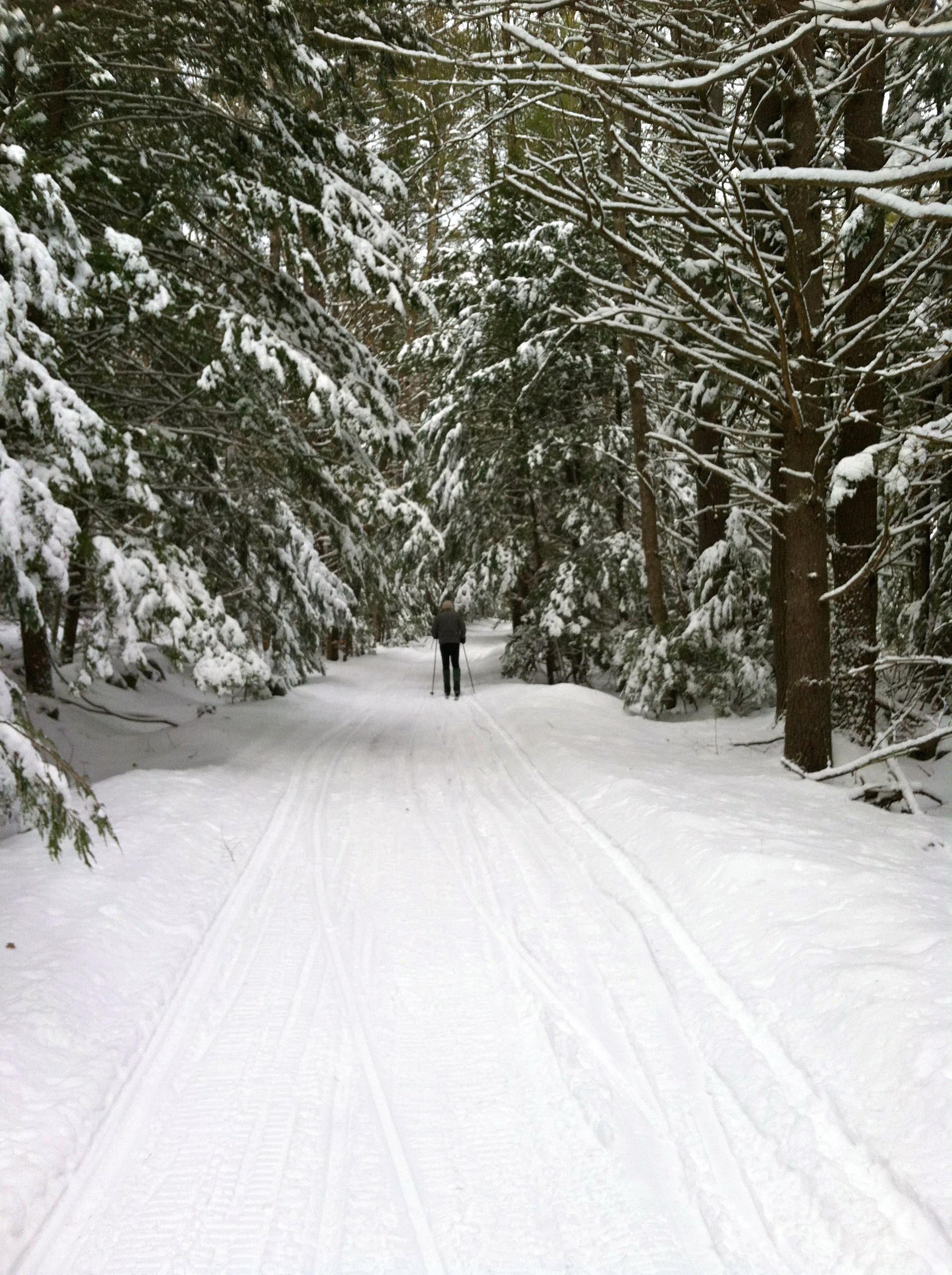
This morning we skied to Flat Meadow Brook, which was running open and loud when I was there on Tuesday.  After five days of mostly single digit temperatures, the brook is closing in, with only small pockets of water showing through some ruffle-edged holes in the layers of white, crusty ice.

IMG_2120

Now it’s a quiet Sunday afternoon with sunshine streaming into my study and that low hum of stillness in the house again.  Time to step back up to the Challenge.

Small Stone #23

photo (43)

Home alone, the low hum of no-one-else-around-silence layered over the quick breath of fire in the stove.  A day of solitude, largely spent with language — writing an article, revising poems, discussing poems and poetry with a friend, reading, reading, reading, mostly poems — has quieted me.  This is my center, a warm circle, the hearth.

Day 9: Back to the Body

Moonlight Tree 2

Slice open the globe of night and inside is 1:00 a.m., sitting in the halo of the kitchen table lights, the line of glass shades reflected in the mirrors of window around me.  I saw a big moon out the east windows after dinner, imagining the glow that would fill the fields all night, snow reflections of a softer light, the night brilliance I used to play in when I was younger.  A full moon after a snow storm meant late night skiing, long shadows trailing us, pockets of darkness in the wrinkles of land we crossed unfolding into light as we skied into them.

Now I fall asleep just after we’ve cleaned up from dinner, the early rising and long day tugging me into bed.  But tonight that didn’t last, the long dark – less than a week before it starts to transform – felt like a weight on me when I awoke.  I got up into the stillness of a house that’s been full of extra people for weeks, everyone asleep right now, the boots piled by the door finally drying, snow mud streaking the tiles.

David and I fall asleep spooned around each other.  “Big spoon or little spoon?” our kids ask about people they know, couples mostly, or pairs of people.  In their relationship, who is the big spoon, who is little?  Or who is the hugger, who the huggee?

Does that matter, as long as the bodies fit together?  “You always come back to the body,” my friend Mimi said to me once decades ago, in a poetry workshop.  Once again I’d brought a poem that had some body awareness in it.  I’m in my body so fully so much of each day, I wasn’t surprised by what she said, but it wasn’t something I’d noticed in my own poems.  Then I wrote this:

Back to the Body

A sickle of moon
on the slice of brook
through bare oaks –
cup of sky
cup of water
our bodies cupped together
when I return to bed.

Now the moon has traveled halfway across the sky, into the western windows and the yard is silver, the far horizons of trees and silo all visible, flecks of ice in the snow sparking.  It’s almost as bright as some recent days have been.

Day 5: Pearl Light, Impossible Poems, Silence

IMG_1969

Pearl light, empty and cold.  Clumps of the off-and-on light snow from the last few days top the browned hydrangea blossoms.  The white lying across the fields and caught in hemlock needles bounces the day back up into itself, a bit of brilliance.  There won’t be many hours of light today, but at least what there is will be reflecting into the air, hard and dry.

David and I have been talking this morning, about the party we went to last night, a collection of poet friends, each of us quirky with creativity and the struggle to hold the making of poems, defenseless little expressions in such a chaotic world, as a primary focus in the face of enormous demands.  Each of us gathered last night have such huge loads to carry – challenging and time-gobbling jobs, or aging family members who require constant attention, or young adult children slipping their tires as they try to get traction in adult lives.  It’s a wonder any of us ever write anything.

Our holiday party tradition includes the hostess giving everyone a prompt to write a poem.  After eating, we each read our poem – or not, those too overwhelmed to write are easily excused – and we tell ourselves we’ll just listen to each other, it’s not a night for critiquing, it’s a party, not a workshop.  But we can’t help ourselves.  Reactions to the poems leak out.

“I wish we could let go of feeling we need to comment on the poems,” a new member of the group said to me as we were leaving.  This was her first holiday party.  “Did you notice the silence after each of us read, as we tried to figure out what to say that wasn’t a critique?”

Mostly I just noticed how much more silence there was after my poem.  Or did I imagine that?

The prompt: Traditions Made New.  My poem:

The Table

“The table comes first,” the French say
and our table fills, and fills again, golden

oak sliding open on gears, leaves unfolded.
A voice carries from the snowy road, lilt

of the neighbor calling her dog, a woman
who never left her house, who now walks

every day past the pruned apple trees
and boxes of frozen garden. Chairs move

in and out of rooms, go back up on hooks
in the barn. The house has nothing to prove.

Day 3: Finding Light

walking

Last night I went to a Kundalini Yoga class, my first time with that practice.  Lots of “fire breath,” quick in and out through the nose, while we held long poses that challenged my muscles’ strength, as much as their stretch.  Kundalini is based on the concept of moving the latent energy at the base of the spine up, through the higher chakras, into the brain. During our final sitting pose the teacher said “May our bodies be more open and our minds quieter.  May the light in me find the light in each of you.”

Finding light.  That’s one of the answers.

Eric and I had a well-established tradition of creating our own holiday cards, using a poem I’d written and an image we often got off the internet, or copied from another card.  In early December I would give Eric several poems I’d written in the previous year.  Almost always he would easily pick the poem he wanted to use, saying about the others, “these are too dark.”

The year after Eric died I picked a poem from the manuscript of The Truth About Death.  I ran it by Adrienne and she thought it was fine.  I paired it with a photo Adrienne had taken that fall, of Matt and Sam walking under the tall white pines further down our road, a tunnel of diminished light.  The poem references that spot.  Perfect.

Except when Sam saw the card, which I’d already printed and had ready to mail, he said, “You can’t use this as a holiday card.  The poem is too dark, the photo is dark.  There’s a suicide in here.”  I knew he was right.  I scrapped the cards and started over.

This morning as I ran under those trees in the dimness I thought about that card. I thought about yoga class last night.  I thought about getting more energy up into my higher charkas, my crown.  I thought about looking for light and as I ran back to the house I noticed frosted grasses along the edge of the road, a hint of sparkle in the thin morning light.

First and Last

Dawn has shifted. This morning wild turkeys
scurry among the tall white pines that shelter
the farm dump, a needled lane lined with tires,
piles of scrap wood, rusted stoves and refrigerators,
a baler. A neighbor shot himself here, in his car.
The turkeys are short ghosts, short soldiers,
upright between long trunks, ruined rectangles
behind them, nothing but frozen road before me.
At dusk another shift, an edge of steel falls
from the sky. I watch it fall, hard and familiar,
comfortable and cold. I can taste the metal.