Bookmaking


This slideshow requires JavaScript.

I’ve been making books (the first definition of bookmaking is someone who takes bets –those of us making actual books come in second).  I’ve learned how to fold sheets of paper into zines and bind pages with the five hole pamphlet stitch. Next week I’ll learn caught loop binding and then on to coptic binding, a beautiful braid of stitches to hold a book together.

I’ve been making phone calls. My goal each week is 15 acts of resistance, which include making collages and going to meetings but mostly calls to Senators Hassan and Shaheen with occasional calls to Annie Kuster. My message is basically the same — resist the Trump autocracy/hypocrisy/treachery flavor of the day. I also make regular calls to McConnell’s office because his particular brand of partisan bullshit cowardice is particularly infuriating to me. Sometimes I even get through. When I don’t, there’s no way to leave a message. Of course.

I’ve been drawing. Every day. I’m bound to get better.

I’ve been getting smart feedback on my memoir manuscript from incredibly generous friends (you know who you are) which has made my writing brain fire off in flashes of insight that I know will lead to a tighter, stronger, more dynamic book. Part of yesterday was spent making lists of what’s coming and going in the next draft — getting ready to dive back in.

I’ve been writing pushback against injustice. Yesterday I sent off a column to the Concord Monitor pointing out the absurdity of arguments against a bill to protect trans people from discrimination; opponents claim it will lead to women being assaulted in bathrooms. I’ve had it with the “bathroom bill” idiocy. NH’s bill to add gender identity to the anti-discrimination law isn’t about bathrooms and the opposition isn’t about protecting women. Let’s be real — the bill is about justice and the opposition is about bigotry. HB 478 — call your NH House Rep to support the bill today.

I’ve been running. According to my training plan I’m running 11 miles this morning. That means my legs won’t do much else today. My gratitude for a body strong enough to still be running long distances is deep, but I definitely feel the difference between a body that’s 60 and a body that’s 63. Hopefully it will all stay on track for the NYC Half Marathon on March 19. Can I run a time qualifying half marathon again? I’m sure going to try.

I’ve been making collages. I’ve made a book collage of collages inspired by Ta Nahesi-Coates’ essay in The Atlantic, “My President Was Black.” The article describes a concert and party the Obamas had at the White House in October, a farewell celebration. It was presented by Black Entertainment Television and was primarily a party for black people — black performers, black guests, black luminaries.

It was a joy to read about, black people having a party at the White House. A house built by black slaves.

But I know there are people in this country, not the majority but enough of them, who couldn’t stand the idea of a black family in the White House, much less that family celebrating there. The White Fuckboys particularly couldn’t stand it.

Now the White Fuckboys are trying to run the country though they’re not having an easy time of it, partly because their treachery keeps catching up with them and partly because of the organic rise of resistance that’s swept across country.

Let’s keep it up. We have no choice.

This slideshow requires JavaScript.

Image & Text

The New Yorker 2.6.17 Time 2.6.17
The New Yorker 2.6.17
Time 2.6.17

Working With Image & Text is the name of the class David and are taking at the NH Institute of Art. It’s also an area of fascination for me. I love words. I love visual art. I love when they’re put together in ways that make the meaning of each bounce back and forth against each other. Looking for ways to combine image and text is what led me to make collages from newspapers and magazines. It’s not only an act of resistance, shredding and weaving the news as a reflection of the world we live in now, there’s also a possibility of beauty.

The Image & Text class is taught by Erin Sweeney, a sculptor, printer and book artist, and Glen Scheffer, a photographer. They’ll teach us how to alter digital photographs, do screen and letter press printing and book binding, and anything else they know about playing along the borders of images and text that we want to know.

Based on the first class, we’ll also learn how to let ourselves go into creating art out of everyday life, the records we keep, what we do, see and hear. Our homework — spend 10 minutes every day writing and drawing in our sketchbooks, including 1) a list of what we did, 2) a list of what we saw, 3) something we overheard 4) a drawing of what we saw.

David and I have been absorbed in our homework; our sketchbooks are open a lot more than 10 minutes a day. I’ve been drawing, pasting, cutting, folding, writing, listing, coloring, printing.

When I went to Vermont Studio Center two years ago John the Founder (he’s one of the founders and that’s what everyone calls him) greeted the gathering at dinner on Sunday night, or first meal together. He welcomed us and talked about the culture at VSC — leave the competition and judgment at the door so it doesn’t get in the way of what you came here to create. “We’re all people who, for whatever reason, like to make things. So go make things.”

I made a collage in answer to a call for artists to respond to the crisis in Syria through the medium of postcards. Art for Aleppo has organized a show and online exhibit of the postcards as a way to raise awareness and money. I made mine from a NY Times article about the evacuation of Aleppo.

“My President Was Black” by Ta-Nehisi Coates was in the January/February issue of The Atlantic. The article was excellent and intersected well with the cover photo of Obama in a crowd of jubilant supporters.

My collage of the front pages of the January 21 and January 22 NY Times, the inauguration of Trump dominating the 21st and the Women’s March dominating the 22nd, came out darker than I’d imagined. The joy of January 22 was real and delicious but was still shadowed by the inauguration, a shadow I walk out of everyday.

Yesterday I wove the New Yorker cover of a reimagined Rosie the Riveter in a pussy hat with the Time cover of a pussy hat underneath the title The Resistance Rises, How A March Becomes A Movement.

We all keep moving towards justice and freedom, that’s how we create a movement. I’m having fun and satisfying something really deep by combining images and text. But I also make phone calls and send emails almost every day  — reps, senators, Governor Sununu, the House Ethics Committee — picking actions from the news and the multiple resources that have been created to keep the resistance strong.

The luck that led me to a life with time to do all this amazes me. I’m squeezing that luck to get every bit of good out of it I can.


What’s Next

img_7138

There it is. My memoir manuscript, printed and stacked on my desk.

Actually, is it a manuscript or a draft? This book has been with me in so many different forms for so many years, just the fact of it being ready to send to three very generous friends who are going to be readers for me is huge. Yuge!

Is there a difference between a draft and a manuscript? This is what the New Oxford American Dictionary says: A manuscript is an author’s text that has not yet been published. Any piece of writing that you have not published in any way (but intend to) is a manuscript. A draft is the same as a manuscript, except that it insists on the unfinished state of the manuscript.

I don’t insist on the unfinished state of this manuscript, but I’m certainly aware that it’s likely unfinished. The fact that the title page has six possible titles itself says it’s not finished. Sending it to readers to get an outside take on its shape and story and cohesion says it’s probably not finished.

Whether what I’m sending out is a manuscript or a draft really doesn’t matter. What matters is that working on this memoir has occupied almost all of my writing time for the past year, a majority of my writing time for the past three years, and much of my writing head space for over nine years. So there’s a big question looming for me — what’s next?

While I wait for feedback from my friends I’ll research agents to query and get back to sending out selections from the book to be published as essays in literary journals. But waking up thinking about a chapter that needs to be tweaked or obsessing over a key paragraph or realizing there’s another scene I need to write or one I need to take out or hunting gerunds to banish the passive voice as often as possible is over for now. The queries and submissions can be done as a secondary focus. What will my primary writing focus be?

I’ve read enough writers on the writing process to know that finishing a book, or getting to the point where the book goes out into the world in some fashion, can be disorienting. When a piece of writing has “got you by the throat,” as a poet friend said to me last year, and then lets go, what do you do with all that breath that’s freed up? How do you decide where to dig to find the next book that’s going to take over?

For now I’ll relish in this impressive pile of paper on my desk. Though it’s still only a manuscript and probably only a draft, it’s definitely a giant step further along the path to being a book.

Don’t Be Fooled; Renew and Resist!

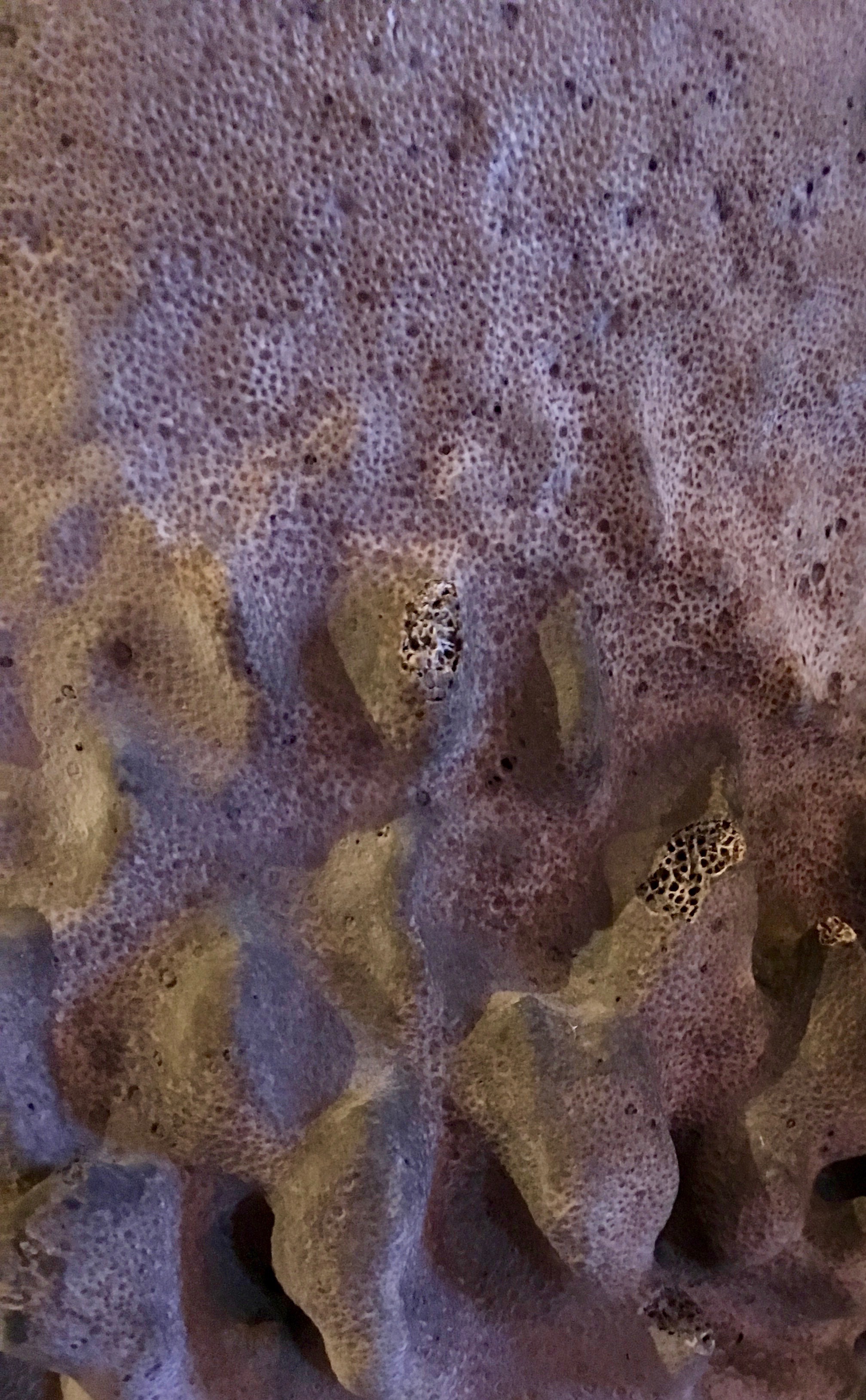
Curious giant fungus: provenance unknown

Trump and his cadre of sycophant puppet masters are trying to wear us out. Let’s not let them.

Our first week as citizens of the new United/Divided States has not gone well. The evidence of Trump’s unstable personality disorder mounted steadily while a wall of silent men stood behind him as he signed executive orders that harm women, children, refugees, and immigrants. When his aides did speak they lied and screamed and distracted attention from Trump’s assaults on core American values. Every gathering I was part of this week began with people expressing their dismay and confusion about what to do.

Can we survive four years of this? Will Trump even last a few more weeks? Would it be worse to have Pence be President. We can be sure it was his idea to order the reinstatement of the global gag order on any mention of abortion by overseas organizations getting U.S. aid. Trump has been quoted as asking why he should care about abortion when “it doesn’t affect me.”

And it seems certain that Bannon’s white supremacy drove the ban on immigrants from Muslim countries and Syrian refugees. The power grabbers around Trump enable his childish obsessions with crowd size and illegal voting to manipulate him into promoting bigoted whiteness and discriminatory Christianity. I think the attraction to rampant capitalism that will further enrich people who already have more money than anyone could possibly use in a hundred lifetimes is Trump’s own contribution to this mess.

Or is it Putin calling the shots?

It has been a horrible week, but those of us (pretty much everyone in my bubble, a bubble I’m proud of) in the resistance have to pace ourselves. We have a long fight ahead and we can’t afford to burn out on outrage. The Trump administration’s strategy is to be so outrageous so constantly that those of us who believe in the democratic country we thought we lived in — where diversity and equity are valued  — get overwhelmed.

So how do we not get overwhelmed? Maybe this is a blog post to myself, because I am overwhelmed. I haven’t been able to sustain a focus on editing my memoir since the end of October. The minute my self imposed no-internet-writing-hours are done I’m clicking Twitter and Facebook and checking the NYTimes and Washington Post.

I know I’m not alone. The women’s poetry listserve I’m on has been full of discussions about how to maintain a creative focus in the midst of madness. One woman wrote, “I wish to God I could just think about quatrains and line breaks now. Time to make some daily phone calls…”

I can’t shut off what’s going on, but I can’t have my face in it all day every day. In fact, having it in my face all day distracts me from taking action that would make me feel better. I didn’t make any calls to Congress this week because I spent so much time reading news about all the things I should be making calls to protest.

This year for the holidays I gave David a commitment for the year ahead: one outdoor adventure and one museum visit a month. Some part of me must have known how much I was going to need dedicated self care and healthy distraction this year. This weekend we bumped up against our last chance to go to a museum and chose the Athenaeum in Portsmouth. The Athenaeum is celebrating its 200th anniversary with a rotating exhibition from their collection — A Museum of Curiosities Both Natural and Artificial.

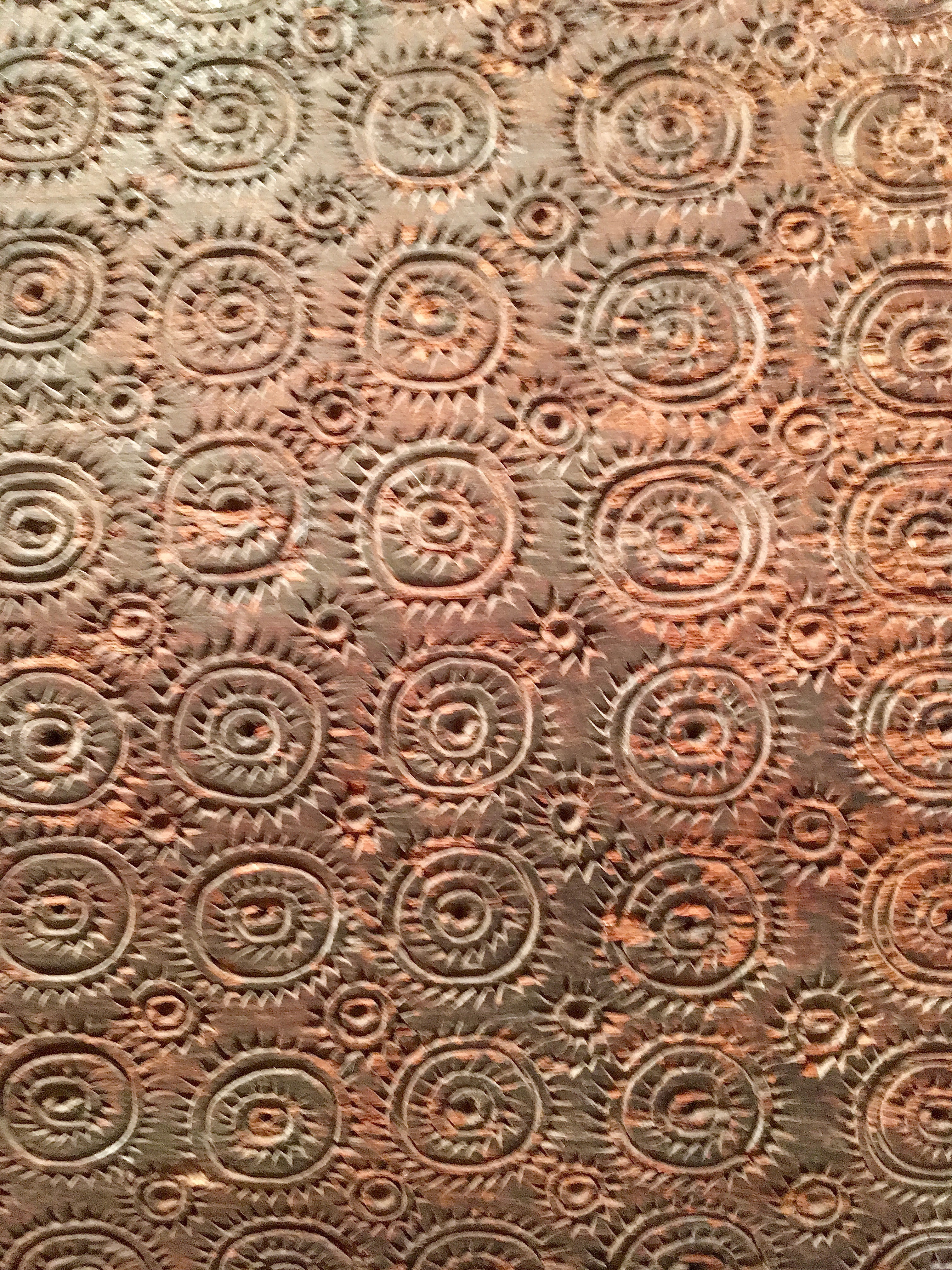
The curiosities included a giant fungus, as big as an end table, “provenance unknown.” The friendly historian and curator of the show that opened yesterday wasn’t even sure it’s a fungus but it was certainly curious. There was a large chunk of stone purportedly from the house of Christopher Columbus in Genoa. One wall was hung with paddles and spears and a shield of intricately carved wood from the Austral Islands in the South Pacific, collected by a Navy officer in the early 19th century to bring back to the Athenaeum.

Viewing curiosities, along with meeting friends afterwards for dinner and a movie, was my reset button. I needed a break. We all need breaks so we can keep making calls, writing poems, showing up for marches, going to elected Rep’s town hall meetings, running for office, organizing petitions and working to get Democrats or Republicans with balls elected.

I’ve been afraid that looking away, enjoying an afternoon and evening of distraction, would be normalizing what’s happening. It isn’t. I’ve been paying more attention than necessary to be effective, and that needs to change. I believe Trump intuitively and Bannon deviously know this — the news is addictive, especially when it’s outrageous. Keep everyone with their faces in their screens and they won’t show up to organize an effective resistance.

I’m walking out of that trap.

Detail of ironwood paddle from Austral Islands


Fewer Words, More Seeing

img_6781

How do you see the world? Through a liberal or conservative lens, fundamentalist or progressive, Democrat or Republican? Which bubble are you in? What frame do you use to organize your thoughts about what’s happening around you, which for me right now is focused much more than usual on national politics.

I can’t turn away from national news and neither can most of the people around me. For much of my adulthood my knowledge of political machinations has hovered at the periphery of my life. I’ve known what’s going on — the Republican shutdown of the government in 2013, opposition to Obama’s ACA, the Supreme Court’s recent rulings in favor of same sex marriage and affirmative action and against abortion restrictions in Texas. But political news hasn’t been at the center of my attention for much of the day every day.

Now it is — Trump’s election, reactions to his lies and hyperbolic assessments of his victory, his increasingly scary and bizarre cabinet picks, breaking news about Russian hacking and pressure on Electors not to elect Trump — are at the dead center of my attention. I check the news as soon as I get up and before I go to sleep and during every break I take during the day — Twitter, NYTimes, Washington Post, clicks through to CNN and Slate and Newsweek, Huffington Post and Politico. I read at least a dozen opinion pieces a day. While I run or drive or walk I listen to the 538 and NPR Politics and Show About Race podcasts. There’s a constant feed of news into my brain, almost none of which is good, and the opinions about what has happened, what might happen, why what happened happened, and what each of us should do about it all is overwhelming.

After a dose of online reading I usually come away feeling like everyone is telling each other how to see the world. But everyone is doing way more talking than seeing. There’s an overload of words meant to convince each other who to believe, who to understand better, which bubble to try to penetrate, your own or someone else’s.

I’ve turned to words myself. Besides the political reading I’ve done in the last six months, probably more than I’d done in the previous ten years, I’ve been writing and talking about this election and its outcome for months now. It’s time for something beyond words.

The most comfort I’ve found in responding to the election of Trump and my fears about living in an increasingly authoritarian, white, male, Christian controlled world has been literally weaving the news, revealing the fractures in truth we’re living through.

I started with the Sunday, December 4 NY Times, ripping strips of the paper, printed with news of Trump and responses to his decisions and actions and Tweets, then weaving the strips into a collage. I’ve since done five more collages with newspapers and magazines and the last one is my favorite — Barry Blitt’s drawing of President Obama on the cover of The New Yorker with text from David Remnick’s article.

Finally, a way of expressing how I see the world right now that doesn’t need words. Cutting and ripping and weaving and gluing shreds of news is calming.

If I can’t stitch the truth together out of what I read and hear, I can at least make something that shows the truth I see.


Resistance: Making Room for Making Art

fullsizerender-23

Because I’m dutiful and generally complete what I begin, I just finished a collage I started before the election. I’d wanted to weave paper, prints of paintings, and had already cut slits in Paul Klee’s Twittering Machine. Next was to cut strips from Cézanne’s Fruit Bowl, Glass and Apples. The prints came from a stash of fine art books I kept from the many dozens David recently gave away to declutter his studio. The piles now in my study are a rich resource I feel okay about cutting up because making art with art makes sense to me.

But does making art still make sense? Since the election the sliced Twittering Machine and the Cézanne print had sat untouched on my art desk. What difference did it make to a world that suddenly felt so out of tilt to make this collage? What difference does it make to work through another revision of my memoir? Does any writing other than poems and essays and blog posts that push back against the current rise of intolerance and tyranny make sense?

Because a hard wave attempt at tyranny is what’s happening. This isn’t abstract. White men without compassion or empathy for others, white men who believe they should be in charge of everything because that’s the way it’s been for much of human history in the Western world and they like it that way, will soon be leading our government.

Is going on with my life, satisfying my need to create, normalizing what’s happened? There’s a strong push to not normalize this election and I’m totally on board with that. Trump is setting up a government of men (maybe he’ll throw a woman or two in there) who want to take away civil rights, reproductive rights, the separation of church and state, and the right to vote if you’re from a constituency they don’t want to have an equal say in how our country is run. Which is everyone who doesn’t fit in their particular narrow definition of who matters and who gets to have a voice.

So where does creativity for the sake of creativity fit in a stance of firm resistance to demagoguery? Is there room for the beauty of art?

I’m glad I read Elizabeth Gilbert’s Big Magic before the election. Her embrace of creativity and permission to make things just because it makes you happy and makes beauty is a message of hope. If we let go of our impulse to create, whether it’s a collage or a lyrical poem or a loaf of bread or tool bench or a blog post protesting the rise of white supremacy, then the world really does get dark.

We need to make room for creativity and the beauty that brings because that’s part of our voice, and isn’t that what we’re fighting for? For everyone to have a voice, to be able to be who they are in the world as long as they’re not hurting others?

Yes, I know this could be criticized as an highly privileged, elite, coastal, liberal point of view. What about people who work three jobs and have no time to be creative? What about people who have no voice? What about people living in the shadow of a controlling partner who doesn’t give them a single free moment to breathe?

I felt despair as I wove the strips of paper for my collage, but that despair made me really think about all these questions, and recall Gilbert’s book, and remember that even in the midst of the worst times we need to get up in the morning and make breakfast and do the laundry and make pies for Thanksgiving. And make art.

Making art is part of my resistance. Creating is asserting voice. The collage I made isn’t going to do anything to stop the white fuckboys from trying to control our lives.

But it made me happy to make it. They can’t control that.

My Twitter Addiction

alltwitter-twitter-bird-logo-white-on-blue


My name is Grace and I’m addicted to Twitter.

In the weeks leading up to the election Twitter became a constant source of both anxiety amplification and reduction. I checked my feed obsessively, looking for good news about a new poll, or another misstep by Trump, or news, like Comey’s letter to Congress, that I knew would be bad for Clinton. Every time I had a quiet moment, my phone was in my hand and I was hitting the little blue bird.

I’m not alone. Yesterday’s NY  Times has an article “Breaking Up With Twitter” that describes almost exactly what I’ve experienced.

If I stayed in my own feed in Twitter I was okay, but I kept clicking in to hashtags I thought were going to reflect my own view of the campaign, only to find them full of hateful vitriol. Getting in to bed at night to read, instead of picking up a book, I picked up my phone and clicked links and read about rallies and campaign strategies and what Nate Silver’s latest forecast map looked like.

Finally, I decided I was going to limit myself to checking the 538 website and the NY Times. But then I’d be back on Twitter and ended up subscribing to the Washington Post digital edition, in addition to the Times, because I couldn’t get enough news fast enough and I had to be sure I was always on top of what was next, what was breaking, what the progressive journalists I admire were saying and what trolls were saying back.

Between the hateful tweets swamping any election related hashtag and the nasty comments in the Times and Post, I started to wonder if there was any place left in the world to have respectful disagreements. At one point I tried to take solace in Facebook, but that became as bad, people yelling at each other through comments and trying to have political discourse through cross posting of links to stories out of their own echo chambers.

Election night I did manage to get off Twitter fairly early and go to sleep. I was exhausted by weeks of anxiety and hoped to wake up to good news. When I did wake up at 4:00 a.m. and checked the NY Times I was horrified to see “Trump Triumphs!”

Sitting at my computer, stunned and feeling sick, I clicked in to Twitter. There was the best tweet I’ve read in months, from the writer Gary Shteyngart. “Want to change this country? Write a book. Read a book to your children. Tell your friends about a great book. Get off twitter. Now.”

Last night I read two books to Emilio, one of which sent him into giggling fits and I giggled along with him. I talk about books with my friends and family all the time and am hosting my book club this week (The News From Spain, an excellent collection of short stories by Joan Wickersham).

Writing a book? Not so much lately, as my pre-election anxiety took me so far outside myself and any kind of productive focus that I haven’t worked on my memoir for a couple of weeks.

I’m not going to normalize what has happened with the election. I’ve already been to one protest and plan to go to more. I’m upping my activism in anti-racism work and I’m always active in ending violence against women. That’s not going to change.

But I’m not going to let the divisive discourse on social media absorb my energy anymore. Good-bye nasty Twitter hashtags and disparaging comments on news articles and comment-thread-fights on Facebook. I’m quitting. For real.

I have a book to write.

But you know what’s most interesting in all in this? When I just searched Twitter to find Shteyngart’s tweet to be sure I had it right, I didn’t. It starts with “Read a book,” not “Write a book.” But I guess what I needed to see was “write.”

Plugged In = Gmail Offline

For the first time in more than two months, sitting down at my desk to write, I shut down my email. Which means I won’t hop back there to see if there’s something new, and then click Facebook real quick to see who liked my latest post, then back to email to answer a message or send one from my list to get done, then see if the library has the next book for book club and then check weather — will it ever rain? — and on to Amazon for Oxi-Brite to get stains out of doilies my grandmother crocheted before I send them to my sister.  And on and on, into that endless rabbit hole.

At the beginning of June, when I’d finished a major revision of the memoir and looked at all the weddings and gatherings and family time ahead, the week at the Provincetown Fine Arts Work Center, a final trip as an Advisory Council member of the National Sexual Violence Resource Center, I decided I was going to take until August 15 off.  Nine weeks with no internal obligation or commitment to writing.  I was going to take a vacation from writing.

I did and it was over last Monday.  The board member and friend and community member went back online last week, but the writer didn’t.  A few times during vacation, in the last three weeks when we were at the pond and looser than I’d been in a long time, David too, I’d see something — a cross hatch of ripples on the surface of the pond, the back lit silhouettes of ducks scurrying from Sam’s dog Quinoa as he jumped through shallow water towards them –and start to formulate the image in language, hold it in words, think about what it might lead to, a poem, an essay?

Then I would think, fuck it.  Why do I have to write everything down?  Could I just have these moments when some small particular pops out to grab a big chunk of world without trying to write it just right so others will see that too?

Last week I wondered about those thoughts, because when I sat down to write, my planned week back at work, I never shut off email, standard practice for me when I’m putting in my few hours a day of focused writing.  It helps keep me on track.  I wasn’t focused.  I wasn’t on track.  Talking with David I wondered if maybe I really was going to stop writing.  At least for a while longer.

“Not having to write everything down?  That’s what being on vacation is,” David said.  Of course.  Fuck it on vacation doesn’t equal fuck it forever.

Obviously.  I just wrote about the ripples and the ducks.

Ready, Set, Write

barn70sA

For me there is magic in writing with others.  A group of my poet friends and I gather every month (or try to make it every month) to generate poems together.  PoGens we call ourselves.  We each bring a poem by someone else to read, then offer a prompt.  I set my meditation timer for 10 minutes, we all write, and when the bell chimes we stop.  We go around and each read what we’ve written. Then we do it again.

At the end of the two hours we spend together there are 16 new poems in the world. During the sessions, themes and images and vibrations start to move among us and the writing deepens and builds.  Being in the physical presence of others who are writing creates an energy of its own that makes its way on to the page.  The opening poem and prompt light the fire, but the commitment to expression, and to sharing the process of expression, is what feeds the flames, what keeps us all burning.

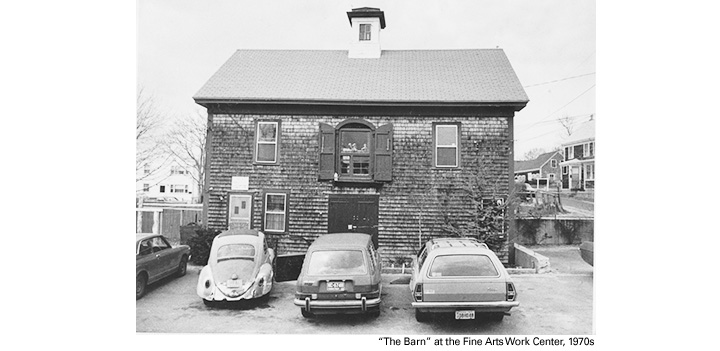
This week I’m at the Fine Arts Work Center in Provincetown in a workshop led by Joan Wickersham, the author of The News From Spain and The Suicide Index.  If you haven’t read them, do so.  Her writing is honest, authentic, searing, tender and brilliant.

She’s also a terrific teacher and so far the week has been instructive, supportive, and magical.  The 10 of us in the workshop all have a piece that’s being critiqued by the group, and even when it’s not my piece being discussed I learn a lot.  What I learned from the group’s response to the beginning of my memoir, which I brought to be workshopped, was invaluable.

But most magical is the writing we’re doing together.  Joan gives us a reading every night which we discuss the next day.  Then she gives us a prompt and we write for 20 minutes. Like PoGens, after the writing we all share what has come out in those 20 minutes. Everyone in the group is a good writer so what’s been produced through the prompts has been predictably good.  And getting better.  The pieces we wrote this morning were excellent, every one of them.  The energy we create talking to each other about our writing, being honest with each other about the piece we’ve brought for critique, bending our heads together over paper for 20 minutes to respond to a prompt is pulling us all into our most creative and expressive selves.  Magic.

Or maybe not.  Maybe it’s chemistry and how being with others who’ve arranged their lives in order to spend a week in Provincetown, bending their heads over pads of paper to write about an object or a photograph or a memory allows us to write at our best.  We’re not alone. We’re not crazy.  We’re writers.

A Blessed Place

IMG_5721

It’s coming up on eight years since I started writing the memoir that’s been occupying most of my writing attention for the past three months.  What started in the summer of 2008 as a book I decided I was only going to write on islands, and only in a journal covered with crinkled brown paper that David had bought for me in London, is finally revealing its structure, which has nothing to do with islands or writing in one particular journal.

But that conceit — writing my “Island Journal” as I called it — is what got me started and the most important lesson I’ve learned over these past eight years as I’ve been trying to master the craft of creative nonfiction is that where you start is very likely not where you end up.

Last summer at the Vermont College of Fine Arts writing conference both Andre Dubus III and Joan Wickersham talked about years of failed attempts to write a story from their lives as a novel.  Years and years of writing that didn’t work.  Both of them finally got their stories right as a memoir — Townie for Dubus and The Suicide Index for Wickersham. Both are terrific (read them if you haven’t).

I went to the VCFA conference to workshop the novel I wrote last winter, which was a much needed break from the intensity of my work the previous spring on the memoir.  I did learn a lot about writing a novel and sustaining a story across many many many more words than I’m used to managing in poems.  But mostly I learned to let go, as Dubus and Wickersham had.  I understood that I needed to go home and stop trying to wedge that original island journal into the memoir I was trying to write about the years when I lost Eric, lost my best friend, lost track of myself, lost faith in my parenting, found David and then lost him as his family navigated its own terrible loss, lost myself again and then found myself again, not surprisingly right where I’d been all along.

Now I’m back to revising the memoir.  I don’t even know what number draft to call this, because its form has changed so radically.  Given what else was going on in my life and my family last summer and fall I didn’t have a chance to use what I’d learned at VCFA to start revising the memoir until January and I started by taking it apart.   I’ve been struggling with how to put it back together — deleting island journal passages, writing a new thread of story to weave in, getting rid of scenes that don’t move the narrative forward, rearranging.  How could I carry the story across the arc it deserves?

And now I know.  I don’t remember exactly when or how, but sometime in the last few weeks the story began to unfold in a structure that so far continues to make sense as I move through each section.  It’s exciting and energizing and makes me want to be at my desk more than anywhere else.

David and I were both getting ready to go out one day last week and I told him I planned to go right back to work on the memoir when I got home in the afternoon.  “Of course,” he said.  “You’re in a blessed place.”

Yes, it’s a blessing to be in a creative flow that’s smooth and open, without the nagging voice that asks why are you doing this, does it matter, is this any good?     I’m listening to the book right now and liking what it says.