Day Two — Seaside and Sky


IMG_4078

Steely water runs out of a creek, cutting a bank through sand before disappearing into the froth and fury of the ocean, blue beaten white as it crashes on the beach.  The wind is hard and cold, clouds low. David and I walk with our heads down, trying to keep the chill off our faces.

We gather driftwood sticks, feathers, black curled strings and bubbles of dried seaweed. I’m imagining a mobile of sailboats hung from sea bleached wood, feathers floating between the curls of seaweed. There are small white feathers, long broad gray ones, one with white circles on a dark background. The mobile will be for my father, a man who grew up on the ocean, who taught me to sail, who took me and my sisters to the beach during hurricanes so we could watch the surf smash over the seawall.  I’m making an ocean he can hang in the house, a beach above the table where he paints sailboats and marshes and waves.

We guess the distance from one end of the beach to the other. We get it right. When we turn to walk back the clouds open for a few minutes of sun and the warmth is startling, backs to the wind, faces to the light. The far shore is luminous under a sky the color of a new bruise, blue beginning to bleed into black.  No yellow yet.

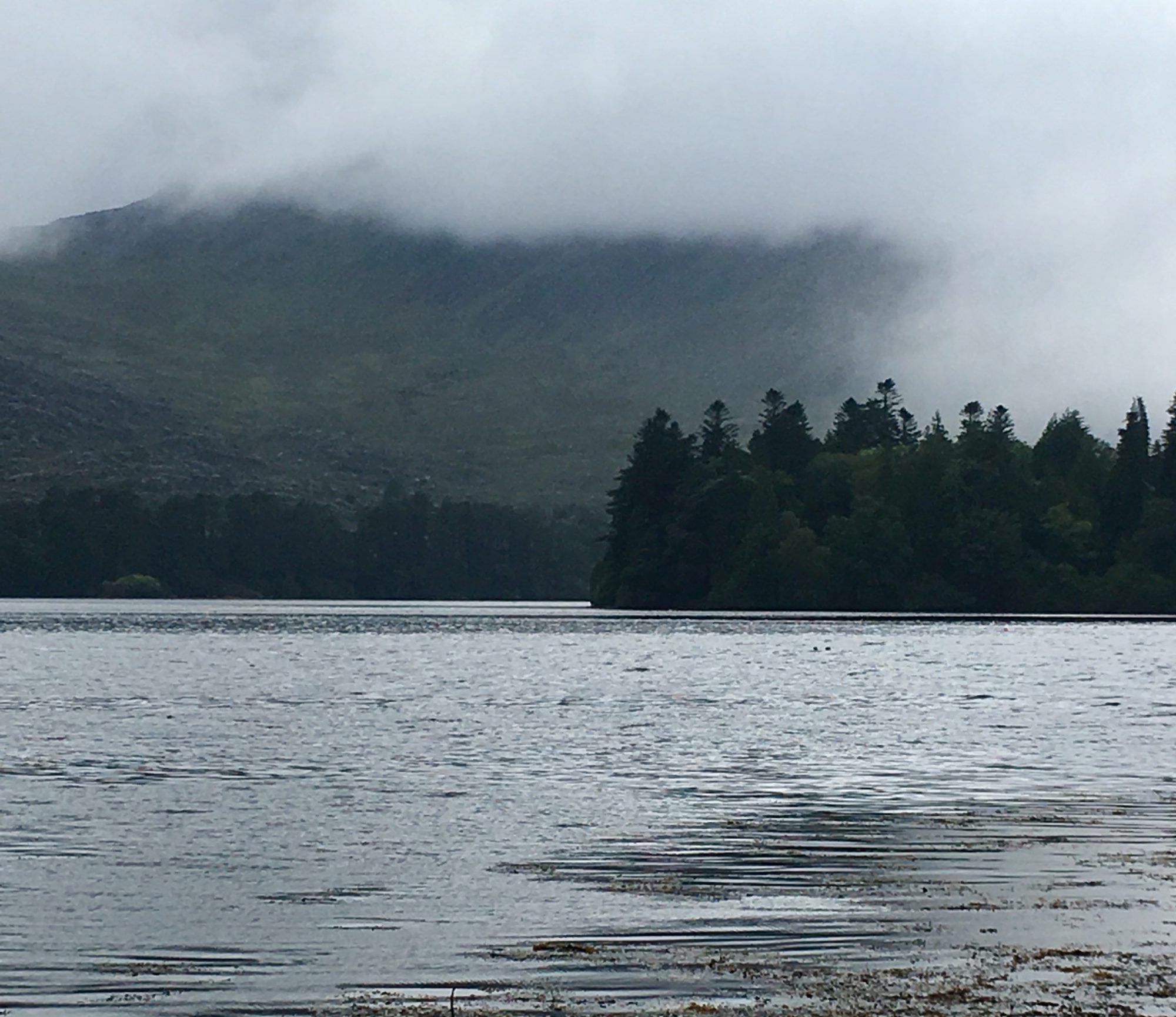
By the time we’re headed home it’s so dark I feel lost.  I can hardly see the road, the early night so heavy we’re wrapped in blankness.  The tunnel of winter is coming, an approach I feel more than see.

My father is 91, he hasn’t been on the ocean for over a decade.  He never walks the beach anymore, though he sits by the harbor and watches boats come and go. He takes photographs and paints, creating a seaside. I’m creating the sky.

Day One — Wilderness

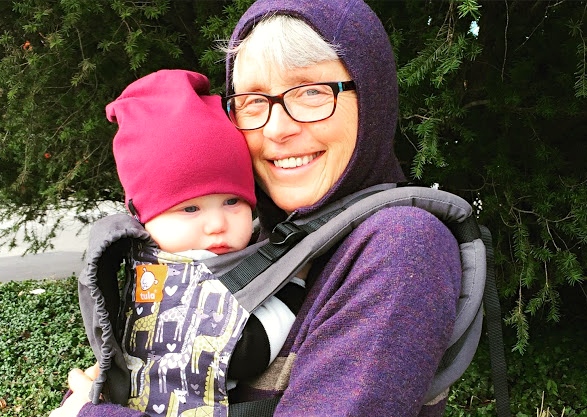
Me and Ava

Wilderness sits at the back of my mind. Before dawn I’m at the kitchen table, sending out the emails that make me think I’m on track. What is the track?  If I get to a spot on a trail where I can’t see the path and can’t find the next blaze, I go back to the last marking I saw and look until I find the next. That keeps me oriented, but does it keep me going where I should?

Are there “shoulds” in life?  There are intentions and desires and choices, but each decision of what to do next, who to call, how long to sit at my desk, which load of laundry to start, what color paper to use as I fold a series of four-pointed stars, which wool sweater to wear to stay warm in the cold house, comes from too many associations to sort through.

None of this has to happen. The laundry gets done because I want clean clothes not because I should do it. Or maybe I’m fooling myself. Maybe my choices are so laden with expectations of what is right and what needs to be done that I can’t feel the “shoulds” under the doing.

I want to get to the wilderness. There are poems there and a new desk in my study for colored paper and collected images, another draft of my memoir that I’ve dared to pare down to the rawest memories, origami sailboats that float at the end of invisible thread, stories I didn’t know I could tell, a walk on another continent, dreams of Eric, a baby resting her head on my chest as she sucks her thumb and reaches the other hand up to my neck, scratching with her tiny fingers, feeling for hair, for an earring, for skin.

Another Day Then Again

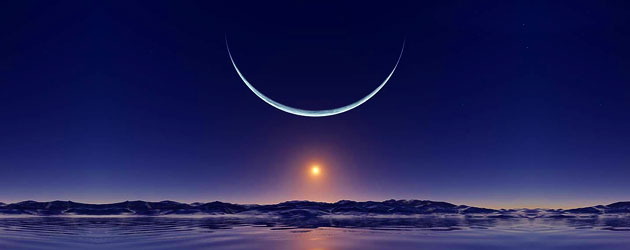
Winter-Solstice-02
Image from FunMozar.com

In December 2012 I began writing two weeks before the winter solstice and wrote at least 300 words every day  — Two Weeks to the Turn, I called it.  It was a way to get myself writing every day, and a way to deal with the darkness.  I’ve done it every year since and am about to start again.

This year the solstice is on December 21 at 9:49 p.m. EST in New Hampshire, so beginning on Tuesday I’ll write every day for two weeks.  Maybe I’ll bump right up against the moment of the turn, pen in hand or fingers on the keyboard.  The approaching solstice is a boundary to wrap my intention around.  The fact of its own repetition inspires mine.

My father has been taking a photograph of the marshes near where he and my mother live every month for two years now.  He’s arranged his favorite photograph from each month of 2014 on a big board, the months labeled on white slips of paper.  It’s a terrific piece of art, the whole of the project greater than the sum of each image.

What is it that’s so satisfying about an organizing principle for creativity?  I think artists, like me, who struggle to stay in a focused daily practice gravitate towards work that’s gotten done because someone made a commitment to practice creativity every day.

William Stafford got up early every morning for decades and wrote a poem.  He wrote that in those early hours “something is offering you a guidance available only to those undistracted by anything else.”  In his commitment to the practice, Stafford was “training himself to hear and feel his way back in touch with distant places, ages, epochs,” wrote critic Laurence Lieberman.  To get to the deeper level of any art requires training and training requires repetition.  It’s how you get better at doing anything.

So I love my father’s photographs and how he’s displayed them.  I love that I have two friends who I email every Monday with a writing prompt, and another friend I trade writing with on Mondays, not to be critiqued, but to be accountable to someone to meet a stated goal, 2,000 words a week, or completion of self assigned writing tasks.  Practice.

Starting Tuesday, I’ll write at least 300 words every day for two weeks.  When I did this two years ago much of it ended up on this blog, my writing organized around an idea from another writer friend who asked me, “With all the sadness that’s underlined your relationship since you met, how do you and David move towards happiness?”

I don’t have an organizing question this year, but I have commitment.  I’ve been slacking off on the practice lately and need to get back to it.  You’ll be seeing the result here.


Ice Skim

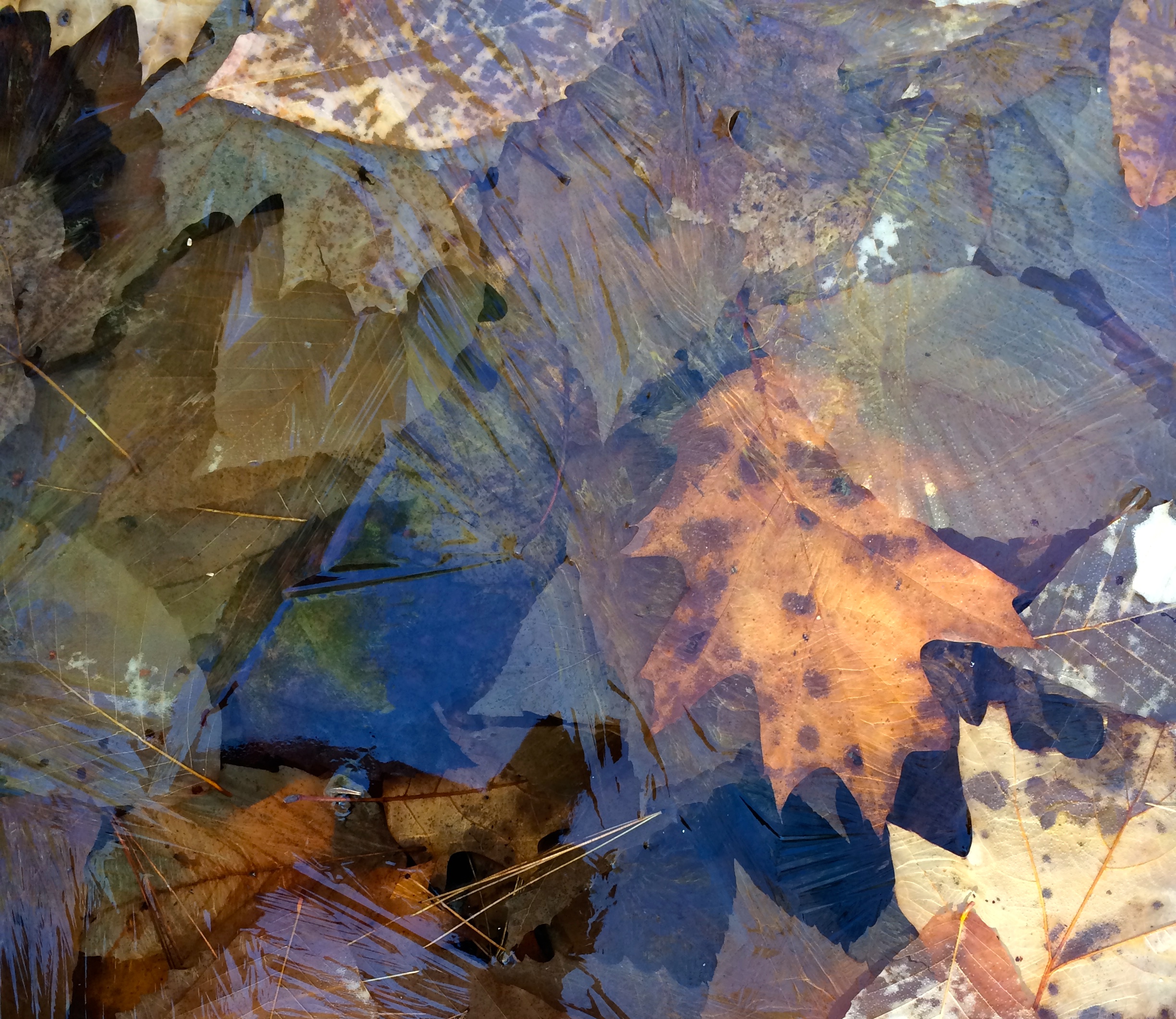
IMG_4055

Yesterday there was a glass-thin layer of ice across a leaf-packed tub of water on the disc golf course David and I walked with Sam as he somehow got discs to angle around corners and find open lines through trees.  The sun was bright but winter felt close by.

This morning I ran by small ponds skimmed with ice.  Now the sun is setting behind the silo in the old farmyard, at least 45 degrees down the horizon from where the last light disappears behind trees in June.  Darkness takes up more and more of every day.

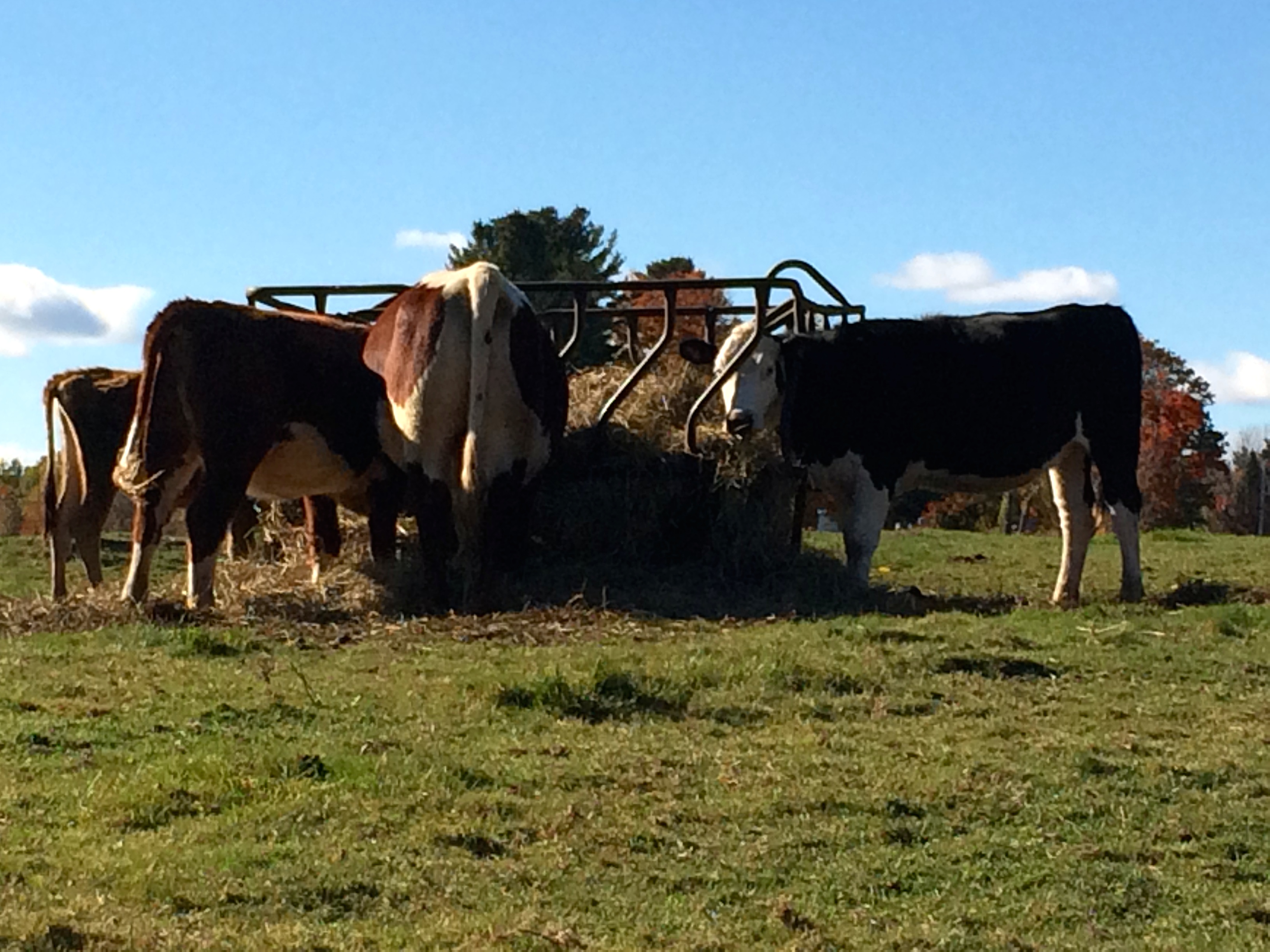
But the pasture across the street still has a sheen of green, grass not yet entirely done for the season, though not enough for the cows to eat.  They romp and bellow as they come to the hay trough that’s parked in front of our house, right under my study windows.  A daily show I never get tired of.  Like watching a fire or moving water, having animals live across the street, in clear view, is calming.

Almost exactly three weeks from now the sun will begin to travel back up the horizon. It’s a relief to be that close to the light cycle turning around yet again.  It will continue to get colder, the ice will thicken and eventually hold and hopefully bear weight for skating or skiing.

But there will be more light.  And cows.

Sadness Moving — Reflections

IMG_4037 (1)

When I write about grief and sadness my blog gets a lot of hits.  Same when I write about my travels.  What’s the connection?  What if I wrote about both at once?

Thursday I went to Boston to the Museum of Fine Arts, meeting up with my youngest sister Meg and her husband John and Chris’s Jon.  Family disappears so I’m hanging on.

Wednesday night I went to Portland to hear Ry Cooder and Ricky Skaggs play such accomplished music, accompanied on piano by Buck White (85 years old!) and his daughters singing exquisite harmony, I remembered how to be happy.

I’m hunting art.  Moving.  Years ago a friend from my work life spent a weekend here. She came to NH to do a half marthon with me so I would think she’d have known what she was in for.  But a day in to our visit, before all our mutual friends showed up as running support and talking-drinking-eating buddies, she watched me move around the kitchen as she sat at the table.

“You really can’t sit still can you?”

“Nope.”

For years she made a joke of the fact that 4 miles into the half marathon I abandoned her and moved off ahead.  I couldn’t run that slowly.  It hurt.

If I could slow down I would.

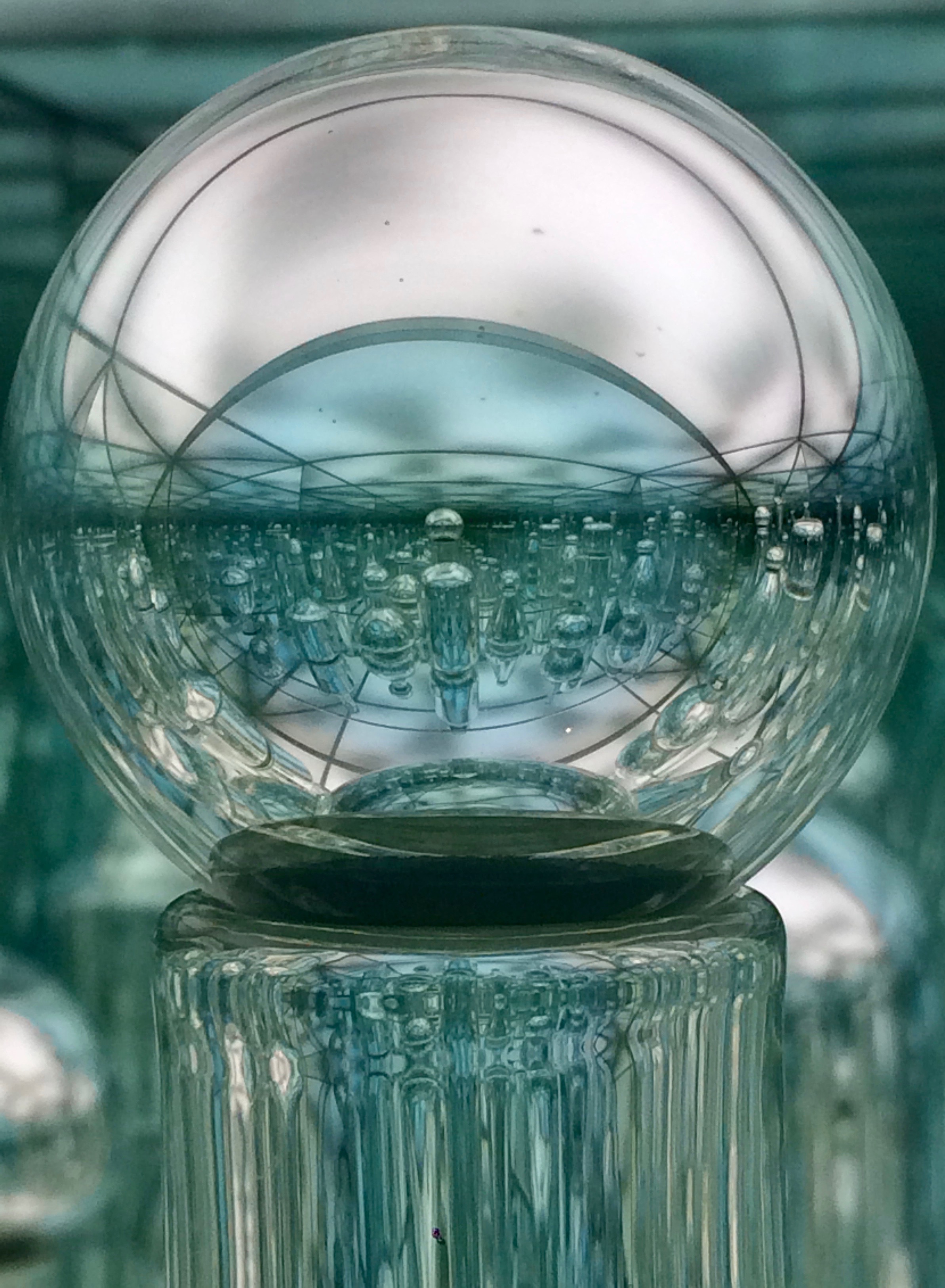
If all my reflections on life created an infinite pattern, I doubt it would be as beautiful as “Endlessly Repeating Twentieth-Century Modernism” by Joshiah McElheny.  His piece at the MFA is stunning and brilliant, a perfect, mirrored box of glass objects that reflect into an unending distance as each object holds its own jeweled reflections.

Now I’m wearing some of Chris’s jewelry along with her shoes and socks and jacket and jeans.

I’m not planning to go anywhere for a while.

We’ll see how long that lasts.

IMG_4038 (1)

Everywhere #Paris #WallsBearWitness

Photo and video by Mackenzie Knowles-Coursin

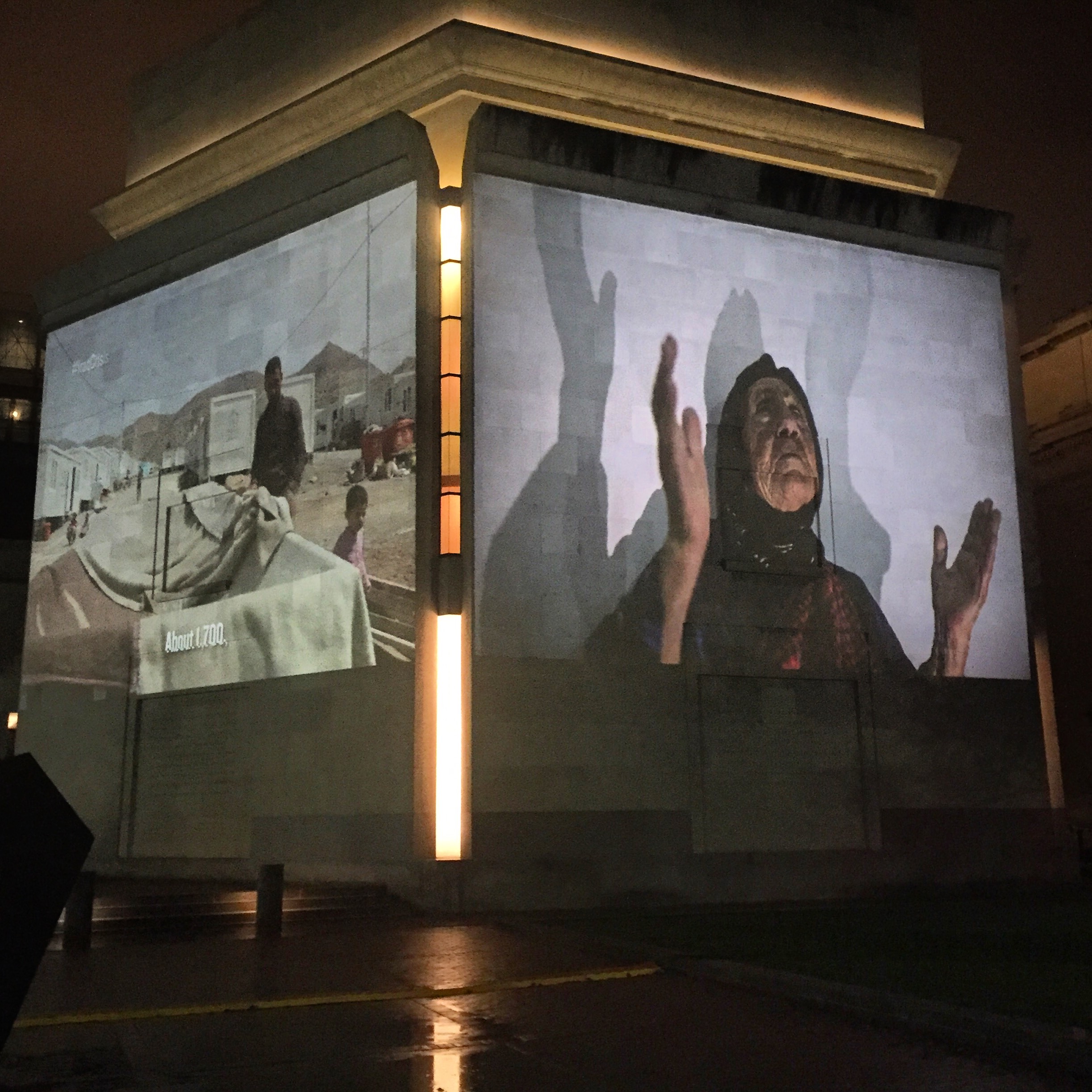
We spent three days in Washington, D.C. earlier this week, there to see an exhibit of Mackenzie’s photos at the U.S. Holocaust Memorial Museum as part of their Our Walls Bear Witness series.  The photos and a video, projected on the outside walls of the Museum, brought the faces and stories of imperiled minorities in Northern Iraq in to stark focus.  Organized by the Museum’s Simon-Skjodt Center for the Prevention of Genocide, there was a panel discussing the self-proclaimed Islamic State’s violence against religious and ethnic minorities, followed by the photo exhibit, part of efforts to hold true to the Museum’s imperative, “Never Again.”

And yet here we are, another morning of mourning, as we face the reality of terrorists calling their lethal violence “miracles,” religious extremists whose moral priorities somehow justify killing innocent civilians.

David interviewed people who were watching the video and loop of photographs on Monday night, not realizing how powerful and true their words would be by the end of the week.  An Iraqi refugee woman who is now a “proud citizen of America” said, “Sadness, sadness, because we have seen it and history repeated itself, every time since ages is the same.  It’s all sad.  Have you heard anything good in the news?  Always bad.”

A Kurdish man, who came to the panel and exhibit to support his “fellow Yezidis,” though he isn’t Yezidi himself, said, “It’s everywhere.”

Indeed.

Applesauce

IMG_4009

I pick apples, out of the trees, with a ladder now because the lower fruit is long gone, and off the ground, which is a treacherous carpet of drops that roll under my feet like ball bearings.

I fill an old woven reed basket my youngest sister Meg gave me years ago, a foot and a half across with a sturdy wooden handle and more than enough room to hold a sauce batch worth of apples.  This basket has held vegetables and fruit from my yard for decades. Lucky me.

I think about staying home for more than a few days in a row, or a week even, and I think I want to, but then don’t.  But when I am home for more than a day or two I find myself gathering apples and running them through the corer-peeler-slicer gadget that Melia brought home the weekend of Chris’s service and I’ve kept since. With an apple loaded on the pronged shaft, I turn the crank and magic happens — the apple comes out the other side of ingeniously arranged blades peeled, cored and sliced into thin rings.  The peel makes one long, looping coil.  I could dry the strings of peel, I could make jewelry or braided snacks.

I don’t.  I make sauce.  The slices go into my biggest pot then sit over a low flame for hours. The apples release their juice and then puff up into mushy versions of themselves before collapsing into a blendable pulp.  Northern Spy, Cortland, Macoun, Yellow Delicious — the different combinations create different flavors and levels of sweetness.  David and I taste the batches, like tasting wine. “This sauce isn’t quite as complex as the last.” “Yeah, it’s a little more flat.”  It’s all delicious.

I wondered, when I  came home in mid-September, how I was going to transition back into my own life, my own pace and schedule.  Applesauce never crossed my mind as the path that would lead me back, but I should have suspected, given how much of the little free time I had this summer I spent freezing local fruit — strawberries, peaches, blueberries.

As I clamp the peeler-corer-slicer to the counter with its vacuum base, I feel like I’m securing myself, grounded, my feet on my kitchen floor, looking out the windows at the now brown oak leaves that keep falling.  There are ten quarts of applesauce in the freezer and always at least a pint in the refrigerator.  Tomorrow I’ll probably make more.

Then go away again.

City Week

IMG_3991

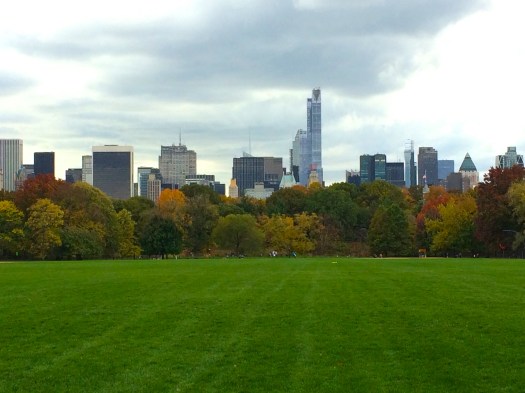
A year ago I was in New York, picking up my number for the NYC Marathon on a rainy Saturday, then running the windy streets the next day.  It was glorious.  Earlier this week there were trucks along Central Park West unloading and connecting massive coils of cable, wiring the park for the end of the race on Sunday.  This year I’ll be watching rather than running (Matt is all trained and ready to do it again) and I’m not sad about that.  In fact, I’m excited.  This wasn’t a year for marathon training, but it’s still a year to enjoy the city.

“You’re four for four,” David said to me Wednesday night as we walked back up town after seeing “An American in Paris.”  I didn’t know what he meant at first, then he pointed out I’d chosen two plays and two restaurants over the previous two days and each had been excellent. We were both surprised by the skilled mix of classical, modern and show dancing (with a heavy emphasis on ballet) in “An American in Paris,” all of it smart and sharp, set against back drops that danced across the stage too, the streets of Paris and the Seine coming in and out of view as panels whisked across the stage on free rolling wheels swirled by dancers, a dazzling art show in motion.

“A View From the Bridge,” directed by Ivo van Hove (excellent profile of him in last week’s New Yorker), with a set as stripped and modern as Paris was 50’s and lush, was gripping on Monday night.  This revival of Arther Miller’s 1953 play had the unmistakable stamp of van Hove, wringing the heart out of a play.  David and I had started the morning packing the car in New Hampshire, and by 11:00 p.m. we were walking up Broadway to our AirBnB on the Upper West Side, stunned.

We had dinner at ABC Kitchen on Tuesday night and lunch at Gabriel Kreuther on Wednesday — fantastic foodie experiences that we were hungry to enjoy, having walked 20 miles over two days by then.  We walk when we come to NYC — into and around Central Park, up and down Broadway, back uptown from the 9/11 Memorial, through Soho and Noho and Union Square and Herald Square and in and out of the overload of Times Square multiple times on this trip, with tickets to three plays.

Yesterday we walked another 7 miles on a day when we’d planned not to move around too much.  But between a morning stroll through Central Park marvelling at the massive sycamore trees, a visit to the American Museum of Natural History and a walk back down Broadway for the play “Hand to God,” we logged a lot of miles again.

Walking back up Broadway last night we were still talking about “Hand to God,” an outrageously funny play that stars Tyrone, a sock puppet brilliantly played as an alter ego by Steven Boyer.  With its irreverent take on religion and incisive portrayal of the pain that can arise from mistaking emotional silence for morality, it’s a deeply affecting play that cuts much deeper than the laughs foul-mouthed Tyrone draws with his dark monologues on religion’s failure to truly lift the human spirit.

Our spirits are certainly higher after a very full week in the city, a much needed mini-vacation when David and I only focused on what we wanted to do.  A week for us.  And we’re not sad about the week coming to an end, because now we have a weekend with Emilio and Ava, and we’ll be back in the city on Sunday, watching Matt, and tens of thousands of others, run.
 

A High Bar


IMG_3961

I wear my sister’s socks and shoes, her jeans and a heathered purple Ibex hooded wool sweatshirt, a perfect layer for these cooler days.  Other women around my sister have taken scarves, sweaters, jackets, hats, gloves, shoes, socks, shirts and boots and they’re wearing Chris’s clothes too.  Pieces of her scattered across the eastern U.S.  It’s a comfort.

I’m not sad and surprised at my not-sadness and then I’m sad.  Today.  The bright trees, saturated orange and scarlet, russet leaching into the oaks, swatches of yellow that make tunnels of light in the woods, pull at me whenever I’m outside so I go outside a lot.

The farmer across the street has moved the hay feeder to the corner of pasture across the small dirt road from the house so I watch cows most of the day, right out my window or off the porch.  In the evening when the cows hear the tractor leave the barn with a new roll of hay they start to scamper and then gallop towards the feeder, two of the smaller ones butting heads.

“It’s weird, isn’t it,” my friend said to me last night at a poetry reading.  We were talking about readjusting our lives after loss — her mother died not long before Chris.  “We have more time now because someone is dead.”

True.  She doesn’t have her mother to visit everyday, trip after trip to rehab then the nursing home then hospice.  I don’t go to Stow for several days every week.  Being with Chris was the organizing principle of my life for months and I surrendered to it.   Helping the body of someone you love get to the end is so immediate and profound nothing else matters.

So what matters now?  I’m reevaluating what I used to think counted in light of certain death.  Because it is certain for each of us.  I’ve been right up next to it again and it’s a high bar.  What do I want to haul over?

Resurrecting Poems

IMG_3944

It seems like a long time ago that I was a young woman shepharding another young woman into the world, a mother to a daughter.  Watching the changes that puberty brought — the rising and falling tide of hormones, the blossoming of fertility, the chance that another generation was going to unfold (which it so delightfully has), was profound.  I wrote about it.  No surprise, I write about much of what I experience.

Sunday David and I visited friends who live far north in New England, and it was winter there.  It’s creeping closer to winter here, the thermometer reading a chilly 20 degrees yesterday morning.  But driving through Franconia Notch two days ago it was snowing and snow squalls followed us all the way to our friends’ farm where the grass had a white crust and a trailing vine on the porch was laced with icicles.  Ice, snow, a hard wind and a fire in the stove.

Put these together, and I think of another poem I wrote long ago, as I did last week.  The resurrection of poems continues.

Valentine’s Eve

I hear ice in the trees.
Our footprints from before dinner
up the walk to the house,
have crusted.

The sky, thin as newspaper,
shredded white,
hides black ice underfoot.
Oblivious to ice’s season,

another seed falls through me,
and through my daughter now too.
My hand on her arm,
she stops to stand with me —

we listen to ice clack above us,
raise our eyes from the ground,
hearts beating hard
as startled birds abandoning cover.