Resistance: Making Room for Making Art

fullsizerender-23

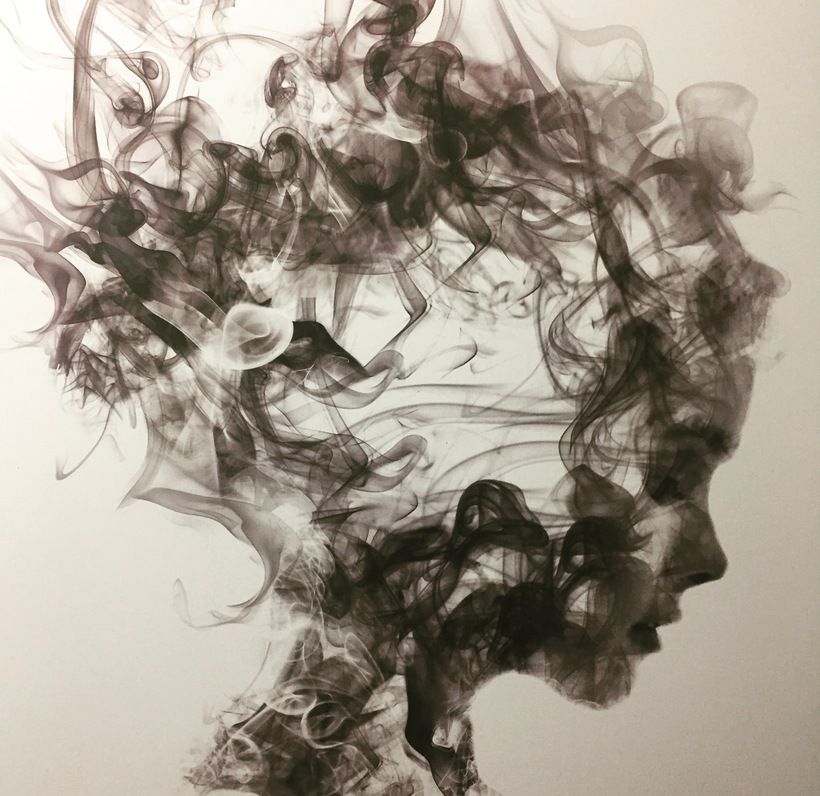
Because I’m dutiful and generally complete what I begin, I just finished a collage I started before the election. I’d wanted to weave paper, prints of paintings, and had already cut slits in Paul Klee’s Twittering Machine. Next was to cut strips from Cézanne’s Fruit Bowl, Glass and Apples. The prints came from a stash of fine art books I kept from the many dozens David recently gave away to declutter his studio. The piles now in my study are a rich resource I feel okay about cutting up because making art with art makes sense to me.

But does making art still make sense? Since the election the sliced Twittering Machine and the Cézanne print had sat untouched on my art desk. What difference did it make to a world that suddenly felt so out of tilt to make this collage? What difference does it make to work through another revision of my memoir? Does any writing other than poems and essays and blog posts that push back against the current rise of intolerance and tyranny make sense?

Because a hard wave attempt at tyranny is what’s happening. This isn’t abstract. White men without compassion or empathy for others, white men who believe they should be in charge of everything because that’s the way it’s been for much of human history in the Western world and they like it that way, will soon be leading our government.

Is going on with my life, satisfying my need to create, normalizing what’s happened? There’s a strong push to not normalize this election and I’m totally on board with that. Trump is setting up a government of men (maybe he’ll throw a woman or two in there) who want to take away civil rights, reproductive rights, the separation of church and state, and the right to vote if you’re from a constituency they don’t want to have an equal say in how our country is run. Which is everyone who doesn’t fit in their particular narrow definition of who matters and who gets to have a voice.

So where does creativity for the sake of creativity fit in a stance of firm resistance to demagoguery? Is there room for the beauty of art?

I’m glad I read Elizabeth Gilbert’s Big Magic before the election. Her embrace of creativity and permission to make things just because it makes you happy and makes beauty is a message of hope. If we let go of our impulse to create, whether it’s a collage or a lyrical poem or a loaf of bread or tool bench or a blog post protesting the rise of white supremacy, then the world really does get dark.

We need to make room for creativity and the beauty that brings because that’s part of our voice, and isn’t that what we’re fighting for? For everyone to have a voice, to be able to be who they are in the world as long as they’re not hurting others?

Yes, I know this could be criticized as an highly privileged, elite, coastal, liberal point of view. What about people who work three jobs and have no time to be creative? What about people who have no voice? What about people living in the shadow of a controlling partner who doesn’t give them a single free moment to breathe?

I felt despair as I wove the strips of paper for my collage, but that despair made me really think about all these questions, and recall Gilbert’s book, and remember that even in the midst of the worst times we need to get up in the morning and make breakfast and do the laundry and make pies for Thanksgiving. And make art.

Making art is part of my resistance. Creating is asserting voice. The collage I made isn’t going to do anything to stop the white fuckboys from trying to control our lives.

But it made me happy to make it. They can’t control that.
My Twitter Addiction

alltwitter-twitter-bird-logo-white-on-blue


My name is Grace and I’m addicted to Twitter.

In the weeks leading up to the election Twitter became a constant source of both anxiety amplification and reduction. I checked my feed obsessively, looking for good news about a new poll, or another misstep by Trump, or news, like Comey’s letter to Congress, that I knew would be bad for Clinton. Every time I had a quiet moment, my phone was in my hand and I was hitting the little blue bird.

I’m not alone. Yesterday’s NY  Times has an article “Breaking Up With Twitter” that describes almost exactly what I’ve experienced.

If I stayed in my own feed in Twitter I was okay, but I kept clicking in to hashtags I thought were going to reflect my own view of the campaign, only to find them full of hateful vitriol. Getting in to bed at night to read, instead of picking up a book, I picked up my phone and clicked links and read about rallies and campaign strategies and what Nate Silver’s latest forecast map looked like.

Finally, I decided I was going to limit myself to checking the 538 website and the NY Times. But then I’d be back on Twitter and ended up subscribing to the Washington Post digital edition, in addition to the Times, because I couldn’t get enough news fast enough and I had to be sure I was always on top of what was next, what was breaking, what the progressive journalists I admire were saying and what trolls were saying back.

Between the hateful tweets swamping any election related hashtag and the nasty comments in the Times and Post, I started to wonder if there was any place left in the world to have respectful disagreements. At one point I tried to take solace in Facebook, but that became as bad, people yelling at each other through comments and trying to have political discourse through cross posting of links to stories out of their own echo chambers.

Election night I did manage to get off Twitter fairly early and go to sleep. I was exhausted by weeks of anxiety and hoped to wake up to good news. When I did wake up at 4:00 a.m. and checked the NY Times I was horrified to see “Trump Triumphs!”

Sitting at my computer, stunned and feeling sick, I clicked in to Twitter. There was the best tweet I’ve read in months, from the writer Gary Shteyngart. “Want to change this country? Write a book. Read a book to your children. Tell your friends about a great book. Get off twitter. Now.”

Last night I read two books to Emilio, one of which sent him into giggling fits and I giggled along with him. I talk about books with my friends and family all the time and am hosting my book club this week (The News From Spain, an excellent collection of short stories by Joan Wickersham).

Writing a book? Not so much lately, as my pre-election anxiety took me so far outside myself and any kind of productive focus that I haven’t worked on my memoir for a couple of weeks.

I’m not going to normalize what has happened with the election. I’ve already been to one protest and plan to go to more. I’m upping my activism in anti-racism work and I’m always active in ending violence against women. That’s not going to change.

But I’m not going to let the divisive discourse on social media absorb my energy anymore. Good-bye nasty Twitter hashtags and disparaging comments on news articles and comment-thread-fights on Facebook. I’m quitting. For real.

I have a book to write.

But you know what’s most interesting in all in this? When I just searched Twitter to find Shteyngart’s tweet to be sure I had it right, I didn’t. It starts with “Read a book,” not “Write a book.” But I guess what I needed to see was “write.”

Defeat the White Fuckboys – Vote on Tuesday!

14947684_1920346578192979_2102809038531576573_n

Thanks to Samantha Bee for so perfectly labeling the part of America that doesn’t want to lose all the privilege their whiteness gives them, that doesn’t want black and brown people to do as well as them, that doesn’t want women to have any authority over their own lives, and particularly, their own wombs.

There’s a lot of ground to be covered here, but I’ll concentrate on the white boys’ intent to gain more control back over women and their bodies. I’m working to learn more about how white privilege and racism and classism and gender stereotypes all intersect to oppress people, but men’s control of women is something I know a lot about

Ever since our ancestors figured out, early in the history of the human race, that men inseminate women, that the miracle of creation is not women’s alone, men have been hell bent on controlling women so they can be sure any babies produced by the women they’re controlling are theirs.

So stupid. Controlling a woman and telling her what to do might be a way to make sure any babies are yours, but it requires vigilance and abuse and denigration and it’s certainly not the best way. Respecting women, celebrating women’s strength, holding abusers accountable when they harm women — that attracts women, that keeps a woman at your side, that motivates a woman to keep you at her side to help raise those babies.

So what about all the women who support white fuckboys and their views? I won’t describe someone else’s life and experience, but I do know from working to end violence against women for almost 40 years that feeling trapped by current circumstances, violence, intimidation or expectations from their childhood entangles many women with partners who are disrespectful and controlling.

A week ago Friday when I first saw the news about Comey reintroducing Hillary’s emails into the election (and let’s remember, everyone, the George W. Bush White House “lost” 22 million emails), I understood again how hard it is to win as a woman if the white boys really don’t want you to. But actually, it isn’t white boys that are the problem. It’s white fuckboys, the ones who can’t stand the idea that a black President will be followed by a woman President, the ones who really think being white is better and should give them more control. How did they lose so much control?

Well they’re poised to lose even more which is why they’re so desperate. Looking at demographics, soon there won’t be enough of those white boys in this country to hold on to any control they have left unless everyone else agrees they should have it.

But already we’re at a tipping point, before white people in the United States are outnumbered by minorities. There are enough straight white women and men who are fine with sharing citizenship and power over their own lives with black and brown people, gender fluid people, LGBTQI people and women. Not only do they think it’s perfectly fine to have a Black President followed by a President who is a woman, they think it’s about time.

So white men who are losing their control over women, over the number of black and brown people in the country, over the ability to deny freedom and autonomy and power to all those “others,” are grabbing as much final control as they can, like taking ground in a war. If they can pull us all back to a place where women don’t have access to reproductive choice, where hatred and violent acts against black and brown people, Muslims and Jews, is okay, where groping and denigrating women is fine, where voting is difficult for black and brown people, where income disparity keeps increasing, then it will take that much longer to get back to where we are today.

Except we don’t have to go back at all. We can, and hopefully will, go forward. Vote for justice, decency, community, tolerance and diversity on Tuesday.

Vote for Hillary, then keep voting Democratic all the way down the ticket.

Give those white fuckboys the defeat they deserve.

Still #NOTokay

no-more_stack_tag_rgb-725x1024

People across the United States are celebrating last night’s World Series victory of the Cubs and choosing a new President. How are these events related? Both offer an opportunity to push back against the culture that condones abuse of women.

The Cubs acquired Aroldis Chapman in a trade with the Yankees this summer, knowingly taking on a man who abused his girlfriend. Although he denies having hurt her, he doesn’t deny having shot a gun into a wall multiple times during a fight with her last year and didn’t dispute his 30 game suspension. Did it bother the Cubs that Chapman is an abuser? Or was it more important to win a World Series?

Cubs president Theo Epstein claims he talked with Chapman prior to the trade and that Chapman was “heartfelt” in his answers. What does Chapman say about that conversation? He doesn’t recall the details and was “sleepy” while they talked.

Now the Cubs have a World Series win and an abuser to thank in part for that.

Here’s the connection with the election. I’ve had to accept over the past several months that I share this country with many people who are not only comfortable with Donald Trump’s racist, misogynist, and xenophobic views but welcome the opportunity to share their own such views.

But I also think there are many people supporting Trump because they are anti-choice and their religious convictions are driving them to accept the hateful aspects of Trump because he may be able to deliver a Supreme Court that will over turn Roe v. Wade. Still others will vote for Trump because they view themselves as Republicans no matter what and will swallow what they don’t like about Trump to vote with their party.

What both supporting the Cubs and Trump leads to, however, is condoning a culture of violence and abuse of women. Any time we support anyone who has been abusive to women, whether it’s firing a gun to frighten your girlfriend (and most likely strangling her, as she originally told police) or groping women and bragging about it, we tell ourselves, our children, everyone, that it’s okay. Nope, #NOTokay.

As Adrienne wrote on Facebook today, about the Cubs victory last night, “You don’t knowingly employ someone who not only broke a law but abused someone. You know what it does to young boys and girls when a team puts him on the big stage? It sends a message that it’s OK. It sends a message that if you’re talented enough you can do anything you want with no repercussions. That’s not fucking ok. That perpetuates a culture of abuse of women.” In Trump’s case, it would be that you’re rich enough that you can do anything you want. 

The Cub’s shouldn’t have acquired Chapman and Americans shouldn’t hire Trump to be President. It doesn’t matter what piece of good you think you can pull out of the mistake of elevating an abuser to an exalted status — that he can pitch the shit out of other teams, that he could make abortion illegal again, that he can help win the World Series, that he can implement a fiscally and socially conservative agenda — it’s still a mistake.

Abuse of women is #NOTOkay now and forever. Remember that when you make choices.


Unwanted Sexual Touch is #NOTokay

http://www.huffingtonpost.com/entry/a-call-to-continue-the-conversation_us_58053ccae4b08ddf9ece0e91
From Huffington Post: A Call to Continue the Conversation by contributor Callie Allie

Mike and I worked together at a natural foods bakery. The year was 1976 and baking breads and cookies with whole wheat flour and honey as the sweetener felt revolutionary. My job was to scrub out the loaf pans, Mike made cookies. We both lived in Montague Center, a small town north of Amherst, Massachusetts where we both attended UMass. We often talked at work and sometimes saw each other around town — out for a walk, at a party, sitting on the porch of the large farmhouse where I lived with a changing cast of housemates.

Eric was waiting tables at that point in our lives so he was rarely home for dinner, but there were almost always a few other housemates around. One night I invited Mike for dinner. I don’t remember who else was there, but I know Eric wasn’t.

After we finished eating I started clearing the table and stood at the sink rinsing dishes. Mike came up behind me in the kitchen, reached his arms around me and cupped a breast in each hand. WTF? (Though that wasn’t a thing then like it is now.)

I turned around, asked Mike what the hell he was doing, and never invited him over again. I avoided him at work. Soon I moved away and didn’t have to worry about running in to him in the neighborhood.

What’s your story? As women, we all have them and now many women who’ve never told their stories of groping and grabbing and flashing are telling those stories thanks to Donald Trump. In the aftermath of his braggadocious video about assaulting women and subsequent dismissal of the women who’ve been assaulted by him, there has been an outpouring of stories.

Who would have thought we’d have Donald Trump to thank for anything? But his arrogance and denial have prompted a national conversation on sexual assault unlike anything I’ve seen in more than three decades working in the movement to end violence against women. There was a lot of media attention to sexual assault on campus  last year (which I wrote about here), but this has gone far beyond that. This time women who were assaulted long ago or yesterday, women who did or didn’t go to college, women who never told anyone about being molested, are talking. They’re telling their stories about being fondled and violated and subject to unwanted sexual touch.

#NOTokay is a Twitter feed started by writer Kelly Oxford asking women to share their first sexual assault that got more than 30 million replies in five days. 30 million! The New York Times called the result “a kind of collective, nationwide purge of painful, often long-buried memories.” There have been almost 93,000 Facebook posts tagged with #notokay.

As I’ve written before, over the last 30 years I’ve asked women I meet if they’ve ever experienced unwanted sexual touch. Only one woman has said no. One. My conclusion? Unwanted sexual touch is a universal female experience, but until recently no one ever talked about it. Now women are talking. If you’re a woman, I hope you’re safe enough to be able to tell your story. If you’re a man, listen.

Finally, perhaps, we’re having the national conversation about sexual assault I’ve been waiting so many years to hear.

Glory and Splendor

img_6168

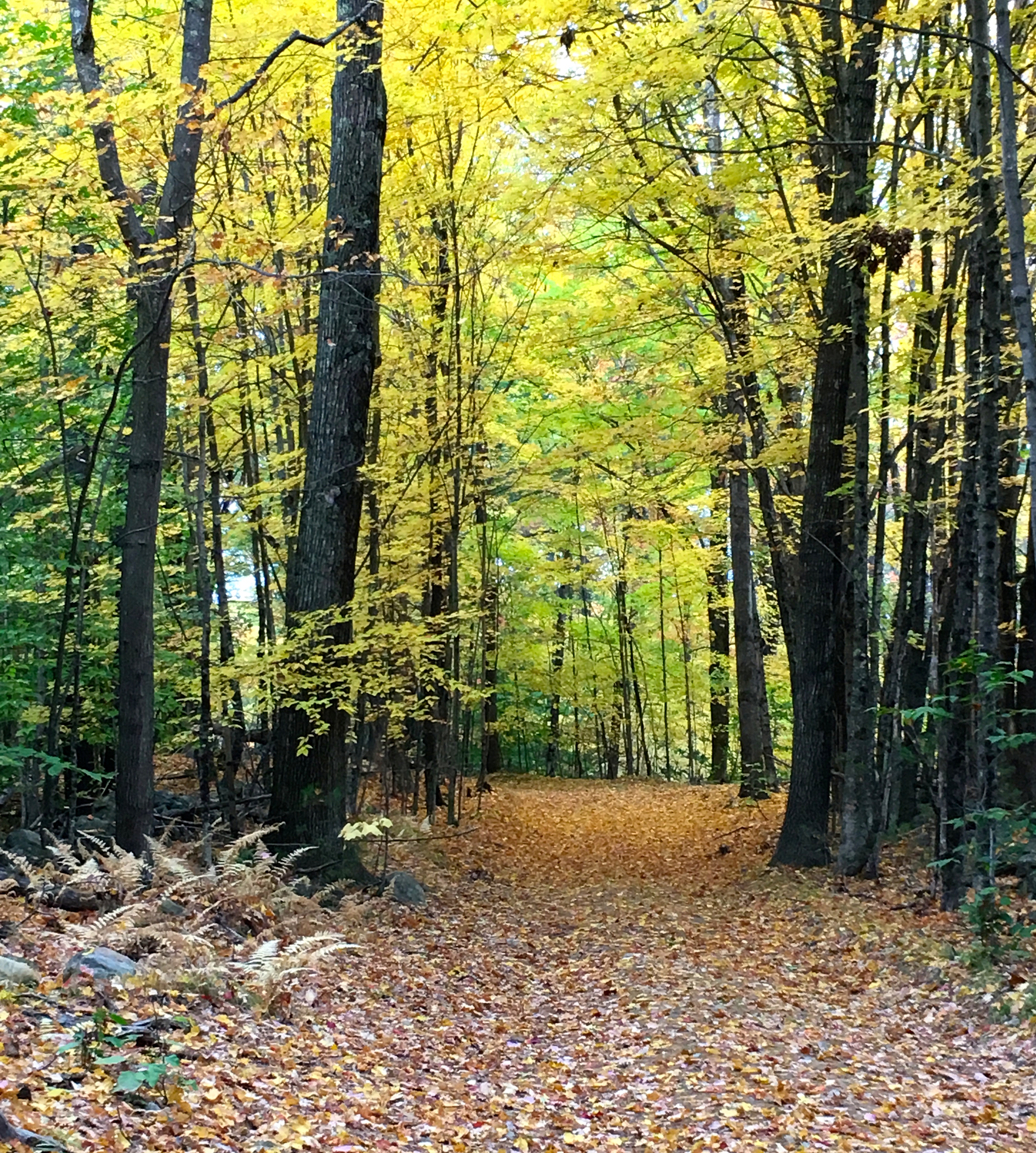
My backyard is riotously colorful. Catching glimpses of the trees along the brook through the windows as I walk around the house makes me happy. I can’t quite believe how glorious it is.

How is something that happens ever year able to be astonishing, again and again?

Some years there are predictions of a dull foliage season — this year the drought, other years too much rain — but it never seems to happen, a season that disappoints. Every year, over and over, I’m surprised again at how wild and vivid fall foliage is in New Hampshire.

And I’m not alone. My friends and neighbors are all agog too. Hillsides go from green to orange and individual red maples are unlike anything else in nature. You see zinnias and geraniums that shade of crimson wine, but not a whole tree, a tree that reaches 70 feet into dead blue sky.

So here I am again, interrupting conversations in the car, or out walking, to exclaim at another patch of color. On Saturday John and I talked about a specific tree on Rte. 4 headed in to Concord that we notice, now look for, every year. I know which swampy spot to watch for the first sign of color, the progression from red to orange to yellow across my neighbor. Familiar yet magnificent. Such a grand trick.

I take a lot of photos so I can remind myself of this beauty. And what a relief during this season of bitter divisiveness — trees of glory and splendor.

This slideshow requires JavaScript.

Yom Kippur Afternoon

img_6146

For five years — 2010 to 2014 — I did a blog post on or about Yom Kippur. I missed last year, I missed all of the High Holy Days last year. On Rosh Hashanah I was in Massachusetts with Chris, in her last days, and didn’t even consider leaving to go services in NH. Yom Kippur was less than a week after Chris died and I wasn’t yet able to face so many people I know asking how I was. Would I lie and say fine, or be honest and tell them my sister had just died and it had been a long, difficult summer, helping to take care of her and watching as another loved one disappeared into the fog of cancer? Rather than answer that question, I stayed home.

Now I’m fasting and ruminating, my usual Yom Kippur afternoon. Last week at Rosh Hashanah services I felt Eric sitting by my side. I kept seeing the sports jacket he always wore to the Temple, because he would ask what he should wear and I’d suggest the brown jacket with black and tan threads woven into a tiny check design. My favorite. When I got home I took out the jacket — one on the few pieces of Eric’s clothing I’ve saved — and hung it in my study. I can see it now, facing me as I sit at my desk.

Since attending Kol Nidre services last night, and through this morning’s service, I’ve been thinking about forgiveness, contrition, sin, wrongdoing, right action, justice and peace and regret, which is what we’re meant to consider on this solemn day.

The Rabbi’s sermon last night was about regret, and how people more often regret something they didn’t do, a risk they didn’t take, a goal they didn’t fully commit to, a hand they didn’t reach out, a letter they didn’t write. I remember how often Eric said, in the last weeks of his life, as he faced his death, “I have no regrets. But I’m having so much fun living, I’m not ready to be done.”

I’m certainly not ready to be done either, but I can’t say I have no regrets. Like most people, my greatest regrets are about things I didn’t do — a card I didn’t send, a story I haven’t dared to write, a call I didn’t make. I’ve also judged people according to my version of the narrative we share, not challenging myself to see the world from their eyes. It can be too easy for me to think I’m the one who has it right.

Yom Kippur is about being honest with ourselves, digging deep and admitting to the ways we’ve not been our best selves, then using that knowledge, not to be ashamed or give ourselves a hard time, but to do better.

I can do better. Eric’s jacket helps me see that.


Another Grace

img_6071-1

Last week my cousin Sally called.  I don’t see or hear from my cousins often so it was an unexpected connection.  Sally wants to give me the antique typewriter our grandfather used when he first started to work for golfing equipment companies in the 1930’s.  I like the idea of having something from my grandfather. He was a man I barely knew.

My father’s parents divorced before I was born and it was my grandmother who was in our lives.  The first time I met my grandfather was a spring afternoon when my sister and I answered a knock and opened our door to a man I didn’t know.

“You don’t know who I am, do you?” the man said.

My sister and I shook our heads.

“I’m your grandfather.”

I only remember seeing him one other time, when he came to Chris’s high school graduation.  While he was at our house he came out to the garage to inspect how well I was preparing our sailboat for a summer of racing.  He ran his fingers along the sanded bottom, making sure it was smooth.  He nodded.

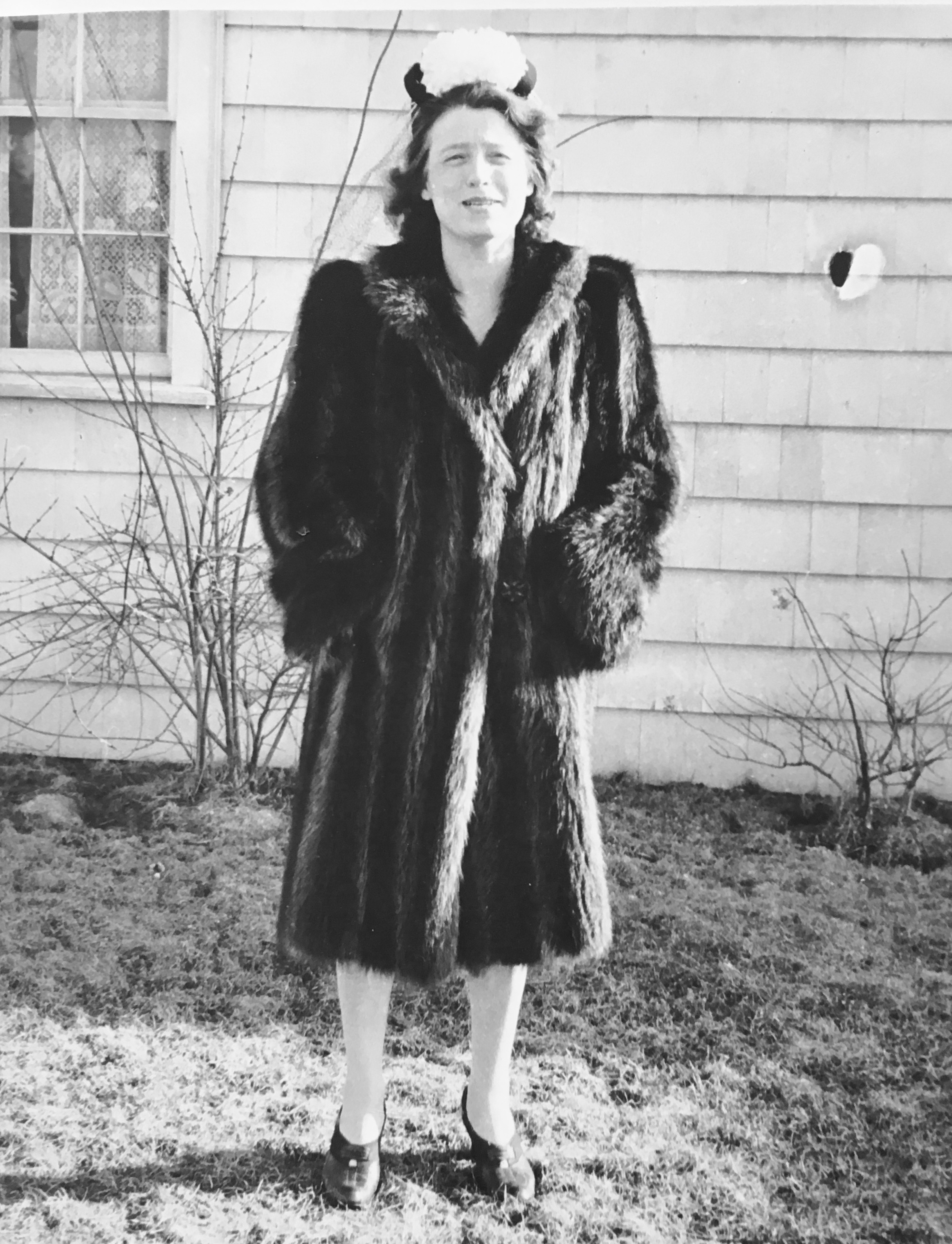
I asked Sally to tell me more about our grandfather, which led to stories about our grandmother.  She was a tough, independent, divorced woman which was a step outside the norm at the time. I don’t remember many hugs or sitting in her lap, but she endlessly knit hats and mittens for me and my sisters and our children once we had them. She knit for church fairs.  She made her own yogurt, gardened until she was in her 90’s, mocked the creaky walk of all the old people in a rehab facility where she spent time after an accident at 97 (she was probably the oldest person at the rehab and the accident wasn’t her fault), and lived to 102.  Visiting her in the hospital towards the end of her life, she complained that she couldn’t get a needle and thread.  “What good am I here?  I can’t even sew while I lie in this bed.”

In the 1950’s my grandmother was diagnosed with uterine cancer.  She was treated with cobalt which was sewn into her abdomen and left there to irradiate the cancer cells.  Later the cobalt was removed and Sally remembers being with her mother when they drove my grandmother home up after the surgery.

“I need an apple,” my grandmother said when she got in the car, wearing a wool coat she’d sewn herself.  They stopped at a local store and my grandmother went in and bought two apples.  When she got to her house she went straight to the kitchen, and without taking off her coat, took out the bottom of a pressure cooker, poured in oil and popcorn and turned on the burner.  When the corn was popped, she sat down and ate the apple and the popcorn.

At the time, doctors told my parents that my grandmother probably wouldn’t live another five years.  She lived another 50.

Her name was Grace.

img_6070-1

Floating

img_6062-1

Now that it’s wet suit weather again, David and I spend a few minutes floating when we go to the pond to swim.  I’ve never been a good floater, my hips and feet sinking any time I’d try to lie back on top of the water.  In swimming lessons as a kid, once the teacher stopped holding up my middle from underneath I’d go down.  Trying again when I got older didn’t make any difference.

Except in a wet suit in the ocean, where the extra floatation and the salt keep me on the surface, face to the sky, arms and legs spread, slowly lifting and falling with waves. The ease of floating is part of what makes me love swimming in the ocean so much.

But really, I love any outdoor swimming, and somehow just recently David and I have discovered we can float in the pond too, as long as we’re wearing wet suits, which we are now that the water is cooling.  Could we always float this way?  We’re not sure.  We were both so sad-skinny when we first met and started swimming together in Long Pond, a small, quiet pond close to our house.  We probably would have sunk then if we’d tried, even in wet suits.

Now we both have more floatation around our middles and we’re coming out of a summer that’s left us relaxed enough to want to be home, to not be rushing off somewhere all the time, to take a few moments to stop, on our backs, in the middle of the pond, and float. Today the sky was cloudless.  Yesterday there were light cirrus clouds.  With my ears in a swim cap, lapped by water, I don’t hear much.  My heart beats, I hover, I look up.

In describing our personalities Eric used to say he was a floater and I was a swimmer. He could move from task to task without a clear sense of where he’d end up.  Not me.  I organized tasks in a sequence so I got things done.  He did things.

David’s a swimmer like me, and I’m still getting focused on getting things done a good part of every day, but I’m also floating.  At least for a few minutes.


A Cairn for Chris


img_6040

My sister Chris died one year ago yesterday. A year seems like an impossibly long time for her to have been gone, and also impossibly short.  That’s the thing about death and the physical absence of the person — it can feel unreal, and so time gets distorted. Chris had been part of my entire life.  She was two years older than me, so she was here when I was born and somewhere in my sense of the world she is always here.

Except now she’s not.  Of course her absence feels much more acute for her husband and her boys — a life partner and a mother are gone, and I know how completely disorienting the loss of a spouse is.  The built-in companion on evenings at home, the warmth next to you in bed, the other parent to sort out worries about the kids — all gone. How to even make that work?

It was a great struggle for me and there are enough people in my life now who are living the same struggle that I know my experience wasn’t uncommon.  Others at the time who reached out to me, who’d lost a partner, confirmed it then.  “It’s like an out-of-body experience, isn’t it,” a colleague said to me at work one day.  His wife had died the year before.

It’s been ten years since Eric died and I’ve long since come back into my body.  But I remember being out of it, I remember being manic and obsessed with writing The Truth About Death, I remember drinking a lot and eating hardly at all, working out whenever I could and talking, talking, talking, as I tried to make sense of what my life was going to be. Losing a sister has been much less brutal — sad and disorienting in its own way, but not cry-myself-to-sleep-alone-in-bed sad.

There was a family trip to Chris’s memorial bench in Scituate, MA yesterday that I couldn’t be at, but I’m building a cairn for her in the woods, on the rock where I’ve built cairns for Eric.

My younger sister Meg texted me first thing yesterday and suggested we talk on the phone and read each other our letters — Chris wrote letters to her husband, to each of her boys, to each of us sisters and to our parents.  A common theme in her letters, and which she talked about at the end of her life, is her belief that she’ll always be with us.

“Know that I am not gone, only my physical presence is missing.  In the space I left is my love, energy, memories and shared history.  Things I would not trade for anything.  Enrich that space with new people, events and shared history.  I will be close by your side,” I read to Meg and she read similar words to me.  We cried.  We miss Chris, but she was right. Yesterday she was with us in her words and in the memories of her that Meg and I shared. She was with us as we talked about our commitment to being in the moment as much as we can, a lesson Chris worked hard to keep at the center of her own journey.

I just put another rock on her cairn, topped with a heart stone from the beach in Humarock, a favorite place for Chris.