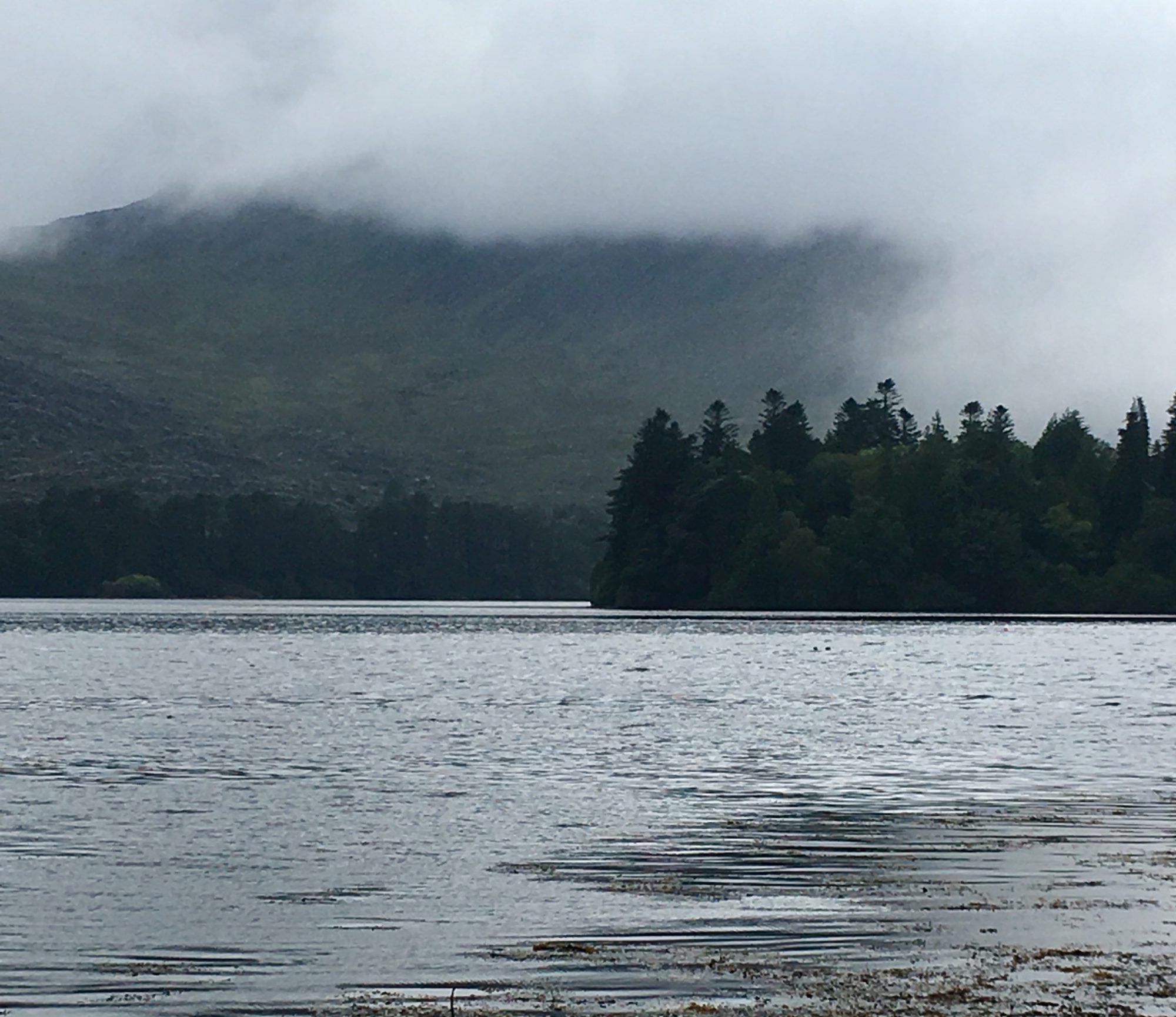
Wake in my own bed
Dawn blanketing home body
Light at the window.
Haiku XIX
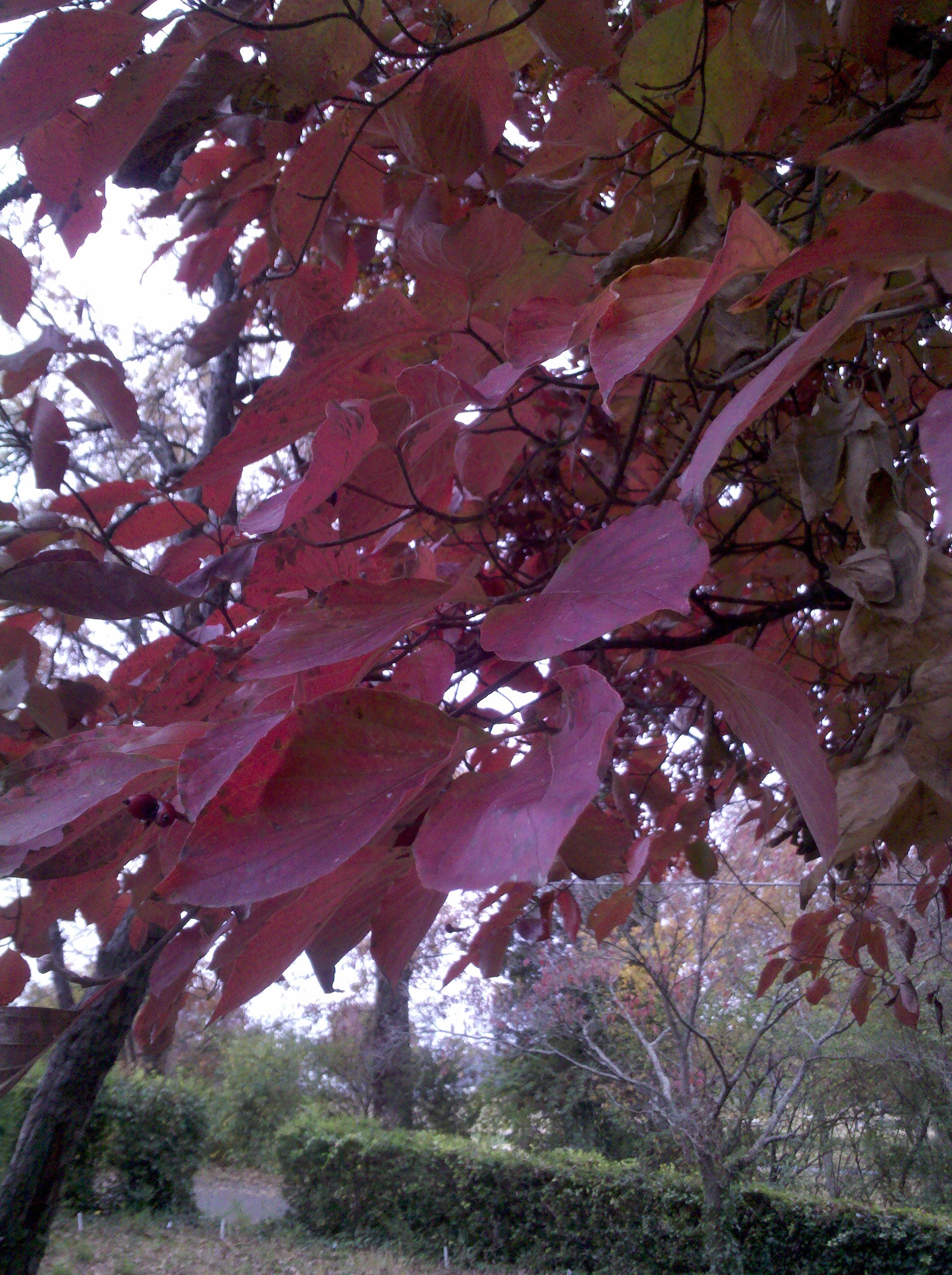
The trees of Knoxville
Flaming rich colors of fall
North wind still to come.
Haiku XVIII

Touring Directors
Network of coalitions
One and all are one.
Charleston Flowers
It’s November. It’s getting dark. Back home there are a few sprawling Johnny Jump-Ups still peeking their tiny yellow and violet faces from the garden bed, and the sunburst of a couple Black-eyed Susans still holding on. But here there are flowers spilling over wrought iron fences, climbing trellises, clumping along the edge of the sidewalk and covering bushes in yard after yard. Thinking about the long, flowerless season I’m heading into at home, I’m charmed. Yes, this is a beautiful city.
Charleston Haiku
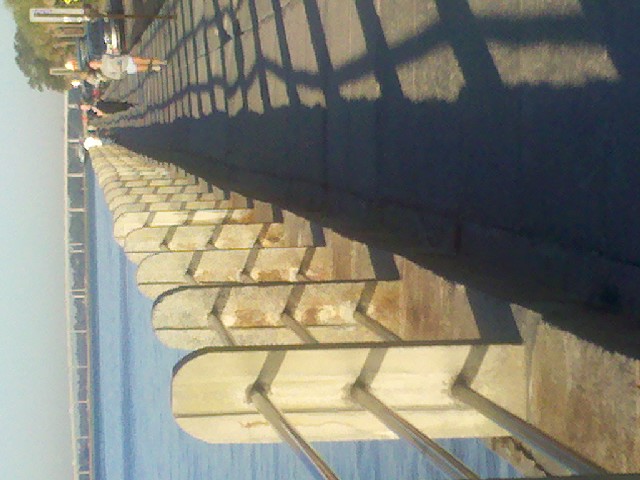
Walking waterfront
City bounded by rivers
Open to ocean.
Haiku XVII

What we see above
Becomes below as we rise
On powerful wings.
Retarded
It’s currently considered rude to use the term retarded when referring to people who are developmentally disabled, even though a few decades ago that was the only term used. The shift in language is important, because there is great stigma attached to the word, and it inappropriately lumps together a host of developmental disabilities with a wide range of effects. But there is a state the word conveys perfectly, which Adrienne uncovered in the months after Eric died.
“Hey, we’re retarded,” Adrienne said one day when we were sitting on the porch, unable to read, unable to garden, unable to do anything besides sit there and stare and talk now and then. According to the American Heritage Dictionary, retard means “1. A slowing down or hindering of progress.” Bingo. No progress other than breathing, a slow down in every function of our daily lives, like getting out of bed in the morning, cooking meals, doing dishes, making phone calls, getting back into bed at night. We were good at grieving and spending time together and not much else
Unfortunately, the definition of retarded still means “affected with mental retardation,” and the slang definition for retard is “a disparaging term for a mentally retarded person.” But retarded can also mean “relatively slow in mental, emotional or physical development.” Take out the “physical” and “development” and there it is. We were definitely relatively slow in our mental functioning and our emotional state was stuck in a permanent wail. We were bogged down with grief, slogging through each day, and unable to process even basic bodily signals like hunger and the need to sleep. Retarded.
What brings this up now? Although my sister’s diagnosis of a recurrence of cancer is nothing like Eric’s, and she is already on a treatment that has a good chance of working, just hearing the news of cancer returned in the body of someone I love set off the grief retardation tremors.
“I was retarded yesterday afternoon,” Adrienne told me, a couple days after we got the news. “I just sat on the couch and stared into space.”
And I have been retarded too. My reading dropped off, my concentration was shaky, and I felt this extra weight across my shoulders, making my already tight neck muscles like stretched strings. It’s eased up, which is how I can now see that it happened.
Retarded. I’m making a case to reframe the word in a way that isn’t disparaging to a diverse group of individuals, but rather affirming of a natural reaction to the tough side of life.
New Garden Recipe Haiku
Mow low, spread paper
cover with old hay, let sit
the winter, plant seeds.
Haiku XVI

Waiting room patience
Clock hand sweeping in circles
Hallway squares in line.
Syllables of Time
Two weeks ago David and I went to the opening of a show of Catherine Tuttle’s paintings at McGowan’s Art Gallery. The paintings were vividly interpreted landscapes of the White Mountains, seen from a hiker’s perspective. A few of our hiking friends were also at the opening, and we had fun showing each other which paintings we’d love to own, to have a favorite view at home with us all the time. David’s friend Bob, another painter, was also at the opening, and the three of us were talking about establishing a practice of art.
“I’m painting every day,” Bob said.
“I’ve started writing a haiku every day,” I said. “It’s a way to have at least 17 syllables of time a day that isn’t about working.”
“Why did you say syllables of time?” Bob asked. “Why would you say time?”
“Because that’s how I think of it,” I answered. Bob talked about a recent book by a local author, Turn and Jump: How Time and Place Fell Apart. Bob had read the book and its essays on how time and place were closely connected in the past, when small towns set their own pace by the rising and falling of the sun, before the frenetic calculation of every minute of most days by schedules and appointments and things that have to be done right now. I’ve been exploring the theme of time in my poetry for decades, and have an entire manuscript of poems that is mostly a mediation on time, physics, and the immutable laws of the physical world that underlie the mystery of consciousness. Where does time exist? It can’t be measured, but we all experience its passing. It has no physical dimension, but controls how we move through our day every day. Just the word move implies time, as any change in physical location, awareness, feeling, consciousness, anything, requires the passage of time to be perceived. Something is one way or in one place, and then it’s not. That takes time.
“I think part of being retired,” Bob said, and he is, “is reconnecting time and place.” I need to read that book. Today’s Haiku:
Dark morning, dark day
Rain stripping the last brown oaks
Syllables of time.
 Grace Mattern