Home

Lee Krasner, The Seasons, 1957
*Portion of The Seasons, Lee Krasner, 1957, Whitney Museum of American Art

A steady clack comes out of the bedroom where the plastic pull knob on the cord for the blinds taps the sill, pulsing in the wind through the window opened to get air into the house.

Sunshine glints off the screens in the four large windows in my study, screens that will come out in the next few weeks.

There was a frost while we were away, nasturtiums drooping on themselves, the basil brown and wilted.  Was it last night?

Cows still graze the pasture across the street, framed by a branch of the old maple sprouting yellow, orange and red.

When I got home this morning I opened my journal to write about our last few days — all the places and family we’ve visited, the historic First Parish in Concord (this is the congregation Emerson and the Alcotts were part of, where Thoreau’s memorial was held) to meet with the minister who’ll be involved in the memorial service for Chris, the astonishing America Is Hard To Find exhibit at the equally astonishing new building now housing the Whitney Museum, watching Ava clap her gold moccasins together and laugh, fitting the pieces of a table-top-size Spiderman together with Emilio, last night in a Rodeway Inn off the traffic circle in Greenfield, MA, a former Howard Johnson’s with a glass shelf of spectacular crystal rocks behind the check-in desk that the clerk said no one knows the history of, this morning’s drive in pre-dawn darkness into the hills to the west and then east again into autumn smoke rising from rivers and dew — and instead I drew a map, with the buildings and skylines and houses we’ve visited, lines with arrows tracing our route, and then connecting the words when I began to write with language.

Is art hard to find or hard to find the time for?

For the first time since the beginning of July, I’m home with no immediate plans to be anywhere else overnight.  What will I find the time for?

* From Whitney exhibit description of the painting above:  This monumental painting offered Krasner an outlet during a time of deep personal sorrow.  The year before, her husband, fellow artist Jackson Pollock, had died in a car accident.  In the wake of this sudden loss, Krasner remarked about The Seasons, “the question came up whether one would continue painting at all, and I guess this was my answer.”

Ferocious Art

8/23/12 -- Cambridge, Massachusetts Popular sidewalk artist and Boston University alumni Sidewalk Sam creating his art in Harvard Square, Cambridge.. Photo by Melody Komyerov for Boston University Photography
8/23/12 — Cambridge, Massachusetts
Popular sidewalk artist and Boston University alumni Sidewalk Sam creating his art in Harvard Square, Cambridge..
Photo by Melody Komyerov for Boston University Photography

“Everything is one pen stroke away from being ugly, or being that which completes the universe.” — Sidewalk Sam

I first met Sidewalk Sam four years ago.  He was one of David’s many friends from an earlier period in his life, most of whom I’d met by then.  Sidewalk and his wife Tina were the last of that set I met, and what a treat it was.

By then Sidewalk Sam, or Bob Guillemin, had been living in a wheelchair for almost 20 years, having been paralyzed from the chest down after falling from his roof.  Being disabled hadn’t at all tempered Bob’s ferocious belief in art as a revolutionary act.  He was so articlate in telling his story and describing his path from a traditional gallery and museum fine art track into creating “art at the feet of the people,” literally on sidewalks, he made me want to interview him and write an article.  For decades in Boston, Sidewalk Sam organized chalk-drawing festivals and public art events that gave everyone a chance to help create large mosaics and murals on the sidewalks and plazas of the city.  I envisioned a piece in The Sun, because Sidewalk Sam, with his story and passion for accessible and experiential art, was exactly the kind of unique individual The Sun portrays.

Now I’m sorry I never got to that writing intention.  Sidewalk Sam died January 26 and his life was celebrated on Sunday during a memorial service.  The sun was high and hot and the yard of Sidewalk Sam’s home with Tina was in bloom, a thick vine of wisteria scenting the air and hanging a lavendar curtain over a corner of a porch.  As I sat on a folding chair in the grass, listening to stories of Bob’s exploits and enthusiams, I saw that the wisteria was also mingled with the leaves at the bottom of a large maple, and burst into a grand spray near the crown of the tree.

Sidewalk would have marveled at the beauty of it, I was sure, even though I didn’t know him well.  But listening to his family and friends speak, I kept hearing about a joyful embrace of the artist in each of us and an unshakable belief in the power of creation in the face of a difficult world.  One of Sidewalk Sam’s best known exhibits was Flush with the Walls, a protest exhibition he staged, along with five other artists, in a men’s restroom at the Boston Museum of Fine Art in June, 1971.  The exhibit drew a good crowd, and over the years Sidewalk drew more and more people to him.

I looked down at the program and Sidewalk Sam’s quote about that one pen stroke.  I vowed to carry away his message — dare to create, be ready to fail and be ready to succeed, witness the beauty in front of you, love your life, and make that next stroke of your pen.  

Attenzione! Silenzio!

IMG_3046

The Vatican Museum was mobbed, and I don’t mean just crowded, I mean Extreme Tourism in the number of other human beings moving through room after room of frescoed walls and ceilings and gilded moldings and marbled walls.  As David and I by-passed the thousands (it seemed like that many) of people waiting in line to get in to the museum, having bought tickets ahead of time online (a must for many of the museums we visited in Europe), we were thankful we at least didn’t have to wait.

But being inside, with all those thousands who had already gotten through the line, felt suffocating.  The crowd was so thick it was almost impossible to do anything but move from room to room with the mass, streaming along and then backing up and getting stuck at narrow doorways.  The museum map was the worst I’ve ever seen, so it was difficult to know where you were or how you might exit the mess.

IMG_3053

But we wanted to see the Sistene Chapel and the rooms of Raphael frescoes, so we kept moving.  The art was extraordinary, and we especially enjoyed the room of geography, mapping ancient Rome, as we could see the cities we’d visited in Provence.  And the Raphaels and Sistine Chapel were as terrific as we expected.

Except, because the Sistine Chapel is supposedly a sacred space, as determined by the Catholic Church, every five minutes or so, as the hum of thousands of people crammed into a small space would start to rise, a stern male voice would announce, “Attenzione!  Silenzio!”

Really?  The Catholic Church is letting this many people into a “sacred space,” and then expecting them not to be human?  To be totally silent?  For all the reasons I’m sure you can imagine yourself, I found it difficult to be told to be silent by the Vatican, after touring the on some level obscene riches of the Vatican.  Who was silenced to build the wealth of this church? How can they honestly reconcile inviting this many people into a chapel and then expect them not to make any noise?  How much money is the church making off this museum?

IMG_3081

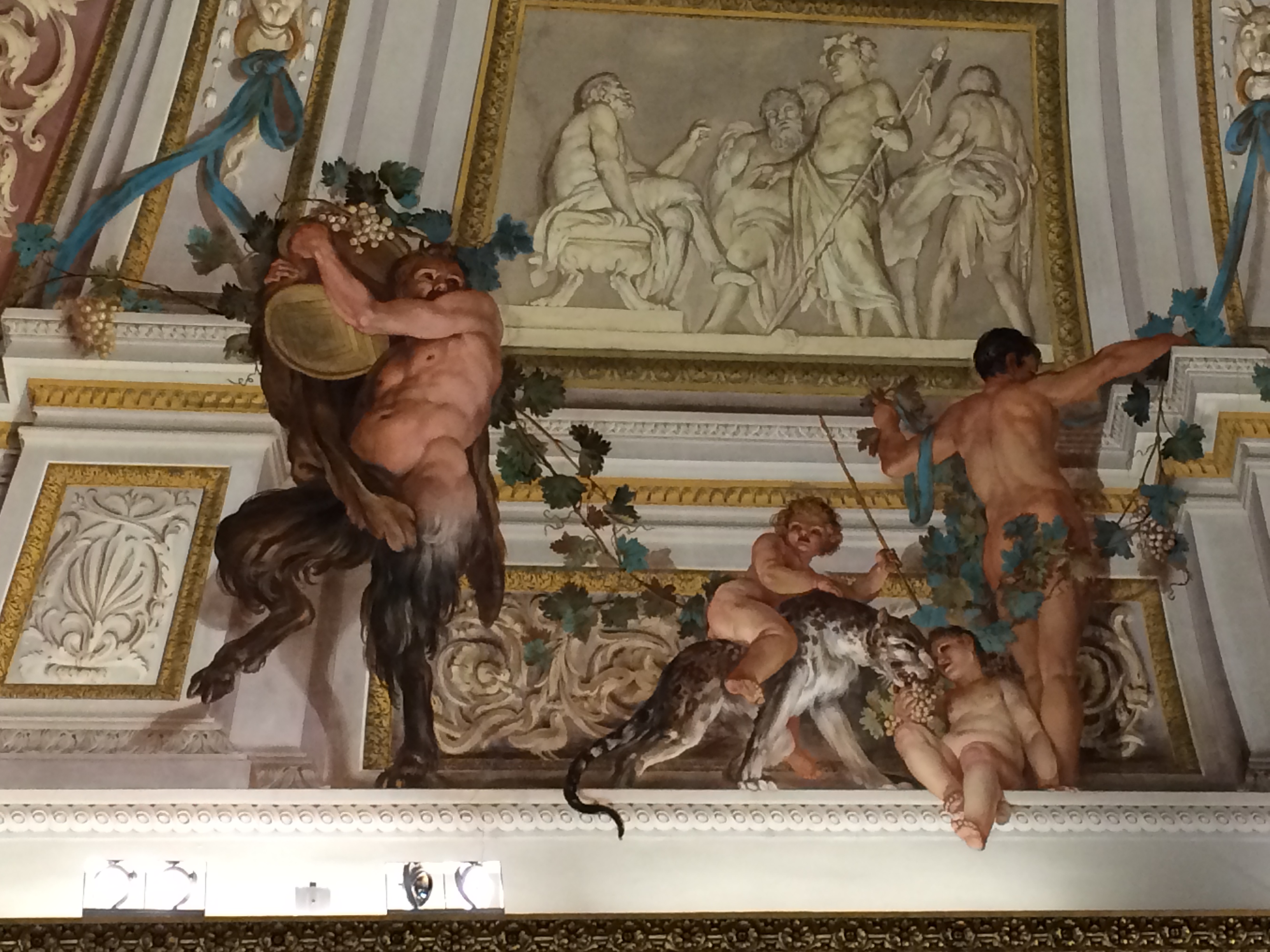
On a positive note, the Borghese Galleria was outstanding.  Again, it’s a museum showcasing the riches of the privileged, in this case the Borghese family, which extended its wealth in part because a member of the family became a Pope.  The smaller scope of the museum made it easier to take in, and aren’t all museums, to some degree, showcasing what the rich have collected?  Our advance purchase tickets gave us two hours, strictly timed, in the museum, so there were never too many people.  The Bernini sculptures were astounding, and the frescoes and decorated rooms and Caravaggio paintings were well worth a visit.

IMG_3088

And afterwards you can walk in the Borghese Gardens, a wonderful green space in Rome. Tomorrow I’ll be walking in my own garden, not an unwelcome thought.

Art is Therapy II

300px-Jan_Vermeer_van_Delft_025

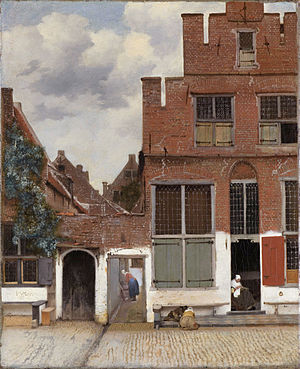
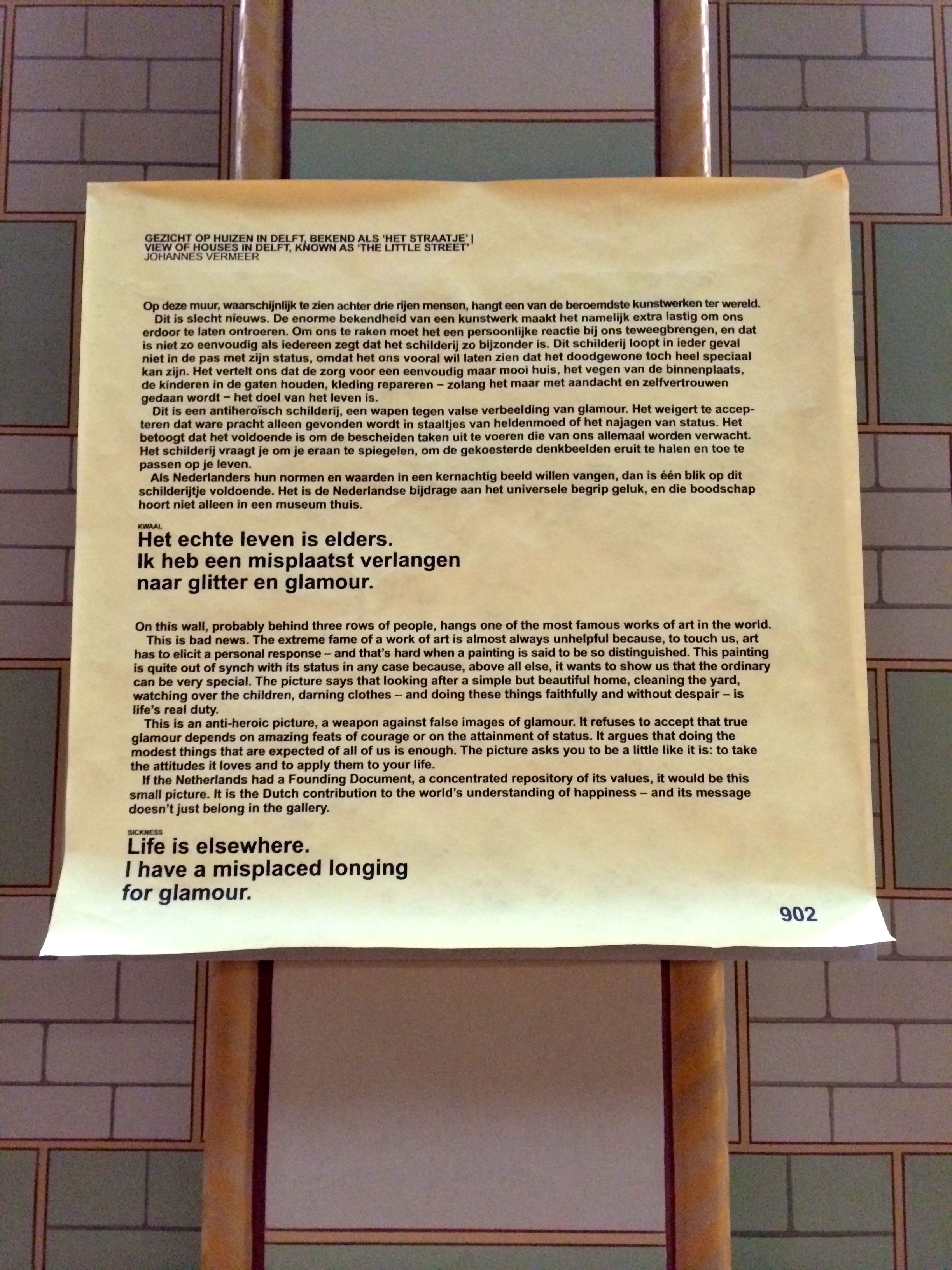
Below is what Alain de Botton and John Armstrong had to say, or thought we might learn, from Johannes Vermeer’s painting, The Little Street (1657-16580).  The last paragraph, about the values of the Netherlands, is very true to the modest accommodations to foster happiness that we experienced from the friendly and reasonable people we met in Amsterdam.

I had a small plastic bottle of water in my purse when David and I went in to the Van Gogh museum.  As I went through the security check, the woman checking bags saw my bottle of water.  “You can’t drink that in the museum,” she said.  “Okay,” I replied, happy that she did’t make me get rid of it.  “Well,” she went on, “you can drink it on the stairways, just don’t drink it near the paintings.”  Then when David and I got on the tram to catch our train at the Central Station on Sunday morning, the man collecting fares waved David’s money away.  “It’s only two stops,” he said.

On this wall, probably behind three rows of people, hangs one of the most famous works of art in the world.

This is bad news. The extreme frame of a work of art is almost always unhelpful because, to touch us, art has to elicit a personal response – and that’s hard when a painting is said to be so distinguished. This painting is quite out of synch with its status in any case because, above all else, it wants to show us that the ordinary can be very special. The picture says that looking after a simple but beautiful home, cleaning the yard, watching over the children, darning clothes – and doing these things faithfully and without despair – is life’s real duty.

This is an anti-heroic picture, a weapon against false images of glamour. It refuses to accept that true glamour depends on amazing feats of courage or on the attainment of status. It argues that doing the modest things that are expected of all of us is enough. The picture asks you to be a little like it is: to take the attitudes it loves and to apply them to your life.

If the Netherlands had a Founding Document, a concentrated repository of its values, it would be this small picture. It is the Dutch contribution to the world’s understanding of happiness – and its message doesn’t just belong in the gallery.


Art is Therapy

800px-Pieter_Jansz._Saenredam_-_Interior_of_the_Church_of_St_Odulphus,_Assendelft_-_WGA20619

David and I had tickets for the Rijksmuseum in Amsterdam, and every intention of spending Saturday afternoon exploring its significant collection, particularly of art from the Netherlands.  But it was an unpredictable day, and we ended up not getting to the museum until 4:30, just before it’s 5:00 closing time.  We quickly made our way upstairs so David could see Rembrandt’s The Night Watch.  As we went through the main gallery, I noticed posted signs on the walls.

IMG_2656The signs are part of an Art is Therapy exhibit at the museum.  From 25 April, British writers and philosophers Alain de Botton & John Armstrong will be showing in the Rijksmuseum what art can mean to visitors. And not so much from an (art-)historical point of view, but focusing rather on the therapeutic effect that art can have and the big questions in life that art can answer.

Here is what they had to say about the painting above, by Pieter Saenredam, Interior of the Church of St. Odulphus, Assendelft, painted in 1649.

The architects of the building depicted here, and the artist himself, were convinced about a challenging idea: if you want to get close to the important things, you will need a lot of calm, of whiteness, of emptiness, of peace. Serenity, concentration and order aren’t luxuries, they aren’t a superficial concern for a particular style of interior decoration; they are preconditions for a thoughtful, balanced life. The picture sends a slightly stern, but welcome message: you have to flight off distraction, it can ruin your life; you have to prioritize ruthlessly; entertainment is the enemy; simplify, get rid of what you don’t really need, don’t check your email all the time; focus is an achievement. Saenredam didn’t just paint a church, he painted an attitude to life.

A stern but welcome message indeed.


Put Amsterdam On Your List

IMG_2578

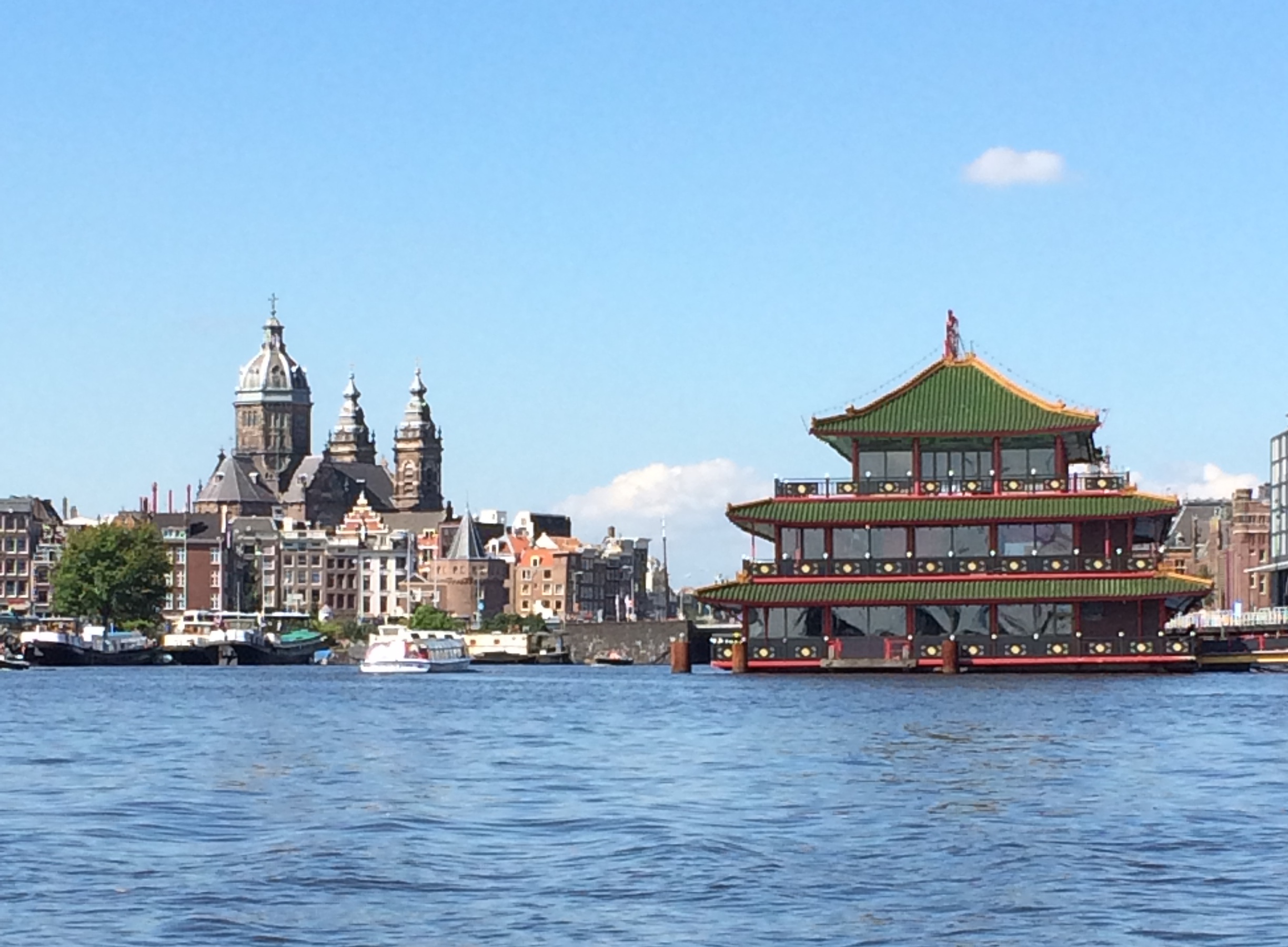
If you have a travel wish list, and Amsterdam isn’t on it, I’d suggest you add it.  At the top of the list.  With its canals and bridges and beautifully preserved if decidedly tilting houses and classic European architecture, it’s lovely.  Bells chime all day and night (in the Jordaan district, where I’m staying, anyway), the sidewalks and canal banks are full of cafes that are full of people eating and drinking, talking and smoking (whatever they want) and there is the excellent coffee and fresh, diverse and tasty food you’d expect of any city.

What’s so striking though, is the way the element of bikes, as a mode of transportation as common as walking and more common than cars, transforms the central city.  Here, on the narrow streets, there are three-way checks for oncoming traffic all the time — walkers check for cars and bikes, bikers check for walkers and cars, cars check for bikes and walkers.  The dance of transportation has the extra element of bikes, which completely changes the steps for everyone.  Not only does it give pedestrians more clout in the jostle for street space, it changes the sound — fewer motors, more talking.

Then there are the boats, which are in abundance also.  The hosts of our AirBnB flat have a small boat on the canal in front of the building, and took us for a ride on Wednesday afternoon, one of the first sunny days in what has been a cold and wet summer.  Everyone seemed to be out, and it was a treat to get introduced to Amsterdam by riding in a boat, getting dropped off at the other side of the city, then working our way back, via many wrong turns and at least one circular trek, to our place.

Today we visited the Anne Frank house which a friend told me was “the best museum in Europe.”  It is quite astonishing to stand in the rooms where 8 people lived in hiding at the back of a canal house for two years.  The world knows Anne Frank through her diary. At the Anne Frank house you get to know her as one of the threads in a web of courage and horror and fierce kindness on the part of the Dutch resisters who worked every day to keep the hiding Jews safe.

Then on to the Van Gogh Museum, another outstanding visit.  The curation of Van Gogh’s paintings in a simple structure and design make the museum accessible, both as a way to understand Van Gogh’s development as a painter, and as a museum that doesn’t leave you on art overload.

And to get to all of these places we walk along canals and cross bridges and more bridges and more canals.  It’s a city of waterfront galore.

IMG_2576

And more.

IMG_2587

The Refusal of Time

images

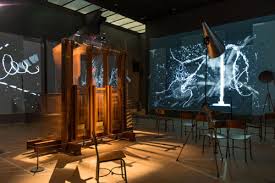
The Refusal of Time is a brilliant exhibit by South African artist William Kentridge.   Currently showing at the Institute of Contemporary Art in Boston (but only through Sunday so get there soon if you want to see it), the work uses drawings, collages, dance and theater moving across five-channels of video projected on large wall panels, music and spoken text, and a central “breathing machine” sculpture to explore time’s mysterious elements — how time shifts and moves, how we try to regulate time, how time is perceived, how the measurement of time has changed over human history, how we “refuse” time.

“Everybody knows that we are going to die,” writes Kentridge, “but the resistance to that pressure coming towards us is at the heart of the project. At the individual level, it was about resisting; not resisting mortality in the hope of trying to escape it, but trying to escape the pressure that it puts on us.”  And politically, “the refusal was a refusal of the European sense of order imposed by time zones; not only literally, but this refusal also referred metaphorically to other forms of control as well.”

Sound deep and interesting?  It is.  The 30 minute video and sound loop is mesmerizing and complex enough that I sat through much of it for a second time.  I wrote down words that were projected or announced that spoke to my own musings about time, which find their way into my writing over and over.

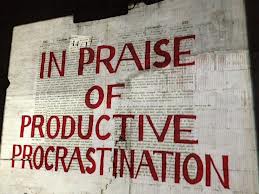
Some samples:  “In praise of bad clocks.”  “Full stop swallows the sentence.”  “Here I am, here I am, here I am.”   “The universal archive of images.”  “Poems I used to know.”  “Performances of transformation.”  “A suitcase of teeth and glass.”  The poetry of this astounding work is profound.

images (1)

Small Stone #29

IMG_2144

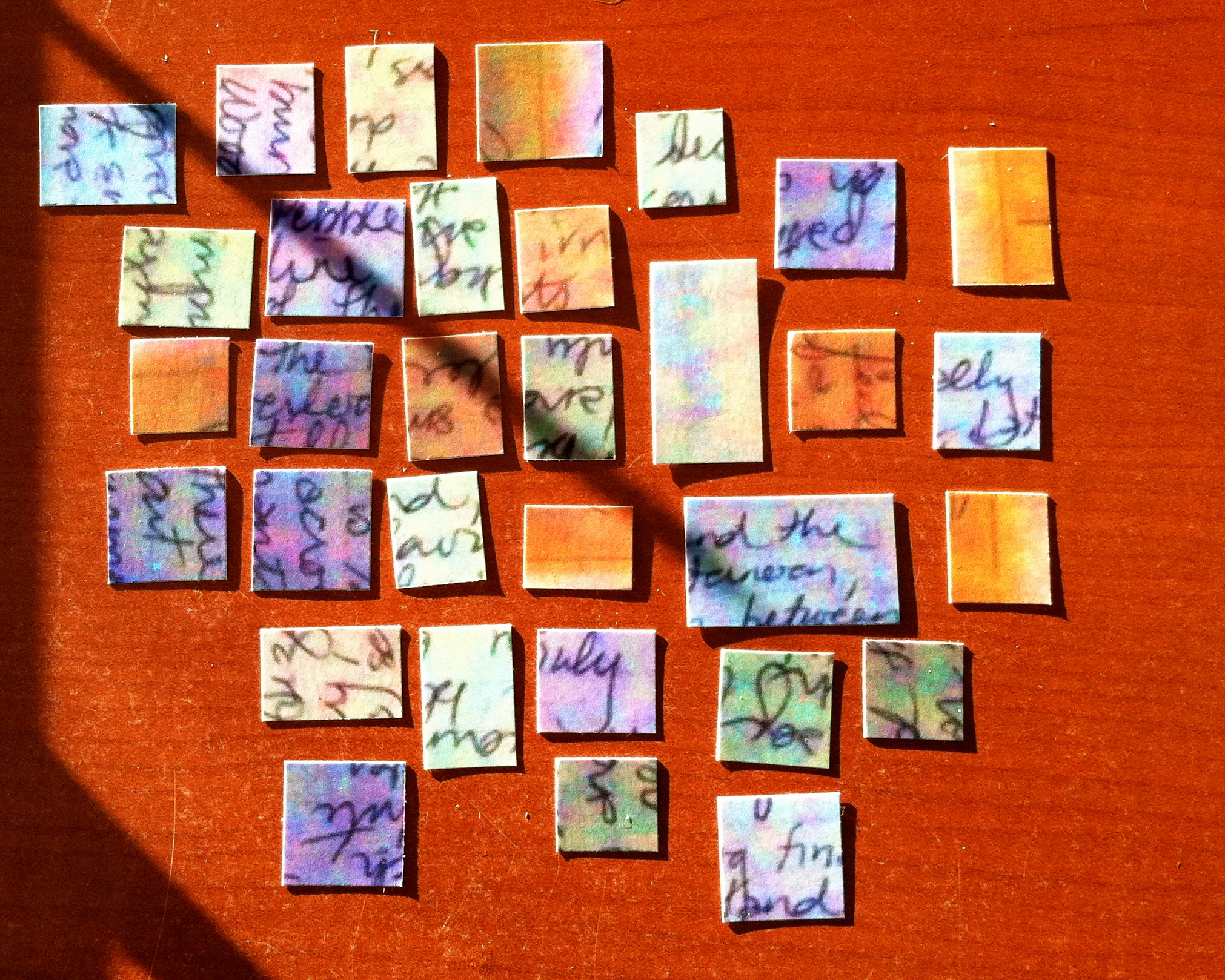
Sun sharpens my study, warming the room.  I’ve photographed a page from my Monhegan Island journal, digitally colored and printed the page, and cut it into small squares and rectangles of fragmented text.  This visual art project has been wearing a circular track in my mind for a couple of days and now is taking shape on my desk.  Is this preparation for my upcoming month at Vermont Studio Center where I’ll be mapping the island journal/memoir I started five years, trying to shape it into a book? At this moment, cutting colored text into boxes to arrange is what I need to do.  So I’m doing it.

Small Stone #22

IMG_2126

I walked through a room of music created by 70 Zebra Finches landing on a dozen electric guitars set upright, so when the finches land on the strings, which they do almost constantly, notes play.  Céleste Boursier-Mougenot created this sonic installation, from here to ear, currently at the Peabody Essex Museum.  It was a day awash in unbridled creativity, small stones and big rolling over and over in me and through me, settling in unexpected corners, waiting to pop up in my path again, undoubtedly in some poems.

Day 4: Create

IMG_1971

The morning comes up pink.  There’s going to be sun today and already the cast of the day has changed.  I anchor myself in what I see, the line of sky against the slopes of the fields to the east, the color behind the bare trees.  

David tells me I should engage my visual talents more.  My drawing has certainly improved over the last year, as I draw cows and horses and penguins for Emilio.  If I look at an object closely, I can draw a reasonable representation of it.  Collage work is completely engaging for me – someone else has already done the representational part of the work, I just need to arrange it in ways that remind me of arranging the language in a poem.  Two years ago, during one of our many visits to the Metropolitan Museum of Art, David and I walked through a small show of collage works, and there were two pieces by Anne Ryan, a writer, painter and printmaker who didn’t begin working in the medium of collage until the age of 58.  Before her death at 64, she created over 400 works.  She was inspired to take up collage work after attending an exhibition of Kurt Schwitters, a German poet and sculptor, as well as collagist.  “Since Anne Ryan was a poet, in Schwitters’s collages ‘she recognized the visual equivalent of her sonnets – discrete images packed together in an extremely compressed space.'”  

Why not me?  Why do I take out my box of cards and books with images I’ve saved for the possibility of collage, my papers and pens and colored pencils, for a day or two at a time, then pack it all up and put it back on the shelf?  I can be inspired too.

Permission to engage in visual expression is all mine.  I can create because I want to create, it doesn’t have to be useful.  My goodness, in what way is poetry useful?  In what way is any creative writing useful?  If I can tie working on something to an ambition to get it published, it might get me to the desk more often to work on it, but my focus, my stepping into the flow, is the same once I’m working on anything creative.  Without any realistic way to be ambitious about visual art, it gets pushed aside even more than writing.  So maybe I’ll start pushing my ambition aside and just create.  Drawing a cow for Emilio is enough because he wants to see the cow.  Moving a collection of images and ideas out of my head on to paper in the form of a collage or drawing, rather than a poem or essay or story, is a world I may let myself start stepping into more often.