Summer: There, Here, Gone

I’ve been an infrequent blogger this summer, mostly because for the second summer in a row I’ve largely let go of any writing habit. It started with the week in June with Emilio, playing like a six-year-old since I was with a six-year-old, which was enormous fun but left no room for writing. An editing job with a July 1 deadline also ate up most of my desk time, making other people’s writing work better, leaving little energy for pulling my memoir into a better shape.

Then it was vacation time with family, followed by a week at the Vermont College of Fine Arts Postgraduate Writers’ Conference, a week spent immersed in workshopping, generative writing, outstanding readings by the outstanding faculty and talks about the craft of writing. It was inspirational and gave me a clear bead on exactly what I need to do next to get my memoir in shape to get it out into the world. But there’s was no time to actually work on the memoir.

The week at home after the conference and before returning to New York for another week with Emilio was consumed with harvesting and processing the bounty from my garden (yes, an electric mesh fence really does work — at least so far — to keep the woodchucks from eating my vegetables and flowers before I can get to them). The time I did have for creative focus I found myself drawing, pulled into my right brain after a week of such intense language, left brain focus.

Today I fly back to New Hampshire and will have 24 hours at home before David and I leave for over two weeks in Ireland. It’s been a very fun week again with Emilio — playing miniature golf, seeing how many times in a row we can catch each other’s throws (55 is our record), going to parks and playing the game of Life. He and I can be silly, serious, focused, scattered, wild and quiet together. He’s sweet and intense, loving and competitive and fiercely athletic. I’ll miss being with him and Ava every day; the energy of small children is amazingly centering because there’s no time to be anywhere other in the moment you’re in with them.

An added bonus of the week: celebrating my birthday which included Ava painting her legs with the blue frosting on my ice cream cake. It was impressively messy and abandoned. Emilio continued his habit of taking whacky selfies while I’m driving.

Now I’m looking forward to a traveling adventure with David. It’s been a long time since we’ve spent a couple of weeks only with each other, exploring a new country. We’ll be walking the Beara Way, then traveling to Connemara and Donegal. From everything we’ve read and heard about Ireland, I expect we’ll be stunned by beauty, heartened by a friendly culture, and cheered by the camaraderie of pubs. I’m also going on a Twitter fast. Who knows, maybe I’ll even go a day or two without checking the news.

All of this activity has made the summer fly. But it’s not over yet and this next journey should be as rich as all the summer I’ve already lived. Want to get a sense of what it’s like to walk, drive, drink, tour, discover and relax in Ireland? I’ll be blogging while we travel, so follow along.
In It for the Moss

When I was first working on climbing the 48 peaks over 4,000 feet in New Hampshire’s White Mountains, I had many companions. Eric came on most of the hikes, sometimes Adrienne or Sam, and many different groups of friends. But as the hikes got longer and less rewarding (e.g. limited views at the end of a very long trek), Eric was the one who stayed with me.

Our hike to Owl’s Head, a remote peak with a steep scramble up a slide of rocks and no view at the top, 18 miles roundtrip with two tricky water crossings, ended with us walking for miles in the downpours from thunderstorms. By the time we got back to the rivers we’d used water shoes to cross on our way in, we walked through the water in our boots. They were already soaked.

The day we hiked to Mt. Isolation, a 13 mile trip that required a car drop at the end of our trail out, then hitchhiking to our starting point, was so sticky and buggy we kept stopping to puff a cloud of deet around us, hoping to keep the black flies and mosquitos away. The bonus of that hike was the isolation — we had the peak to ourselves.

Mt. Cabot is the northern most of the 4,000 footers, mostly viewless and tricky to climb because of a private property closure on the trail that has the shortest route. Eric and I climbed it on a snowy day in November of 2002, and that was the day Eric first noticed a change in his eye sight. When he looked at his pole he saw a crook that wasn’t there. It was two weeks later that we learned he had a cancerous tumor in his left eye.

Eric was still with me when I completed my list in October of 2003. Then he finished his list on Mt. Madison in March 2005. Our last hike together, in March of 2006, he complained about the pain in his back when he tried to run down Mt. Israel, a small mountain with an excellent view. Two months later he was dead, his liver and bones overrun by cells from that original tumor.

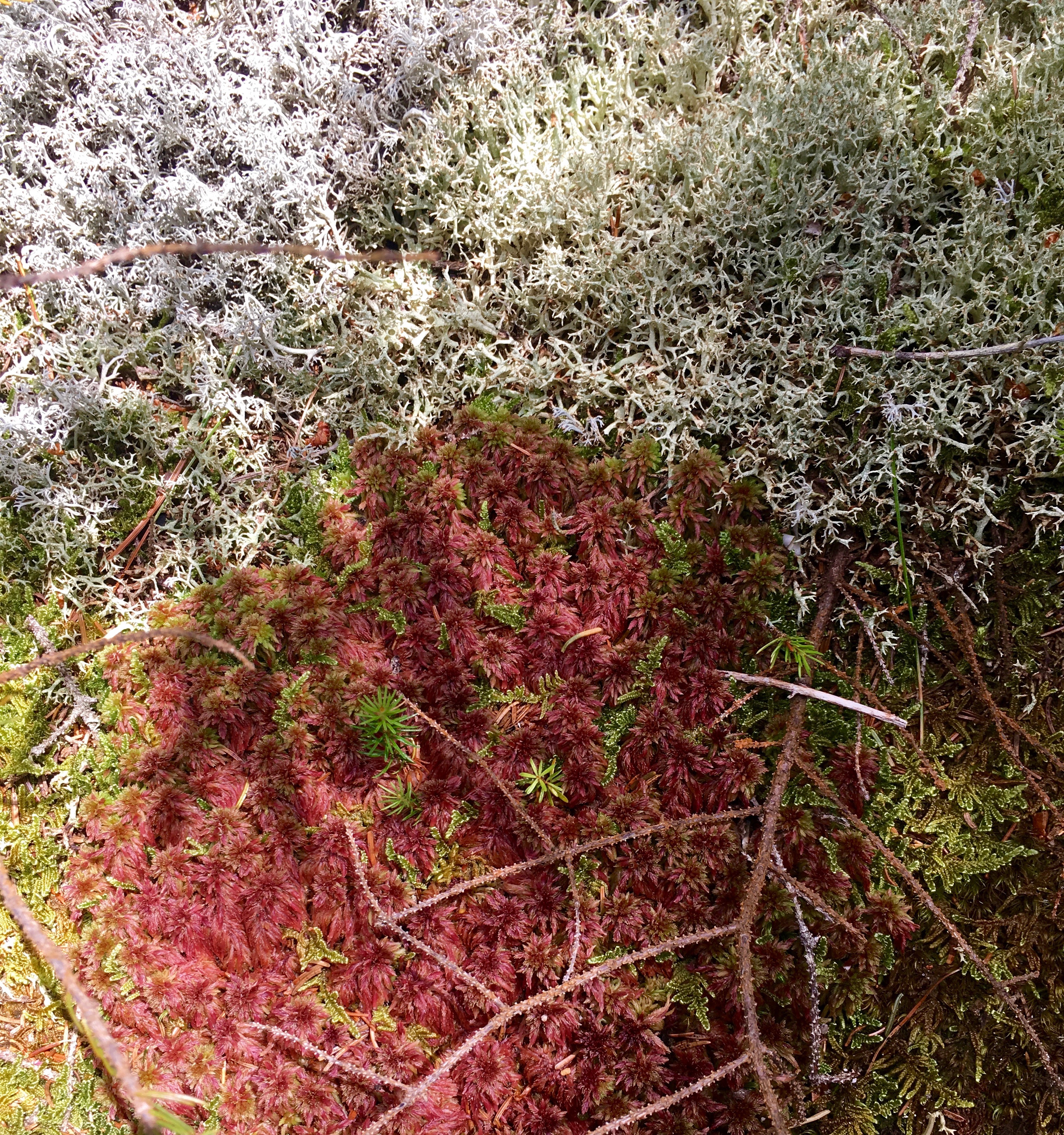
I thought about all of this yesterday as I hiked up to Jennings Peak with David and our friend Anne. The view was excellent, but much of what recommends the hike is the ridge leading to the peak, which is covered with beautiful moss. It’s not a trail to a 4,000 footer, but it was one of the first hikes Eric and I did together, and he was enchanted. Over the next several years, as Eric and I talked to friends and family about my peak bagging quest, he was often asked about his reason for doing all the hikes with me. “I’m in it for the moss,” he’d say, remembering the hike to Jennings Peak, and all the other beautiful mosses we saw over the years.

Yesterday I was in it for the exercise, the companionship with David and Anne, the challenge, the view, the chance to be outdoors most of the day, the magical ridge of moss, and the memories of Eric.

Silver Water

FullSizeRender (4)

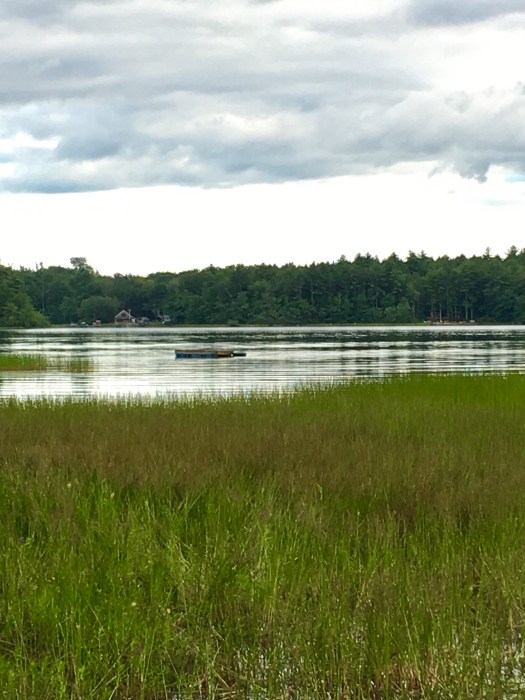
Though David and I have been renting a camp on Jenness Pond, a few miles from our house, for over a week now, we’ve only just started staying here at night. There’s been a wonderful assortment of people filling the camp — family, friends, and friends of family, including our children and grandchildren and our children’s friends and their children, lots of little ones from age eight to two. There’s nothing like the noise of children playing in water. There’s nothing like playing in the water with children, no matter what age.

With fewer visitors coming through the camp this week, last night we blew up the air mattress to sleep on the screen porch for the first time, something I’ve been thinking about since we did it last summer. Falling asleep in the night air is such a treat, and not having to set up, then crawl in and out of, a tent to get that sky-just-past-the-mesh feeling, is a highlight of this camp.

Except last night was the coldest yet this summer. Rain all day, wind, and temperatures in the low 50’s, by dinner time we lit a fire, the first time in this house, probably the first time in July. After an evening warming up by the fireplace in the living room, we went out to the porch to go to bed. Layered between two comforters beneath and three above, David in a wool hat and down jacket and me in a hooded sweatshirt, we fell asleep with a cold summer night all over us. What a treat.

This morning David and I sat on the porch couch, a comforter over our laps as we read. A pair of kingfishers spent the morning chitting from the trees along the shore, flying to the post at the end of the dock and the railings of the raft ladder, scanning the water for a meal. At one point a guttural squawk made us both look up. A heron was flying directly towards the porch, then turned and moved along the grasses on the shore.

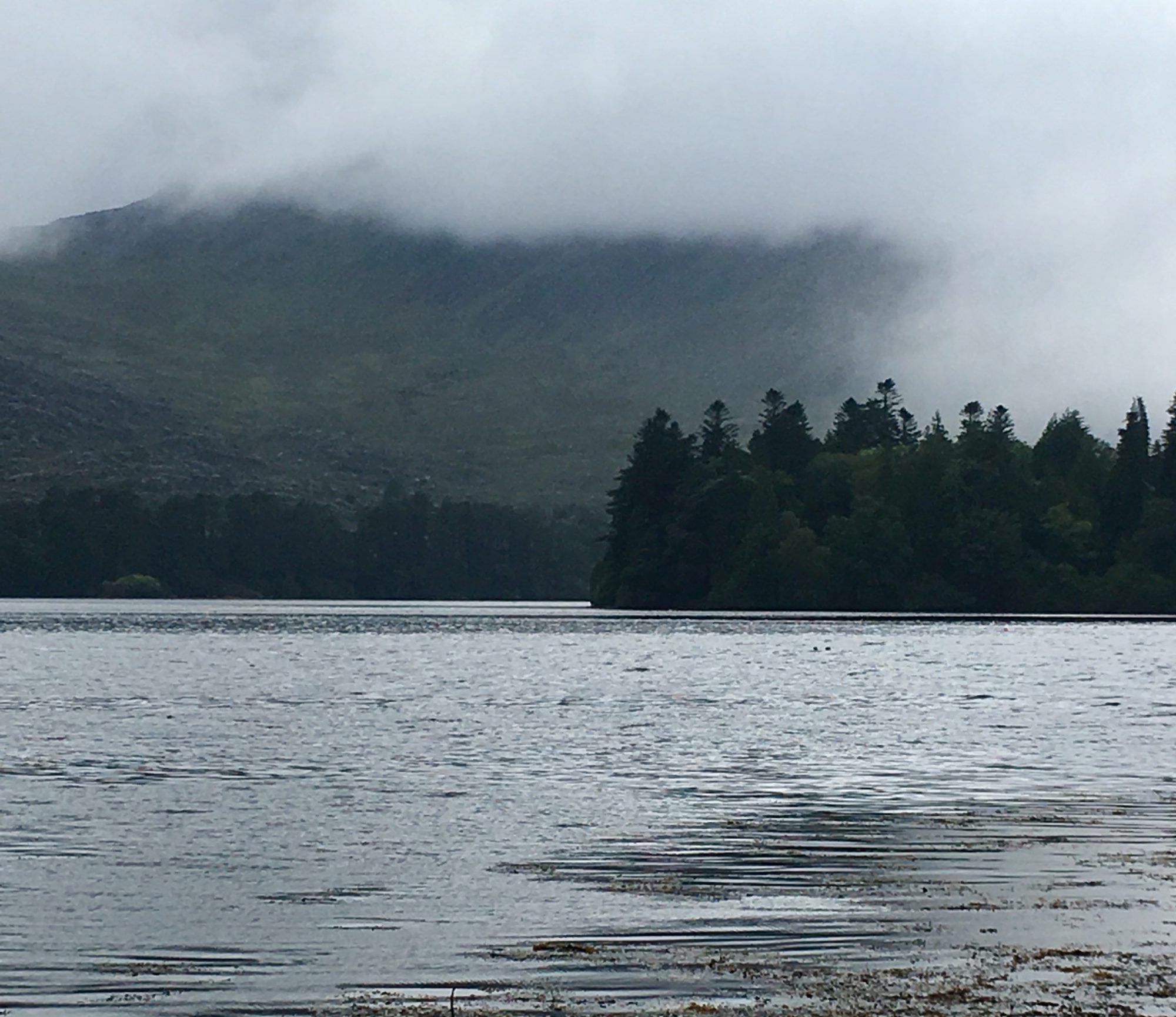
Late this afternoon the noisiest event on the pond was the flapping and prancing of ducks, lifting themselves out of the water by the dock with a furious slapping of their wings. The sun and clouds traded places and the pond was silver and then black. There was enough sun to warm the air, enough that I probably won’t have to pull up the hood of my sweatshirt when I go to bed.

I’m so lucky.


Haunted

July 4th, 2003

Last night I went to the 4th of July BBQ I’d planned to be part of two years ago. A lakeside camp, boats, swimming, friends and lots of my friends’ family including adults I’ve known since they were kids now with kids of their own. Burgers and hot dogs and fresh strawberries and then fireworks set off from the raft off the beach and other rafts up and down the lake front. I had fun.

Then this morning I got up and cried. I missed the BBQ two years ago because I wanted to be with Chris, my sister whose metastatic cancer had progressed enough to make her so sick she couldn’t see how sick she was. My other sister Meg had a cookout at her house with my family and David and I knew that was where we wanted to be. It hurts to remember how fragile Chris was that day, how she had trouble standing on her own, how she talked about being patient while she waited for her new medication to work.

At one point while we were eating she looked up at Meg and thanked her for the invitation, as if she hadn’t spent more holidays with Meg than almost anyone else in her life. Why does that moment haunt me more than others?

The rest of that summer haunts me, and last summer when our friend Peter was so sick, and the summer after Eric died and all the summers he was alive and healthy when we had our own July 4th traditions — a day of kayaking on Squam, followed by a BBQ and fireworks at a good friend’s house, Eric along with his buddies John and Mark bending over a batch of fireworks with a lighter and then backing up quickly as light and color exploded upward. I remember the heat of summer sun on our skin, the fresh smell of lake water, the ease of a cold cocktail on our friends’ deck as burgers and chicken sizzled on the grill.

Last month David and I spent two weekends with my family, bracketing the week Chris always rented a house on the beach in Humarock, near where Meg and my parents live. The rental on Humarock tradition has continued and much of my family was there. At one point we did a Face Time call with Adrienne and Emilio and Ava because they couldn’t get there, and after my mother had said hello to her great-grandchildren she handed the phone back to me.

“Who else do you want to talk to, Ava?” I asked.

“Grandpa Eric,” she said with a smile.

I’m happy we’ve done such a good job telling her about the grandfather she’ll never get to meet that she wants to meet him.

If only she could.

Deathaversaries: When Dates Line Up


This deathaversary season (what Adrienne, Sam and I call the anniversary of Eric’s, or anyone’s, death) has felt harder than other years. Or do I say that every year? I don’t think so.

The accumulation of other losses, the spread of grief in my circle of friends and family from those losses, and the communal dismay of the majority of Americans at the continued display of arrogant greed, racism, sexism, homophobia, xenophobia (okay, I won’t go on forever) among the white fuckboys currently trying to run/ruin our country all contribute I’m sure.

But I suspected dates were lining up in a way to remind exactly of what was going on 11 years ago, when Eric was diagnosed with metastatic cancer just before Passover. I was right.

David and I had a busy weekend, spending time with my family to celebrate Easter in a decidedly secular way then coming home to host a Seder with a group of friends we’ve been celebrating Passover with for many decades.

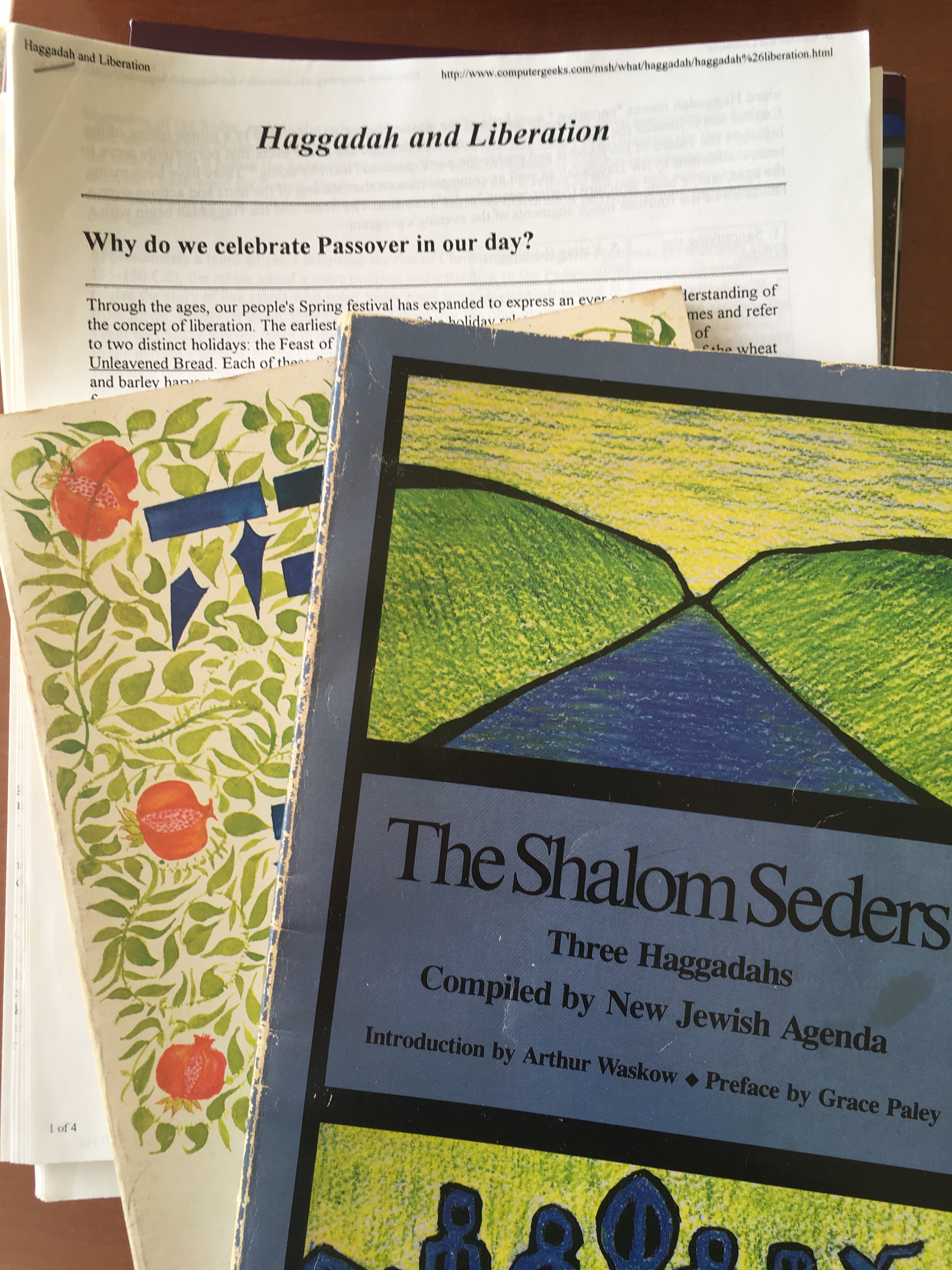
Wasn’t this the weekend in April 2006 that we had a much diminished Seder after Eric got home from the hospital with his grim diagnosis? We’d planned to host the Seder with friends that year, but had called it off earlier in the week when we understood Eric’s back pain and accelerating fatigue was from bones full of cancer. Instead of a dozen friends seated around the table, we had a small family Seder, using a two minute Haggadah someone had sent to Adrienne. Eric sat at the head of the table as he always did at Seders, leading the ritual telling of the story of the Jew’s exodus from slavery in Egypt, embellishing the minimal text with his own knowledge of Jewish history and custom.

Yesterday afternoon when David and I got home I pulled out my folder of calendars and wasn’t surprised. Yes, the dates line up. The day Eric got home from the hospital in 2006 was Friday, April 14. We had our small Seder on April 15. This year David and I hosted our Seder on Sunday, April 16.

No wonder I’m feeling the presence of sorrow. The 2006 calendar is repeating. The sun is at the same angle, birdsong is rising out of the fields in the morning at the same pitch, the brook out back is running high and hard, and the red buds on the maple tree out front are fattening into their familiar, fuzzy flowers. On some level, my body takes this all in and connects it with that scared and bewildered body 11 years ago.

There is a difference in the Jewish calendar though. Passover is ending today, not beginning as it was in 2006. Tonight I’ll light a Yahrzeit candle, which I just learned is a tradition on the last night of Passover.

How fitting.


Early Spring Tableau

My desk as this early spring afternoon slips over to dusk — Belvenie on the rocks, in a lovely tumbler Eric bought. He would approve.

My sketch book with a drawing of tulips I bought yesterday. Last week I figured out how to draw a leaf turning over on itself; I followed the contour line through the flip, added a bit of shading, and there it was. I’m practicing, still drawing almost every day.

Not Sunday. Under the sketchbook is my bib from the NYC half marathon, on its way to getting pinned on the decidedly not-decorator-worthy-wall of homasote in our bedroom from back in the days David was seeing if the room would work as a studio. It didn’t. But having a wall of fiberboard to tack up race bibs and Emilio drawings and sketches and poems and cards and posters is too wonderful a thing to take down. Two weeks ago David put up homasote over the art desk in my study.

As I ran down the West Side Highway towards the Battery on Sunday, sun on my face and the wind at my back, I knew I was probably going to make it to the finish line fast enough to qualify for the race next year, but my right knee and left thigh and left, blistered foot hurt.

So I let them go. I remembered what Sam told me after he ran an 11 mile trail race a few weeks ago. Describing his fastest stretch, running downhill after a grueling, steep-as-shit climb, he said, “I was flying. My body was gone.” A faster song came on my playlist and I picked up my pace.

1:58:17. That’s 31 seconds slower than last year. I’ll take it. It gives me 3 minutes and 43 seconds to come under the 2:02 qualifying time next year, and the year after I’ll be 65 and get another 10 minutes. With my time on Sunday I’d have been fifth in the 65-69 age group. The number of women running dropped from 162 in the 60-64 group to 53 who were 65-69. Two thirds fewer. Can I keep running into that age group? That fast?

In the first years after Eric died I would have laughed at myself for making plans to place in races two years out. Where do plans get you?

But I like the idea that by keeping myself on the road I could get closer to winning, even though being able to run 13.1 miles is winning enough.


#daylightsavingstime

The Truth About Death
Cover painting “Grace” by David

My conversation with Adrienne about daylight savings time started on Instagram. Under her photo of scrambled eggs and coffee she wrote daylight savings is weird. #theend. When I commented I want my hour back she replied every year! Time for the poem from 10 years ago!

Yes, Adrienne has listened to me complain about this lost hour all her life. It’s such a let down after that extra hour (bonus galore!) we get in October.

I’m not alone. Twitter is full of complaints today. Mamas, how are your #daylightsavingstime naps going? (Accompanied by a photo through a door of a child standing in a crib playing with a mobile.) I remember those days.

And, as always on Twitter, there’s politics and humor. You didn’t lose an hour of sleep # just redistributed it to someone who needed it.
Losing an hour of sleep means you have to sleep in, right?
I woke up and it was like noon wtf
low key wishing we lost the next four years vs one hour of sleep last night.
so do i have one more or one less hour to be high today?
Well, at least the clock in my car is right again…

There was a suggestion we all chill out by Relaxing Back Into Soothing Stillness w/this

Here’s what I had to say about it ten years ago, the poem Adrienne recalled. I wrote it the weekend Sam and I helped her move to live with Matt in NYC. March 2007, in the midst of the writing fever that produced The Truth About Death, less than a year after Eric died. I could feel the raw pain coming up off the pages as I looked through the manuscript for this poem. What a time.

Moving

Our daughter is going to the epicenter, someone is always
going somewhere, I can’t make small talk, I talk too much,
I am following the little red car, I can do anything I want,
I am a sparrow feeding in the bushes, the promised manna,

such pain to get here. Highways, cars, family, the irrevocable
center, flip your hand, wave off the evil eye, not evil, scary.
There is a blue balloon floating, this song is the tits, this song
is the bee’s knees, it’s if I had wings. I’m still mad

about the hour they took away two weeks ago. There are bells
ringing, it’s 6:00 p.m., the boys are watching college hoops,
the buildings out the window fall down in cubes, gardens
tucked into ledges, trees and statues below, a lion and a nymph

holding bounty, a set table in a room of glass, birds, planes
lifting west. I dance with a maenad, I dance by myself, drive fast
with my family. A lovely and ancient tradition. At dinner we discuss
predictive text, our son never finds his phone, our daughter’s lover’s

mother knows the pre-revolutionary Russian for lovely,
beautiful – veeleekalyepnah. When she found her grandfather’s book
of Torah commentary it opened to her son’s portion. Go forward
and be a blessing unto the world. Never enough, never enough.

Snow Party


img_6837

Since the election I haven’t done much of my usual personal writing, because what does some happy or sad moment from my own life count in the fight to make sure our country stays as just, diverse, safe and equitable as possible?

But there is life beyond resistance to whatever roll-backs of social justice the Trump administration will bring and I need to live that life sometimes. Or perhaps the life beyond resistance is resistance, because living from a place of struggle to make the world a better place requires joy as much as persistence.

Sam was home last week and over one of our predictably competitive Scrabble games we had this exact conversation — the need to balance how life goes on in the face of struggle. How much would my life actually change with Trump as President? Couldn’t I keep enjoying what’s good even if we have a dick for a President?

Melia and Sam’s friend Mike were here too and this lead to a long discussion about what would change, what mattered, what we were afraid of, what was upsetting us the most. Was it a gendered response that Melia and I are more worried about reproductive rights than Sam or Mike? Sam and Mike are most upset by how little people are listening to each other and how ready they are to judge others based on their votes. They both live in states with far more Trump supporters than Melia or I do.

So how is this about joy?

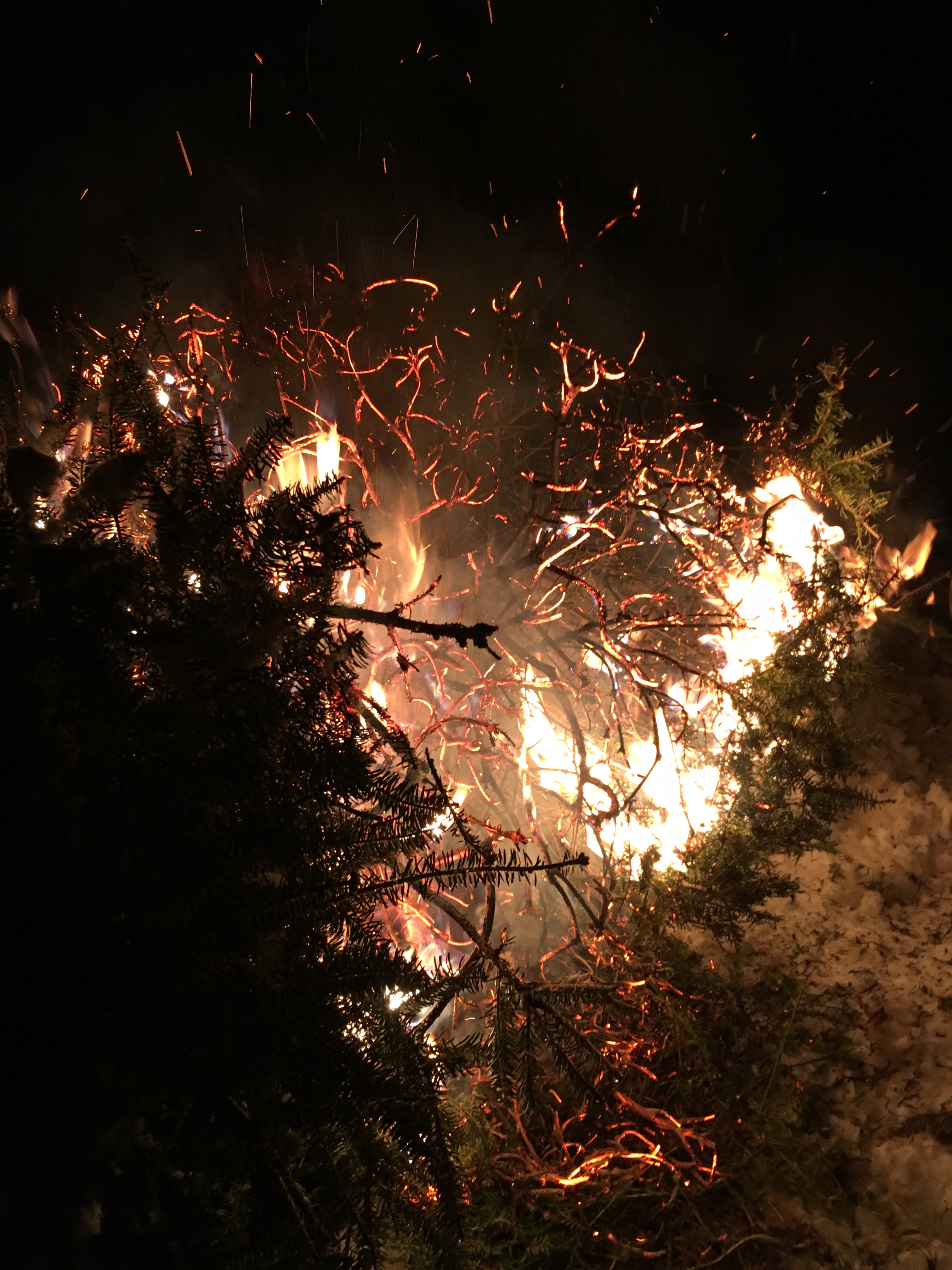
The Scrabble game (I got crushed) and discussion were on Thursday afternoon and that night we got over a foot of snow. A group of Sam’s friends planned to visit and the thickening snow didn’t stop them. Trucks still arrived in the driveway with young men and boxes of beer, one with his Christmas tree ready to burn.

Burn it we did, drinking beer while snow swirled and slid off the solar panels on the barn roof in clumps that thumped and drenched us. We watched flames catch the limbs of the tree and curl up into the needles, hot pine burning yellow then glowing red as the fire moved on to the next branches.

It was an elemental celebration, because this is how it all started, getting through the dark part of the year by gathering with family and friends around light. Most holiday parties are lit by electricity and candles, cheery and warm. We love the sparkle.

But when the light is outside in a snow storm, the knot of of energy created with a circle of faces to the fire and backs to the darkness is tight and strong. Joy. To carry into the new year.

Here I go.

img_6843-1

Kindness On Top

img_6793

President Obama is a kind man. You can see it in his eyes. You can see that he loves other people, that he can love women and children without threat, to himself or them. He’s not afraid of other people’s personal power. He’s not afraid of powerful women. He’s not afraid of much I don’t think.

I’ve been frustrated by some of Obama’s choices (tackling health care before climate change, not fighting dirty enough to counter the obstructionist Republican Congress) but I also have deep admiration for his intelligence, resolve, patience and kindness.

There’s no kindness evident in the administration Trump is assembling. One nasty person after another has been nominated for the Cabinet — misogynists, homophobes, xenophobes, billionaires with no compassion. Already people around me are longing for some sign that those who’ll be making decisions for all of us, our next leaders, care about something besides themselves, their rich friends, and tearing down protections for people “other” than them — women, LBTQI people, brown people, black people, Muslims, Jews, Palestinians, refugees.

Is this what we get because a black man who is kind and trustworthy has been President?

My series of collages to make sense of what’s happening in national politics continues. Last night I again used Obama’s face and words, from an interview in Rolling Stone. His eyes — kind eyes, compassionate eyes, brave eyes —  kept looking out from the weave of words.

There’s a message in those eyes, a message President Obama spoke to all of us. “There’s no benefit that’s derived from pulling into a fetal position. We go out there, and we work. And we slog through challenges, and over time things get better.”

So let’s get to work and make sure we get kindness on top again.


Another Grace

img_6071-1

Last week my cousin Sally called.  I don’t see or hear from my cousins often so it was an unexpected connection.  Sally wants to give me the antique typewriter our grandfather used when he first started to work for golfing equipment companies in the 1930’s.  I like the idea of having something from my grandfather. He was a man I barely knew.

My father’s parents divorced before I was born and it was my grandmother who was in our lives.  The first time I met my grandfather was a spring afternoon when my sister and I answered a knock and opened our door to a man I didn’t know.

“You don’t know who I am, do you?” the man said.

My sister and I shook our heads.

“I’m your grandfather.”

I only remember seeing him one other time, when he came to Chris’s high school graduation.  While he was at our house he came out to the garage to inspect how well I was preparing our sailboat for a summer of racing.  He ran his fingers along the sanded bottom, making sure it was smooth.  He nodded.

I asked Sally to tell me more about our grandfather, which led to stories about our grandmother.  She was a tough, independent, divorced woman which was a step outside the norm at the time. I don’t remember many hugs or sitting in her lap, but she endlessly knit hats and mittens for me and my sisters and our children once we had them. She knit for church fairs.  She made her own yogurt, gardened until she was in her 90’s, mocked the creaky walk of all the old people in a rehab facility where she spent time after an accident at 97 (she was probably the oldest person at the rehab and the accident wasn’t her fault), and lived to 102.  Visiting her in the hospital towards the end of her life, she complained that she couldn’t get a needle and thread.  “What good am I here?  I can’t even sew while I lie in this bed.”

In the 1950’s my grandmother was diagnosed with uterine cancer.  She was treated with cobalt which was sewn into her abdomen and left there to irradiate the cancer cells.  Later the cobalt was removed and Sally remembers being with her mother when they drove my grandmother home up after the surgery.

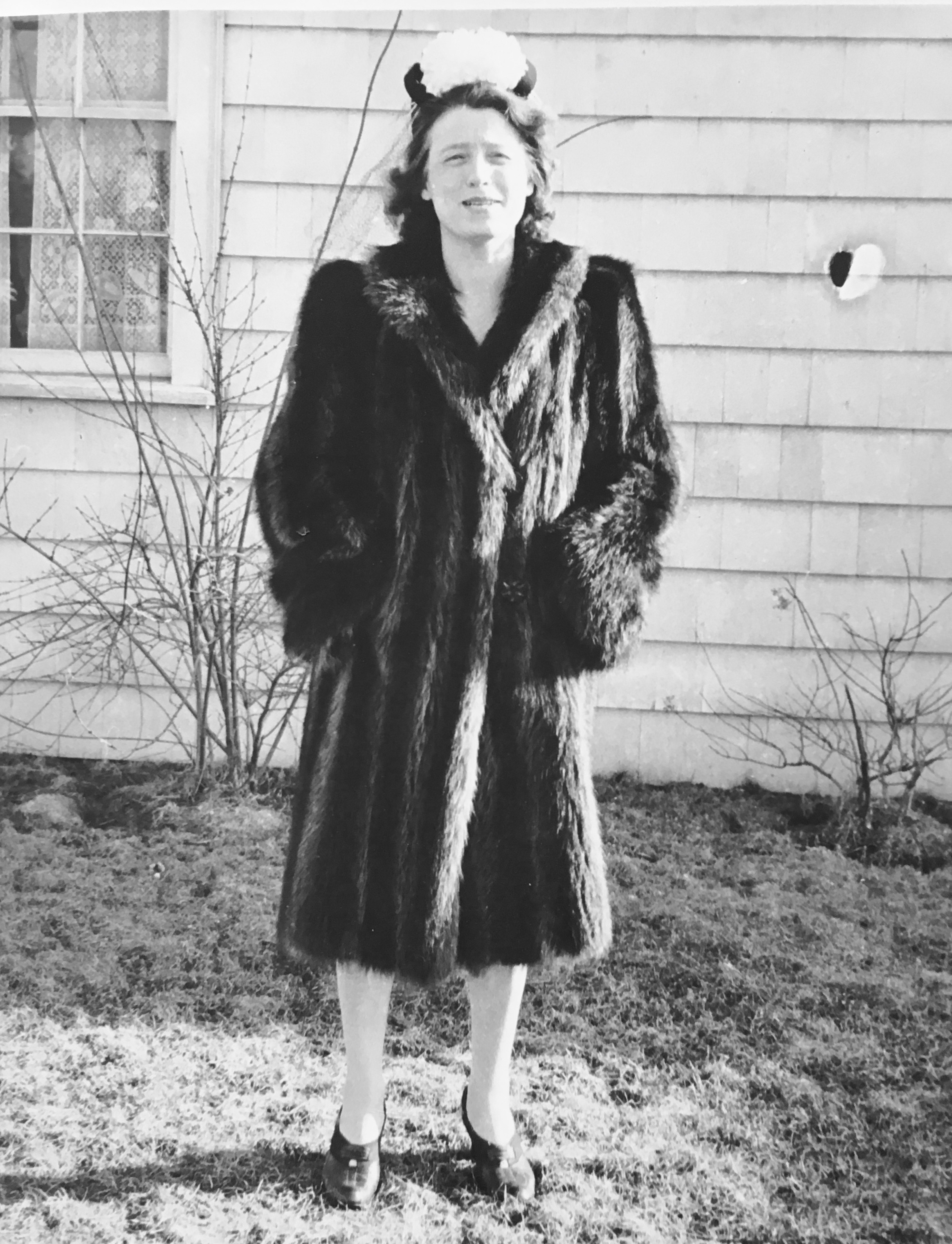
“I need an apple,” my grandmother said when she got in the car, wearing a wool coat she’d sewn herself.  They stopped at a local store and my grandmother went in and bought two apples.  When she got to her house she went straight to the kitchen, and without taking off her coat, took out the bottom of a pressure cooker, poured in oil and popcorn and turned on the burner.  When the corn was popped, she sat down and ate the apple and the popcorn.

At the time, doctors told my parents that my grandmother probably wouldn’t live another five years.  She lived another 50.

Her name was Grace.

img_6070-1