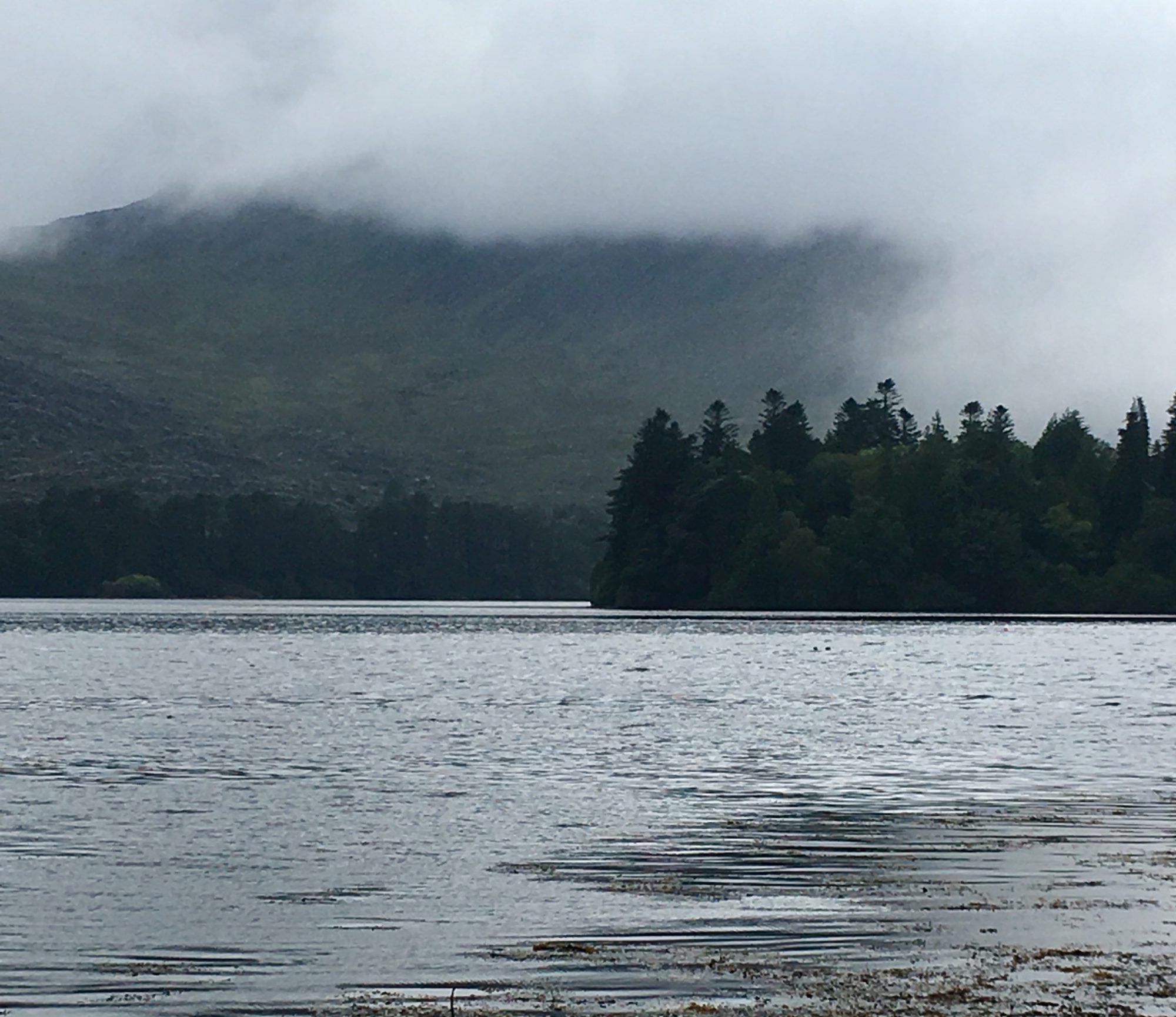
Grinding Stones

seven-storey-by-pascal1-300x200
Photo courtesy of Writing Our Way Home

I’m Grinding in January.  I’m also going to write a “small stone” every day.  What is Grinding, what is a “small stone” and why do they work together so well?

Having written about both on this blog before, maybe you know.  But here’s a refresher. The Grind is a monthly commitment to writing that poet Ross White organizes. You pick your genre and get put in a group of 10 or so other writers, get each other’s email addresses, and then are  responsible to send a new piece of writing every day of the month by midnight of whatever time zone you’re in.  You don’t provide feedback or even acknowledge what you get sent.  That’s not the purpose of the Grind.  The purpose is to write every day and having a group of strangers expecting your work in their inbox, even if they never read it, helps.

It more than helps.  For me, it works.  This is my seventh Grind in the last two years and it does make me write.  Every day.  A good thing always.

In January 2012 and then again in 2014 I joined the challenge of writing a small stone every day, reminded to do so both years by sister blogger A Woodland Rose. A small stone “is a short piece of writing that precisely captures a fully-engaged moment.” The bloggers at Writing Our Way Home believe that small stones “help you connect to the world, in all its richness & complexity & juiciness.  When we translate something we’ve seen or experienced into words, it is necessary to pay more attention than we usually would. A few minutes of mindful attention (even once a day) helps us to engage with the world in all its beauty.”

The party I was planning to ring in the New Year isn’t happening. Instead I’m navigating another of those left turns that seem to come up in my life regularly.  My mother’s in the hospital recovering from a fall due to a stomach flu and David and I are in Massachusetts helping to sort out next steps in getting her healthy and home.

So instead of cooking and decorating and welcoming a group of close friends to eat and drink and be merry together, I’ll be talking to doctors and eating hospital cafeteria food and driving my father back and forth to the hospital.  And hopefully getting my mother set up to recover fully at home.

My New Year celebration will be writing every day — a small stone to share with this month’s Grinding pals, and most likely with all of you.  Stay tuned.
A Gift

IMG_4131

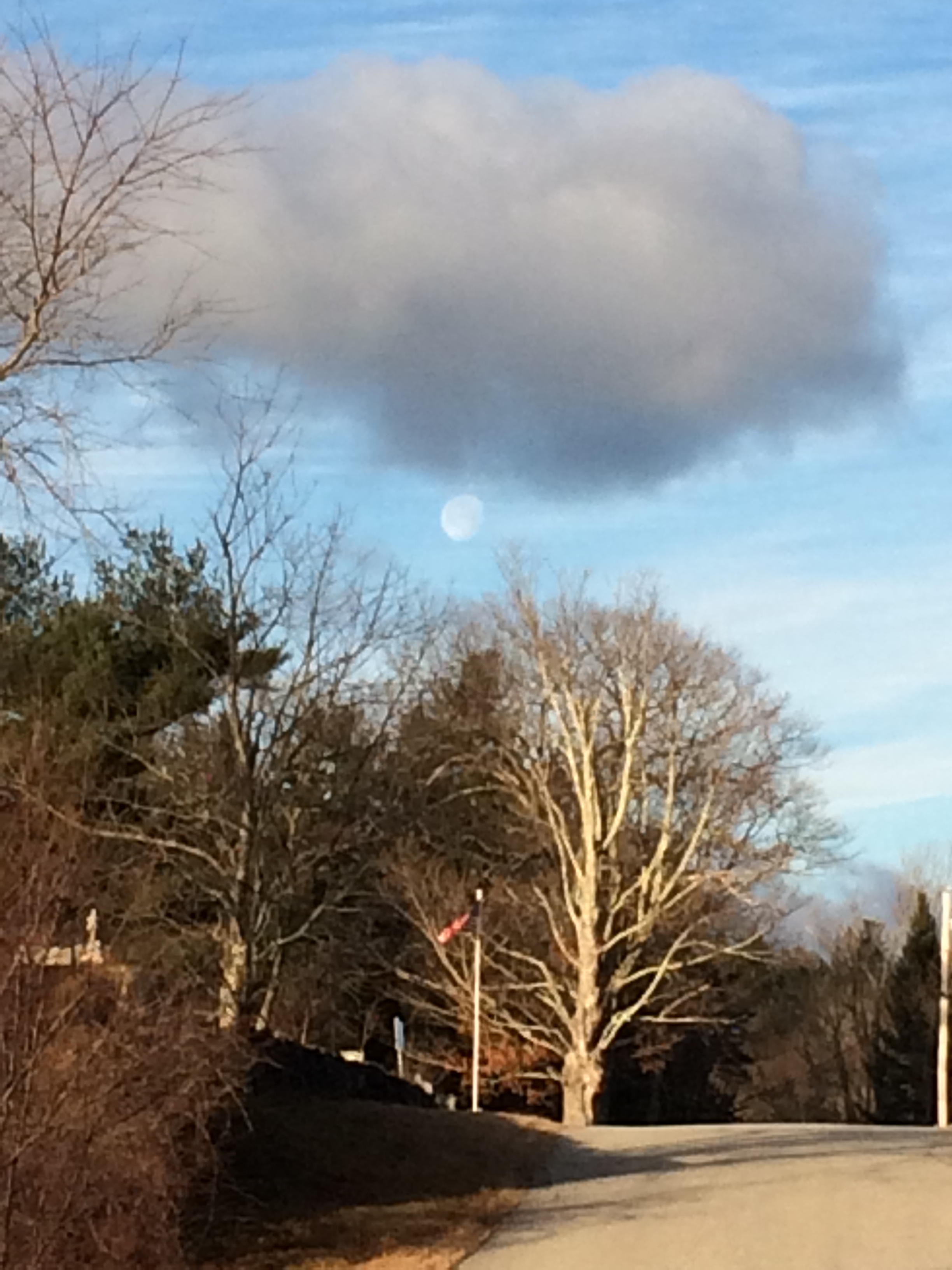
The waning moon hangs in the sharp morning sky, a pale reminder of its full self in darkness two nights ago, now surrounded by high, wind-thinned clouds and low, dark ones. The wind is cold, coming at my face where it’s bare between my hat and neck warmer. This is winter and it’s my first time out in it.

It’s my first time outside since Friday, a day spent celebrating with family, which included time on the porch of Chris and Jon’s house, bringing back all the mornings I drank my coffee there this summer.  Keeping with the family tradition of Christmas at Chris’s, Jon and his boys hosted the family dinner, which was delicious and lovely and sad.  I know the hole a loved one leaves lessens over time, or takes up less of the available awareness in any given moment, but this hole is fresh and big.  And Adrienne and Matt and the grandkids weren’t there because Adrienne had a stomach bug that sent them straight home after Christmas morning at my parents’ house, meaning they didn’t come back to NH after dinner at Jon’s.

But it was warm and sunny.  Porch weather.  I’m glad I took advantage, because the stomach bug got me that night, and I barely got out of bed on Saturday and got out of bed but not out of the house yesterday.  Two days of illness makes the simple act of waking up with enough energy to walk towards a waning moon feel like a gift.

Which, of course, it is.

Day Thirteen — Blessings of Boys


The world is full of light this morning – sharp, bright, cold finally.  I woke late, the sky already gray with dawn, sounds coming up from the kitchen. Last night watching Snapchat stories for Sam and Will I suspected they had started their drive north, and here they were, Sam plugging in Sylvia, the espresso machine, Will smiling.

“Why are you making coffee? Weren’t you up all night driving?”  They were, but they took turns napping, they wanted to get in a round of disc golf at Beauty Hill before crashing – they’d played a sunset round in Johnson City before starting their drive yesterday, they were excited about following that with a sunrise round.

Will would have napped but was willing to be swept along in the stream of Sam. Mike arrived, they all drank coffee, they left to play. These beautiful young men who’ve been in and out of this house since they were boys.  Twenty years. Such a blessing.

2015-12-22 11.42.38

Eleven, Twelve — Double

IMG_4111

December 18

Guitar music comes up the stairs. David is playing.  He hasn’t painted since April. I’m building a standing art desk next to my writing desk, a space to turn and make things with materials, not words, colored papers and pens and boxes of cards and catalogues I’ve been collecting for years to use for collages.

Which means emptying a book case so I can run the new desk into the corner. Already my date books are in a box in the barn.  Next go my journals. What do they say?

March 6, 1979: I confront Jim, a nasty and misogynistic roommate who lived with Eric and me in a house we rented from Lynne Cherry in Marlborough, CT. Lynne sometimes spent a night or two there, had slept with Jim one weekend, but now she was angry at him, he hadn’t paid his rent.  She asks us to talk to him so I do.

I don’t back down when he tries to placate me. At one point I just kept talking back at him, wouldn’t shut up – making him face my anger & he told me to leave his room – we had a stare down & he couldn’t budge me – I loved it.

One journal has no date on the cover and my entries don’t even have the day of the month: saturday evening, sunday evening, thursday, saturday early afternoon, friday, the next tuesday may 24 – ah, a date. Still no year and no upper case letters. I think it was 1977. Who needed to know the day of the month in 1977? Not me.

I write a lot about writing. Needing to get possessed. Art desk.

December 19, 2015

When I sit on the end of my bed to put on my shoes, I see a Great Blue Heron on the other side of the far farm pond in the cow pasture. A really big one.

Then I quick catch yet again that it’s not a heron. It’s not Eric. It’s the tall stump of a small tree that blew over two years ago, the wood bent forward in a thick figure of a heron.  Eric isn’t in every heron, though seeing a heron fly overhead or standing in water makes me think of him.

This summer when I was home from being with Chris for a few days a heron stood in the intersection of Canterbury Road and West Street for about 30 minutes. It didn’t move, other than to swivel it’s head. A car went by, in the lower part of the intersection several yards from the heron. The car stopped, then went on.

I kept watching. The heron stayed so long I stopped watching. Then I decided I wanted a photo and went to get my phone and a truck came and needed to make the turn up Canterbury Road and the bird lifted and flew away.

Chris has a story on her blog about a heron seeming to follow her one day, and thinking about herons are how Eric comes to me. The winter she learned she had cancer in the lining of her brain she was scared, but she told me Eric had visited her and been close and that felt comforting to her.  She wonders about magic — Birds are special; they can fly, they can soar and they can also put their feet on the ground.  Birds connect heaven and earth.  


Day Ten — Why I Cry When I Cook

IMG_1501

The boys are making lasagna for Christmas dinner, Chris’s boys. Chris has been hosting Christmas dinner for many years, and Jon wants to continue the tradition of the family gathering there and knew his boys would help with the cooking.

Which they are. But thinking about Matt making lasagna makes me cry. In early July we made our first trip to Stow to help, right after Jon emailed David and me to ask for advice about how to handle Chris’s growing infirmity and lack of awareness of how her illness was advancing. Our advice was our presence. David and I both knew you don’t do what Jon was doing alone.

Matt arrived two days after us.  Chris was still walking, though barely and mostly with someone beside her and helping her get up and down from her chair, where she spent most of the day.  She was having trouble hanging on to what was happening around her.

Jon and Matt and I had decided to make lasagna for dinner, and Matt and his girlfriend were putting it together as David and I got ready to go for a swim at the local lake, our regular release on those hot afternoons of confusion and sadness. Watching my hands plunge in to the green water below me, over and over, right then left then right then left then right brought me back to myself.  Or to familiar bilateral motion anyway.

“What’s going on?” Chris asked, because she could see the activity in the kitchen and it was confusing not to be part of it.  That was what she did, put together meals.  Why was it happening without her?

A couple of hours later, when she shuffled to the table where her other boys had gathered with their girlfriends, her face was blank. She was quiet, fallen out of the present, her eyes fixed, looking at another world.

It was light then, the summer evening still too hot, windows open to any breeze. Now it’s so dark and so hard to think about that blankness, how Chris disappeared before she disappeared.


Day Six — Checking & Keeping Track

IMG_4097

“How many times do you check things?” I asked a group of my colleagues about ten years ago, other Executive Directors of state domestic and sexual violence coalitions. We went around the table, out for dinner after a day of meetings. One friend talked about the 79 potted plants on her porch that she needs to water every day in the summer, making sure she gets to them all. Everyone double, triple, quadruple-checked something — sums on budgets, spreadsheets, brochures about to go to print, sensitive emails. I checked that my medication was in my luggage at least three times before I would get on a plane.

“How much checking is OCD, and how much is what makes us good at our jobs?” I asked.

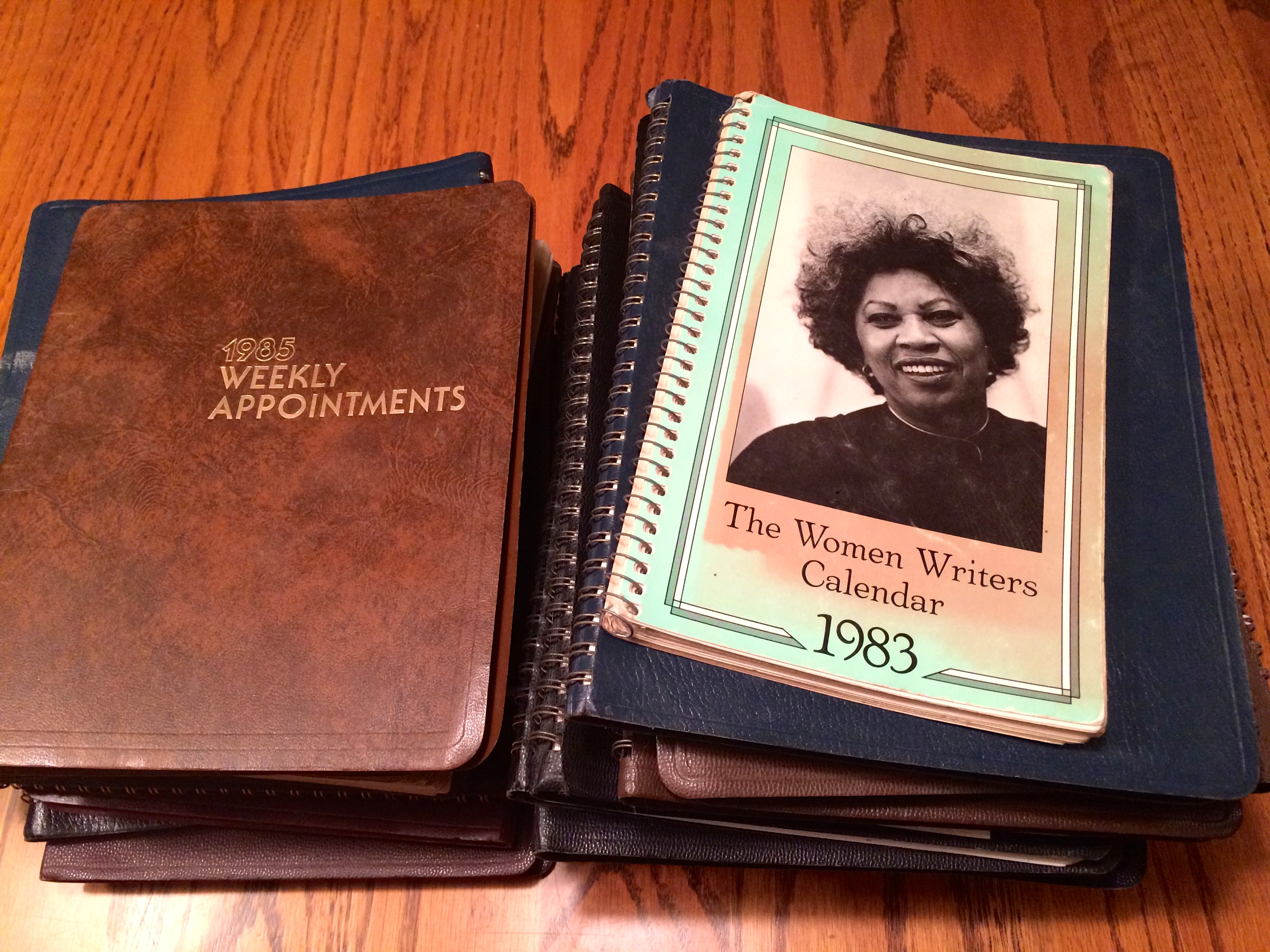
I still don’t know the answer to that, but Saturday night, after hours of eating and drinking with a group of these old friends, the topic of checking and keeping track came up, different but related habits.  One of my friends keeps a log book of her bike rides.  Another wears a FitBit and makes sure she walks 10,000 steps at least six days a week.  I write down my exercise every day in my calendar, and apparently have been back to 1988, as I can see in the old, spiral bound Note-a-Date Weekly Business Appointments for that year. I had my old calendars out, considering whether to dump them in the process of rearranging my study — they take up a lot of shelf space (though far less than all my journals, which is another whole story).  But tracking exercise isn’t so uncommon — I have numerous friends who record their daily workouts and some compare what they’ve done each day against what they did a year ago.

Then the topic of tracking periods came up and I remembered I did that from my late teens until well in to my 40’s.  In the 1985 date book I found small back-of-the-book calendars from 1983, 1984 and 1985 taped to the inside back cover. The dates of my periods are circled, as they are in all of the date books.  Tucked in to 1985 is a piece of paper that graphs my basal body temperature and the quantity and consistency of my cervical mucus for the month of June. Tracking my fertility cycles.  After the beginning of June there are no more circles in the 1985 calendar.

Sam was born in March 1986.


Day Two — Seaside and Sky


IMG_4078

Steely water runs out of a creek, cutting a bank through sand before disappearing into the froth and fury of the ocean, blue beaten white as it crashes on the beach.  The wind is hard and cold, clouds low. David and I walk with our heads down, trying to keep the chill off our faces.

We gather driftwood sticks, feathers, black curled strings and bubbles of dried seaweed. I’m imagining a mobile of sailboats hung from sea bleached wood, feathers floating between the curls of seaweed. There are small white feathers, long broad gray ones, one with white circles on a dark background. The mobile will be for my father, a man who grew up on the ocean, who taught me to sail, who took me and my sisters to the beach during hurricanes so we could watch the surf smash over the seawall.  I’m making an ocean he can hang in the house, a beach above the table where he paints sailboats and marshes and waves.

We guess the distance from one end of the beach to the other. We get it right. When we turn to walk back the clouds open for a few minutes of sun and the warmth is startling, backs to the wind, faces to the light. The far shore is luminous under a sky the color of a new bruise, blue beginning to bleed into black.  No yellow yet.

By the time we’re headed home it’s so dark I feel lost.  I can hardly see the road, the early night so heavy we’re wrapped in blankness.  The tunnel of winter is coming, an approach I feel more than see.

My father is 91, he hasn’t been on the ocean for over a decade.  He never walks the beach anymore, though he sits by the harbor and watches boats come and go. He takes photographs and paints, creating a seaside. I’m creating the sky.

Day One — Wilderness

Me and Ava

Wilderness sits at the back of my mind. Before dawn I’m at the kitchen table, sending out the emails that make me think I’m on track. What is the track?  If I get to a spot on a trail where I can’t see the path and can’t find the next blaze, I go back to the last marking I saw and look until I find the next. That keeps me oriented, but does it keep me going where I should?

Are there “shoulds” in life?  There are intentions and desires and choices, but each decision of what to do next, who to call, how long to sit at my desk, which load of laundry to start, what color paper to use as I fold a series of four-pointed stars, which wool sweater to wear to stay warm in the cold house, comes from too many associations to sort through.

None of this has to happen. The laundry gets done because I want clean clothes not because I should do it. Or maybe I’m fooling myself. Maybe my choices are so laden with expectations of what is right and what needs to be done that I can’t feel the “shoulds” under the doing.

I want to get to the wilderness. There are poems there and a new desk in my study for colored paper and collected images, another draft of my memoir that I’ve dared to pare down to the rawest memories, origami sailboats that float at the end of invisible thread, stories I didn’t know I could tell, a walk on another continent, dreams of Eric, a baby resting her head on my chest as she sucks her thumb and reaches the other hand up to my neck, scratching with her tiny fingers, feeling for hair, for an earring, for skin.

Sadness Moving — Reflections

IMG_4037 (1)

When I write about grief and sadness my blog gets a lot of hits.  Same when I write about my travels.  What’s the connection?  What if I wrote about both at once?

Thursday I went to Boston to the Museum of Fine Arts, meeting up with my youngest sister Meg and her husband John and Chris’s Jon.  Family disappears so I’m hanging on.

Wednesday night I went to Portland to hear Ry Cooder and Ricky Skaggs play such accomplished music, accompanied on piano by Buck White (85 years old!) and his daughters singing exquisite harmony, I remembered how to be happy.

I’m hunting art.  Moving.  Years ago a friend from my work life spent a weekend here. She came to NH to do a half marthon with me so I would think she’d have known what she was in for.  But a day in to our visit, before all our mutual friends showed up as running support and talking-drinking-eating buddies, she watched me move around the kitchen as she sat at the table.

“You really can’t sit still can you?”

“Nope.”

For years she made a joke of the fact that 4 miles into the half marathon I abandoned her and moved off ahead.  I couldn’t run that slowly.  It hurt.

If I could slow down I would.

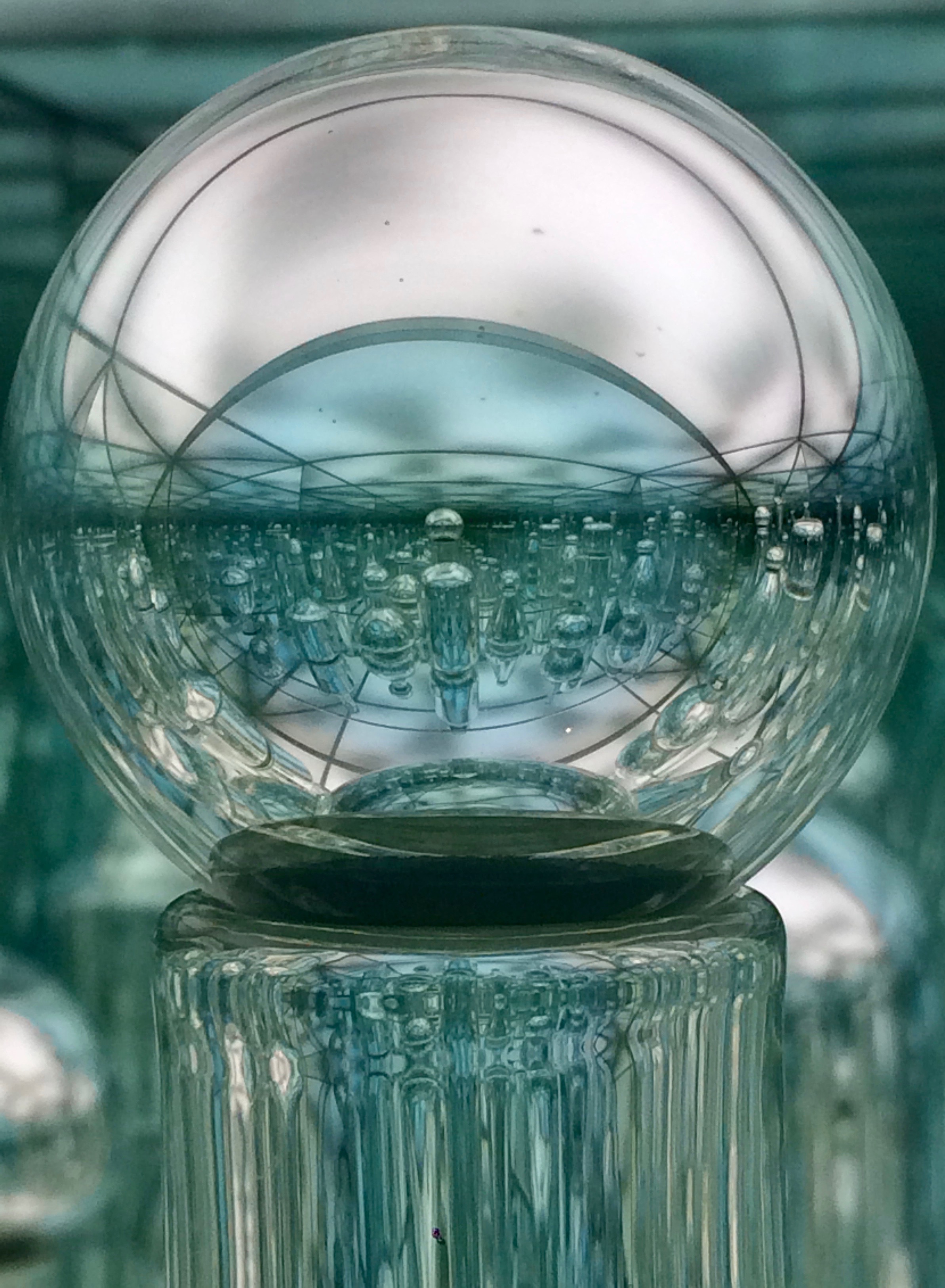
If all my reflections on life created an infinite pattern, I doubt it would be as beautiful as “Endlessly Repeating Twentieth-Century Modernism” by Joshiah McElheny.  His piece at the MFA is stunning and brilliant, a perfect, mirrored box of glass objects that reflect into an unending distance as each object holds its own jeweled reflections.

Now I’m wearing some of Chris’s jewelry along with her shoes and socks and jacket and jeans.

I’m not planning to go anywhere for a while.

We’ll see how long that lasts.

IMG_4038 (1)

Applesauce

IMG_4009

I pick apples, out of the trees, with a ladder now because the lower fruit is long gone, and off the ground, which is a treacherous carpet of drops that roll under my feet like ball bearings.

I fill an old woven reed basket my youngest sister Meg gave me years ago, a foot and a half across with a sturdy wooden handle and more than enough room to hold a sauce batch worth of apples.  This basket has held vegetables and fruit from my yard for decades. Lucky me.

I think about staying home for more than a few days in a row, or a week even, and I think I want to, but then don’t.  But when I am home for more than a day or two I find myself gathering apples and running them through the corer-peeler-slicer gadget that Melia brought home the weekend of Chris’s service and I’ve kept since. With an apple loaded on the pronged shaft, I turn the crank and magic happens — the apple comes out the other side of ingeniously arranged blades peeled, cored and sliced into thin rings.  The peel makes one long, looping coil.  I could dry the strings of peel, I could make jewelry or braided snacks.

I don’t.  I make sauce.  The slices go into my biggest pot then sit over a low flame for hours. The apples release their juice and then puff up into mushy versions of themselves before collapsing into a blendable pulp.  Northern Spy, Cortland, Macoun, Yellow Delicious — the different combinations create different flavors and levels of sweetness.  David and I taste the batches, like tasting wine. “This sauce isn’t quite as complex as the last.” “Yeah, it’s a little more flat.”  It’s all delicious.

I wondered, when I  came home in mid-September, how I was going to transition back into my own life, my own pace and schedule.  Applesauce never crossed my mind as the path that would lead me back, but I should have suspected, given how much of the little free time I had this summer I spent freezing local fruit — strawberries, peaches, blueberries.

As I clamp the peeler-corer-slicer to the counter with its vacuum base, I feel like I’m securing myself, grounded, my feet on my kitchen floor, looking out the windows at the now brown oak leaves that keep falling.  There are ten quarts of applesauce in the freezer and always at least a pint in the refrigerator.  Tomorrow I’ll probably make more.

Then go away again.