Journal Journey

IMG_2294

The journal is beautiful.  Covered with textured paper and bound with string, its large pages are thick and creamy, flecked with fibers.  When I couldn’t sleep one night almost six years ago, staying with David at a friend’s camp on Bear Island in Lake Winnipesaukee, I got up to write.  As I sat down and opened this journal, which David had recently given me, I thought to myself, “I’m going to write a book, in this journal, and only write it on islands.”  I filled that journal over the next eight months, always writing on islands, and have since filled many more pages on many other islands in other journals and on my computer.

When I started writing that night, I had no idea where my intention would lead and certainly never thought I would soon be recording another difficult life passage, as untimely cancer death bumped up close again within weeks of our time on Bear Island.  Turning that original island journal into a full story, into the book I’d imagined, has also meant going back to my life with Eric and how losing him reverberated in so many unexpected and disorienting ways.

That’s the memoir I’ve been working on over the last several months, starting with my time at Vermont Studio Center.  Several blog posts lately have talked about the difficulty of revisiting such turbulent times in my life, but there’s more to it than how hard it sometimes is.  It’s also necessary.

As one writer friend said to me, when I told her there are days I start to hate this book, “You have a story to tell and this is your story.”  She shrugged.  Another writer friend asked, “Why are you writing this book,” not to challenge me, but to understand why I’m engaging with a subject that’s clearly hard for me.  “It’s a story that resonates with people, that I want more people to hear,” I said.  “It’s about recovering and getting past something you feel you can’t get past and learning how to go on.”  She nodded.  She understood.

I understand too.  I need to do this, which is why I’m sticking with this book, even when it makes me uncomfortable.  How could I have known opening this lovely journal on a summer night six years ago it would lead me here?


Bluets


IMG_2293

Bluets are blooming, salting the grass with clusters of their pale blue blossoms, another reminder of how this season conflates renewal and loss for me.   “I know you haven’t been able to get outside much for the last few weeks, so I brought some outdoors to you,” a friend said to me the day of Eric’s funeral.

My friend is a clay artist, and had made a tiny pot, dug up a clump of bluets and packed them into the bowl to bring to me.  He was right.  Eric’s illness and death had been so fast, and taking care of him so all consuming, the opening of spring happened without me having time to notice.

I kept the small patch flowers on my windowsill for a few days, and when the flowers faded, I kept the pot.  The small empty well of brown clay was sad and sweet and comforted me, thinking of my friend’s thoughtfulness, and how right he was to know I’d missed the outdoors.

When the pot got knocked off its shelf a few years later and broke, I was sorry but not upset.  I had the memory and the association of the bluets, that still comes back to me every year.  The Truth About Death holds the bluets too, as one of the final images from that year of grief, that season that comes and goes.

Anniversary II

Someone is being buried, cars clustered on the road
by the cemetery, brilliant like the day your coffin rocked
in the haul, the cemetery men jiggling a stuck strap, rocked
as if in your boat, we’d dressed you for kayaking, swinging
paddles in the pivot of your hands. I’ve stayed organized, ready
for blackness, speed the answer, no question. The grass is longer,
dandelions will be next. I found stones in a box on your bureau.

I was dazed, I was sitting in the funeral car, the scary center,
a friend ran to get me water when I asked, the clearness
of water, the green gleam of lake water over white sand,
the coves we found and rocked over, passing fruit and Scotch
across our boats, parallel, holding each others paddles,
face to face. I move too fast, bruise my hips, keep
moving. You told me never to leave you alone again.

I bring the stones to your grave, one white, one a perfect black
circle, I slept with them in the pocket of your father’s shorts,
found them on the sheet this morning. Birdsong from a maple
budded red like at home, bluets in the grass. I’m living
on ink, fire on the paper for the millisecond before it dries,
sunlight on water, the constant flow and flash, the center,
going through the door and never coming back.

Eight Years


Eric Schain1

What does eight years feel like? The grain of memory runs against the rushing train of time, and too many mornings of sun through the windows as I first walk into the kitchen get crushed into today. For the first two years after Eric died the early sun made me cry.  “Why do you do that to yourself?” my therapist asked me and all I could think of was the river I was swimming across and how some days the river seemed to widen into infinite water. The sun was in my eyes.

“You won’t always wake up to the slap of it,” a friend told me in the months afterwards.  She knew, because it had happened to her, that every morning when I woke the first thing I felt was the truth of Eric’s absence in my gut, as if I was being hit with a 2×4.  Hard.  My friend was right.  One day I woke up to sadness, but it had softened.

“It will change between the second and third year,” another friend who lost her partner told me and again, she was right.  There was no day or week or hour or moment I could point to and say, “there, that’s when it changed.”  But at the third year “deathaversary” the grief had spread out into a quieter pool.  I could touch the shore on the other side of the river.

I still tell time by before and after Eric, but now that it’s been eight years it’s more events than emotions I can track.  One morning last week he visited me in a dream, walking into the house with a brown paper bag under his arm.  What was in the bag?  Peanut M&Ms and Twizzlers, his favorites?  A bottle of single malt scotch?  Milk for coffee in the morning?  His appearance was so ordinary and extraordinary.  I was glad to see him.

It’s been eight years.


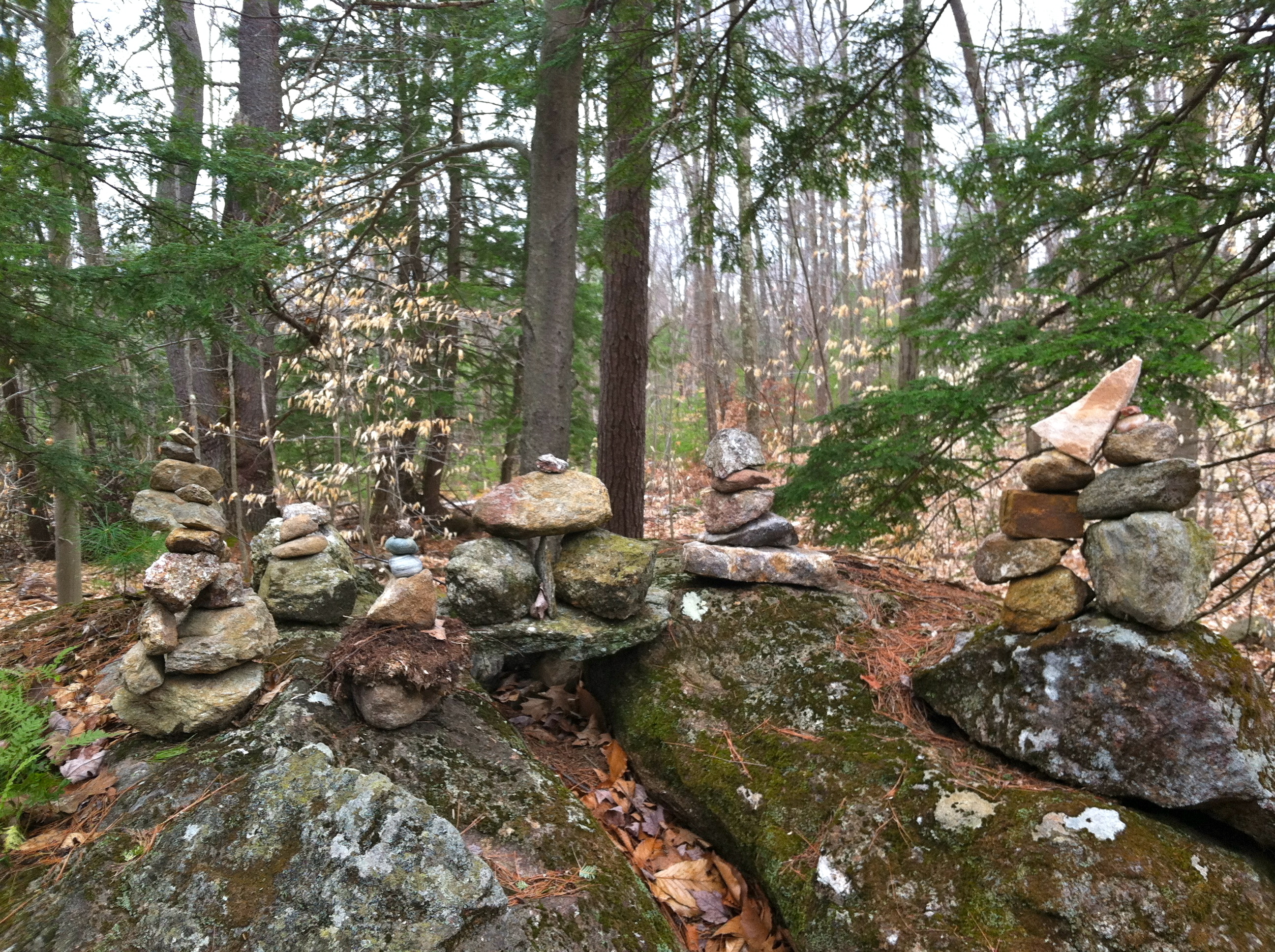
Tending the Cairns


IMG_2273

Tending the Cairns

Rain begins as I do but I keep walking, only
showers, sure I have time to get to the rock

two miles out the road into the woods,
climbing slowly to a ridge it never reaches.

Here is where my husband walked with me
his last time, in this season when we recount

liberation in order to count, the Passover meal
served after we eat bitterness and tears,

after we remember how we arrived
at this table. Winter walks hid what fell,

pillars of freeze and melt, how weather
broke the cairns I’ve built for him for years.

Now I reach the rock, my shoes muddy,
my hair a moist frazzle but no rain yet,

time to gather fallen stones and rebuild
balance, adding one stone I chose today, one

each visit. I bow, I tell him stories we told
last night then turn for home, running in rain.

The Train of Memory

IMG_2271

Passover is over, the train of memory that carried me into this year’s observance has moved on.  Working on the memoir I’m writing has meant living in the present moment (or as close to being present to the present as I can get) while on some level reliving the turbulent years that are at the center of the book.  Part of the book’s story is Eric’s illness and death.  Eric’s metastatic disease was first diagnosed just before Passover in 2006, and Passover this year was almost exactly the same time as that year.  It makes sense that the overlay of date and season, along with significant immersion in my experience of that period of my life, would make this Passover carry an extra weight of memory and grief.

One thing I’ve discovered in working on the memoir is how much of the story of Eric’s illness I was telling David two years later, shortly after we met.  Many days in April of 2008 I was writing emails and letters to David, telling him what had been happening on that day two years before — this is the weekend Eric first slept all weekend and hardly ate, this is the day he went back to the doctor and ended up at the hospital, and on and on.  I couldn’t help reliving everything and writing it down helped make it easier to carry. Having David to write it to made it easier still.

I’m having another one of those years.  Because I’m writing about and reading about remembering each day as if overlaid with that day in 2006, I found myself back on the train of memory.  Here is a letter I wrote to David on April 13, 2008:
Eric’s diagnosis came just before Passover, the Jewish calendar is lunar so the dates float across the Roman calendar. Two years ago tonight was the night we were going to host a Seder here with our NH Jewish friends, a Seder tradition dating back to when we first moved to NH.  I was so delusional in the face of Eric’s mounting illness I’d shopped for the big Seder the weekend before even while knowing on some level it would never happen.  So two years ago Eric was just home from the hospital and we did a little Seder with just the family. Eric told the Passover story, gave a short history on the tradition of the Seder, and Matt told Adrienne later that it had been great to listen to Eric, he’d learned so much, he wished he’d have more Passovers with Eric. Adrienne told Eric Matt had said that, then Eric said to me (so much circular conversation!) “Well, that’s a reason to stay alive for another year. To teach Matt more.” And Eric was dead in three weeks. Yikes. I’ve been crying a lot tonight.

But time is on its constant track, so even as I remember sad times from eight years ago, or remember remembering six years ago, today is today and we had a wonderful Seder last week with some of those same friends.


Still Snowing

IMG_2202

I love snow, and woke to a world full of it this morning, snow piled to the railings on the back deck, a huge white hood covering the grill.  Sitting by the wood stove with my cup of coffee, the kindling I’d set on the coals flicked into flame, a burst of light through the glass door. The blush of color ringing the dawn horizon deepened and caught fire also.

All the snow in the past few weeks, the storms and the skiing, and my obsessive checking of weather forecasts, reminds me of so many winters, so many treks through deep snow, so many outdoor adventures reveling in the way a great storm transforms the fields and forests into a cross-country skiing paradise.

In the year after Eric died, I couldn’t bring myself to ski or enjoy winter.  Snow storms made me sad.  Skiing had been such a part of our lives together, it didn’t feel right to ski without Eric.  I spent that first winter watching storms, rather than celebrating them.

Recognizing how far I’ve moved from that place of paralyzed grief, I remembered this poem from The Truth About Death, which I wrote just about exactly 8 years ago.  Eric would be happy knowing I’m back to celebrating explosions of snow like the storm that rode through New Hampshire yesterday.  He would have loved this winter.  Let it snow.

Valentine’s Day

The first real storm washes out the little color
in the landscape, the barn and shed and silo
weathered to the gray of a cut snow bank.
Sparrows peck in the perennial bed, tall stems
and seed heads clustered through snow. Small storms
of snow blow up off the roof of the hay shed,
sweep past. We would ski at midnight to catch
the pure snow before the storm slipped over to sleet.
So much happens every day, I need a wagon to hold
the hole. Last night I lay on the kitchen floor,
where our cat slept for her last year, her old body
bony, weightless. I noticed the narrow maple
floor boards running under the hutch, thinking
the world is flat even as I know it is round.

Small Stone #20

Natalie Schain

Tears welled up as I moved into child’s pose this morning, at the beginning of yoga class.  “I wonder what this is about,” I thought, and then in another pose when the tears were right there again.  Then during shavasana, the lying relaxation pose at the end of yoga class, I remembered.  Natalie died a year ago. I’ll light a candle for her at sunset and let the small glow it creates dance in the kitchen as it grows dark. The candle will still be burning when I get up in the morning.  Another day.

Day 7: Balance

IMG_2021

I cry during yoga.  The first time it happened was the first time I went to a yoga class in my latest attempt to bring a regular practice into my life.  When we settled in for shavasana, the lying pose at the end focused on relaxation, the teacher talked about gratitude for the chance to practice yoga, and being aware of what we could let go as we sunk our backs deeper into the floor, scanning our bodies for any places that still needed to release tension.  I felt a surge of tears rise and then quickly subside.  What was I letting go?

Then it happened again a couple of yoga classes later, and this week it’s happened every time I’ve gone.  Thankfully, that’s been a lot.  I’ve been telling myself I should start practicing yoga for almost a decade, and lately I seem to be doing just that.  I’ve been to yoga three times this week and am enjoying it and looking forward to it so much I’m hoping it’s going to flow right into being a regular part of my life.  Finally.

Today the teacher had us begin in crocodile pose, face down on our mats, our heads resting on our hands.  She wanted us to be able to feel our breath fill our bellies, pushing against the floor.  What I felt were tears rising again.  “We carry stories in our bodies,” the teacher said as we settled into an awareness of our breath.  “If we can make the stories not personal, if we can leave the drama and hurt that might go with the stories behind, we can work on accepting where our bodies are right now.”

Is it finally sitting still with mindfulness that’s letting some sadness rise to the surface for me?  Is it the practice of yoga itself, with its focus on the balance of mind, body and spirit, that’s pulling an unbalanced part of my mind and spirit back into a softer place?

The sun has been riding through the wall of gray storm clouds to the south all morning, sinking into a hint of light then brightening again into a broad halo.  By late afternoon it should be snowing and the world will be all gray and white and black.   Something is sinker deeper in me right now, or something deeply sunk is rising.  Or maybe both, a knot of sadness that’s surfing the stillness I’m cultivating.


The Metaphor of New Glasses

Photo by Grover Landscape and Design

Getting accustomed to progressive lens glasses, that correct for both up close and distant vision, isn’t easy.  If your eyes have been used to no correction, or just reading glasses, it takes a bit for the eye-brain coordination to come back into sync once you change what you’re looking through.  Which is why I’ve been putting off getting progressive lens for years, making do with reading glasses, even though my mid-distance vision has been deteriorating, and it’s meant taking my reading glasses off and on constantly.  Which has meant spending a good part of every day walking around the house, looking for my glasses.  I lost them for an entire day two weeks ago, finally finding them when they tumbled out of my pajama tee-shirt when I put it back on to go to bed that night.

I made the leap to new glasses last week, and I’m still adjusting.  The young man who helped me pick out frames at the optical shop, and who talked to me about managing the transition, told me, “You really have to look at what you want to see.”  Meaning, in order to bring something into focus through the right part of the lens, you need to point your face right at the object and look.

What a metaphor.  Looking to see.

David and I have been negotiating yet another unexpected left turn in our lives.  We’d been talking about how nice it was to go for months and months without one of those phone calls that turns everything upside down.  Then last weekend, another one of those phone calls came.  Navigating a tough week with new glasses has been both disorienting and good timing.  Disorienting because the world has literally looked different; good timing because I’ve had to pay attention to how I’m looking at things.

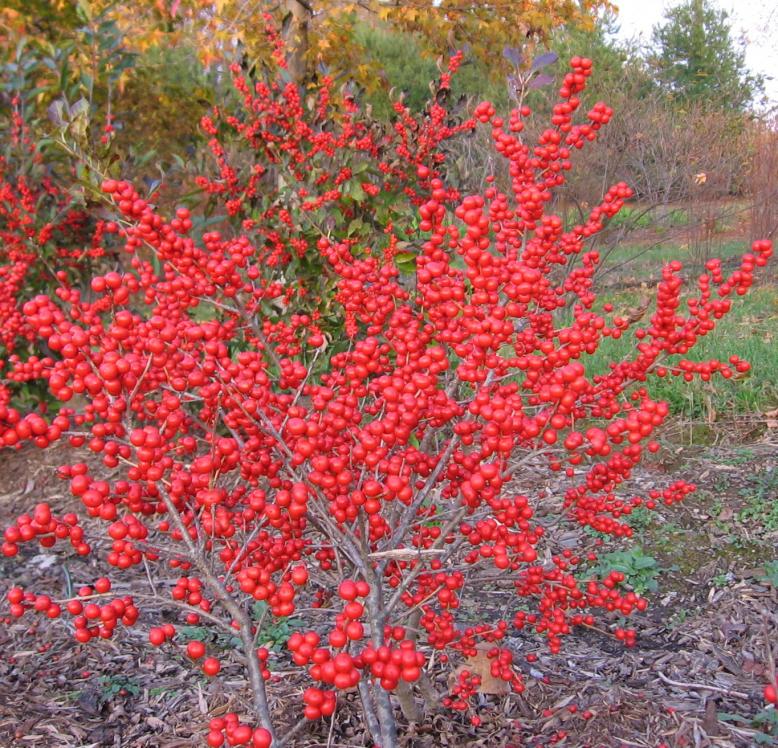
So this morning as I was running I was thinking about how I’ve been looking at things figuratively, reminding myself to remember all that is right in my life.  I was also really looking at the seasonal shifts in the landscape, particularly noticing the winterberry bushes so full of red this time of year, when most of the color in the landscape has dropped away.

I’ve been reading through essays I wrote a few years ago, looking for pieces that seem worth editing.  Paying attention to winterberries, seeing these flashes of brilliance in a dull season, is something I’ve been doing for years.  Two years ago I did a blog post about these red berries, and included a poem that features them from The Truth About Death. And here is what I had to say about noticing winterberries six years ago, again in the context of struggling to stay focused on what endures in life, what continues despite difficulty and loss.

I give up trying to keep track.  So much happens every day, and at first when Eric got sick and died so quickly I felt compelled to write down all that was happening, so he could catch up when he got back.  So I could catch up.  But it got to be much too much. There were all the details of death, the event, the paperwork, the telling people over and over, Eric is dead.  There were red berries on a bush along a river with sun on them, lit inside and out.  The unrelenting urgency of life just wouldn’t go away, all of creation and destruction churning along in its usual pattern, water moving downhill over and over.

Life is as urgent as ever, and if I remember to look directly at it, it comes into focus.

What Counts

wabi_logo

Several months ago I read a column in Poets & Writers magazine about the bounds of realistic ambition for a writer, or more specifically, for a poet.  The writer of the column made a point I make a lot — how many people have ever heard of those we poets consider famous?  Almost no one.  This was made very real for me recently when Sharon Olds, a neighbor of sorts, won the Pulitzer Prize, after winning the T. S. Eliot prize a few months before, and the local daily paper made a big deal about it, as they should.  But a friend who is deeply involved in and interested in the arts had never heard of her.  Really?  Yes, really.

As a poet I’m used to a small audience, both at poetry readings, and in terms of readers. Even widely published and celebrated poets have a very small audience in our current culture.  If you touch one person with a poem, the column author I read several months ago asserted, count that as a real success.

I’ve been back out in the world with The Truth About Death, giving readings, one of which was in far northern Vermont, at the Galaxy Bookshop in Hardwick, Vermont, The Town That Food Saved.  (It’s a very groovy little town, at the epicenter of Vermont’s grow local, eat local food movement.)  The local weekly paper had requested a review copy of the book, so I sent one off.  I was delighted by the review one of the staff wrote.  “Most people would not be excited to pick up this book,” the writer begins.  “Such a depressing subject, what can she say?  But this book is so well crafted, the poems so tight and intimate, that it is exciting to read.”  Not only did the reviewer praise the book, she got it.  “Some of the poems are elegies to lost love, but many are fierce as the author courageously faces a new reality, a world without a part of her soul.”  

As happy as this review made me, I was even happier when the editor of the Hardwick Gazette came to the reading and immediately approached me.  I thanked him for printing the review.  “I read the book too,” he said.  “I lost my wife two years ago, and your book really spoke to me.  I’m buying one for a friend who lost her husband last year.”  After the reading a woman bought a copy to donate to the local hospice program.

Yesterday I did another reading and again sold a few books, one to a woman who is giving it to her friend whose son died several years ago.  Two readings in two weeks, a total of 20 people at the readings and 10 books sold.  Not very big numbers.  But in those numbers is one man who was truly touched by the book, and hopefully at least a couple others who’ll see something of their own grief journey in mine, and realize that there is a way to navigate that difficult path.  That’s what counts.