
Talking About Feelings

Squam 2005 048

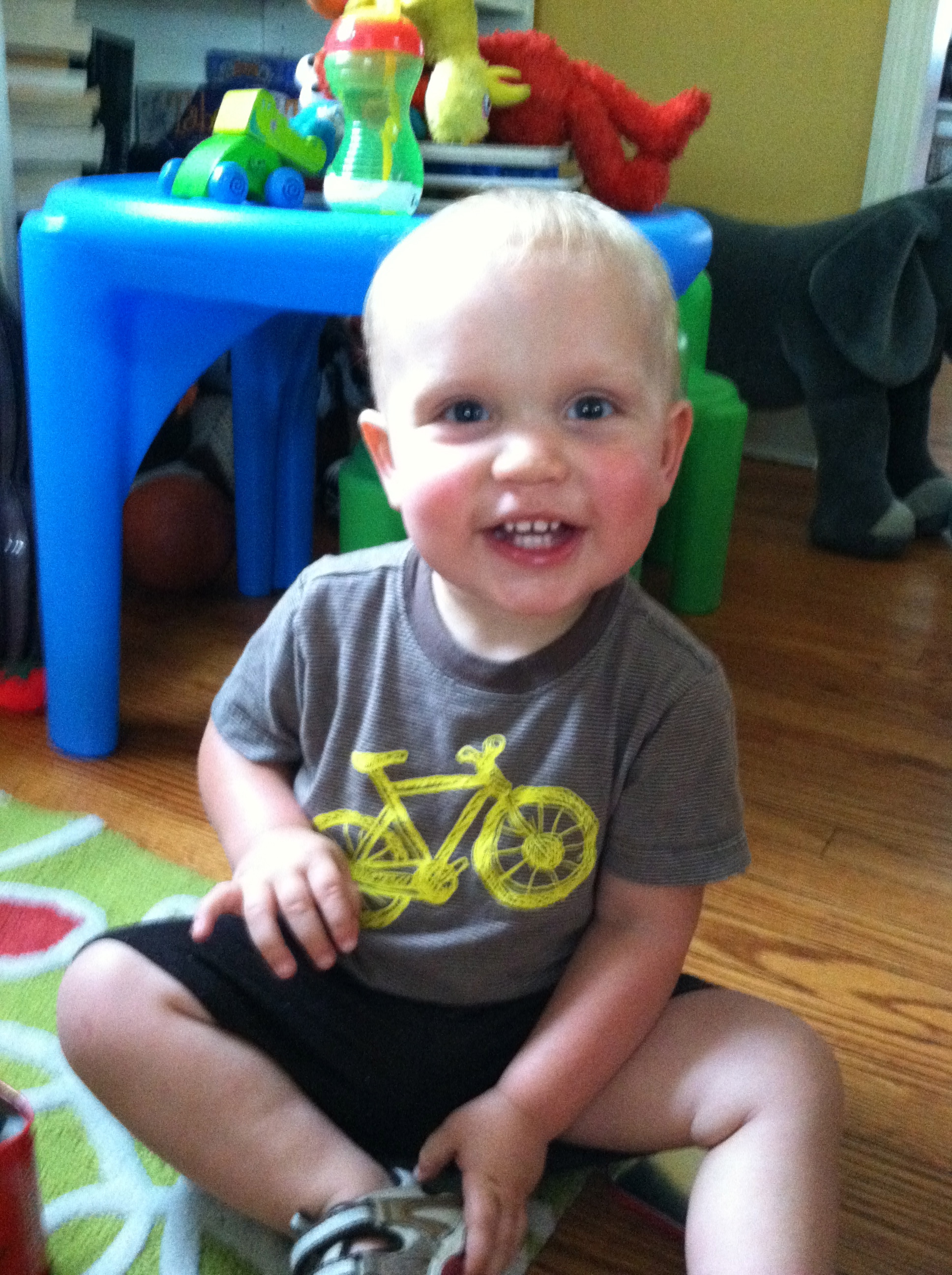
“I sad, miss Mama,” Emilio said to me on a Friday morning, after Adrienne had been away since Tuesday.  I’ve been impressed with Adrienne and Matt’s natural parenting instincts since Emilio was first born, and they’ve enhanced those skills through reading and paying attention to what other parents have to say.  One thing they do is help Emilio recognize his feelings behind difficult behavior, like saying to him, “I know it’s frustrating to you when I say no more videos,” when he fusses as they put away the iPad.

So I felt proud of both Emilio and his parents that Friday morning when he was able to tell me what he was feeling.  Helping a toddler recognize his feelings, and express them, is important regardless of the child’s gender, but it’s particularly encouraging with a boy, given how few cultural messages there are for boys to express feelings.

All of which reminded me of a talk I tried to have about feelings with Sam and two of his friends, more than a decade ago, when they all were about 12.  It was late on a Sunday afternoon in the cottage we were renting for a week on Squam Lake.  All our visitors for the weekend had left and I realized I now had a week ahead with a lot of male energy in a small space — Eric, Sam and his two friends Ben and Mike.  The boys and I were sitting in the living room of the cottage.

“Okay, Guys,” I said.  “Since I’m going to be the only female here all week, let’s practice talking about our feelings.”  The boys looked at me.  “What are you feeling right now?”

After a pause Mike said, “I feel hungry.”

Ben looked puzzled for a moment and then smiled.  “I feel sand between my toes.”

We all had a lot of fun that week.
My Loss Guru

Natalie Schain

After Eric died, his mother Natalie and I grew closer than ever. Our relationship was already a happy story of transformation.  When Eric and I married in 1980, I hadn’t yet converted to Judaism — in fact, that didn’t happen for another 20 years.  Disapproving of Eric’s marriage to a non-Jewish woman, Eric’s Orthodox Jewish parents didn’t come to the wedding.  They’d been unhappy about our relationship for the five years we’d been together — I was divorced (so was Eric), I wasn’t Jewish, I was a feminist who refused to convert to a “patriarchal religion” as I told the Rabbi Eric’s parents arranged for me to meet with prior to the wedding.

For years there was controversy about our attendance at Passover Seders and other family events, and arguments among the aunts and uncles and cousins about how we should be treated.  But over time, and especially as Eric’s parents got to know me better and began experiencing the joy of their first grandchild, Adrienne, their attitude towards Eric and me warmed and softened and then grew close and supportive.  As Adrienne and Sam grew up, visits to Eric’s family were frequent and happy occasions.  When Eric died in 2006, the strong connection between Natalie and me got even stronger.

I would call her several times a week to talk about Eric.  We would relay the dreams we were both having about him, talk about how much we missed him, where we thought he was now, how we could stay connected to him.  Natalie told me stories about Eric as a baby, Eric as a boy, Eric as a teen-ager.  I told her stories about Eric’s jobs and the wonderful sympathy cards I was getting from people who’d known Eric, how much they admired him.

Natalie was devastated and overwhelmed with grief, as I was, but she kept plugging through her daily life, as she had through so much loss.  Her mother died when she was eight, her father when she was a teenager.  She lost her oldest sister in her 50’s and spent close to a decade caring for Eric’s father as he became more and more disabled from MS.  Ray died in 2004, and within 3 years Natalie lost another sister, a brother-in-law, Eric and three of her closest friends.  Then she lost her remaining sister, her sister-in-law, her brother, and many more friends.  When she talked about surviving and moving through grief, she knew what she was talking about.  I called her my Loss Guru.

Now Natalie is gone.  She died early Monday morning, after a year of failing health.  I can’t call her and talk about grief and how to manage the groundlessness of the ever shifting world that includes both joy and pain, loss and gain.  I can’t call her and cheer her up with happy news about her grandchildren and great-grandson.  I can’t call her and listen to her talk about seeing and talking to Eric, because over the past year she’s been in touch with him a lot, a trick I asked her about at one point.  “It’s really interesting that you talk to Eric so much, because he doesn’t exist in this dimension any more.”

“I know,” she said.

“Then how do you talk to him?”

“He calls on a special number,” she said.

Now she’s taken that number with her.

Hospice II and III

II

“How did you get here, Helen?” Natalie asks me.

“I’m not Helen,” I say.  “I’m Grace.  And David is here too.”

“Oh,” Natalie says, nodding, her eyes unfocused.  She’s almost completely blind from macular degeneration.  She has been for years, and now that she’s in Hospice, after a year of disorienting illness and moving around from home to hospital to rehab to home to hospital to rehab, over and over and over, when she has any idea at all who is with her it’s a victory.  “Is this real?” she asks.

“I think it is,” I answer.  “And that’s a really good question,” I say.  “You’ve had so much confusion over the past year, checking in about what’s real and what isn’t makes sense.”

“And we’re happy to help you understand what’s real,” David says, coming over to touch Natalie’s arm.  I’m holding her hand.

III

“Is this a truck visit?” Natalie asks.  We’re back after two days, having been to New York for Emilio’s birthday party.  We’re on our way back to New Hampshire.

“What’s a truck visit?” David asks.  “People who come on a truck?”

“Yes,” Natalie says.

“We didn’t come on a truck,” David says.

“We’ve been to Emilio’s birthday party,” I say and Natalie puffs out her cheeks.  “Are you making cheeks like Emilio’s?” I ask and she nods.

After I’ve helped her drink some water and eat some soup for lunch I ask, “Are you comfortable?  Do you want me to put your bed back down?”  We’ve raised the head of the bed so she can eat and drink.

“That’s two questions,” she says.

“You’re right,” I say.  “Are you comfortable?”

“You can ask me two questions,” she says.

“Okay.  Are you comfortable?  Do you want me to put your bed back down?”  Natalie nods and I press the button and the bed flattens.

Sammy’s Roumanian Steakhouse

This slideshow requires JavaScript.

As soon as we walked into the Chanukah party a family friend was having at Sammy’s Roumanian we knew we were in for  a good time, and not only because it was our first chance this holiday season to all be together — Adrienne, Sam, Matt, Emilio, David and I. Told to expect something along the lines of the cheesiest Bar Mitzvah we could imagine,  we weren’t disappointed.

We’d walked through the sketchy neighborhood on the Lower East Side of Manhattan and down the steps to the crowded basement dining room, graffiti scrawled across the sign above the door.  The walls were plastered with photos and business cards, old news clippings and posters.  The ceiling was low, and in one corner, practically on top of the tables, a man at a keyboard was enticing everyone to get up in between the tightly packed tables and dance the Horah, circling the room.

“Who’s a Jew?” he shouted and everyone cheered.  “Who’s happy?” he shouted again and again everyone cheered.  “You’re a bunch of liars.  There aren’t any happy Jews!  Okay, okay, should we sign a Christmas song for the goys?”  More cheers.  He started playing the keyboard and singing, “Jingle bells, jingle bells, Jesus was a Jew.”  Everyone laughed. He looked at a couple sitting at the table right in front of him and nodded at the man.  “I recognize you from last year.  You’ve gained weight.”  More laughter.

The 750 ml bottles of Ketel One vodka came to the table frozen into blocks of ice.  Following large bowls of chicken liver chopped with onions and strips of turnip, the platters of food kept coming out of the kitchen piled high with meat, meat and more meat, then a few potatoes.  The two long tables of our party talked and laughed and ate and shouted over the music and the talk and laughter of all the tables squeezed around us.  The man at the keyboard took a break, then came back and shouted and swore and made fun of more people, and played more music.

The friend who hosted the party said he first found Sammy’s decades ago when he was in graduate school in New York City.  Nothing has changed.  As the night wore on, tables were taken down in the middle of the crowded room and the man at the keyboard started playing dance songs.  More bottles of vodka frozen into blocks of ice came to the tables.  Strangers and friends and family got up and danced.  Then sang and danced some more.  Emilio got passed from Adrienne to Sam to me to Matt, bobbing his head and dancing along with everyone else, long past his bedtime, his eyes frozen into wide circles of fatigue and excitement.  Chanukah had already been over for more than a week, but nobody cared.

The next morning I asked Emilio if he’d enjoyed the party the night before.  He nodded his head.  “Yes,” he said.  “Music!”

Hospice

IMG_1060Two women came out of the room closest to where I was sitting in the hallway with Natalie, Eric’s mother.  Natalie has been through another round of hospitalization, and this time the doctor suggested she be discharged to hospice.  The Connecticut Hospice is in a beautiful location, on the water at the entrance to Branford Harbor.  Sunday was a gray and windy day and the wall of windows in the lobby opened to waves sloshing against the rocks along the shore.

The older of the two women put her hand on my shoulder and stood next to me.  Natalie was dozing, I was sitting quietly, content just to be there with her through her cycles of waking and napping.  “I know what it’s like,” the woman said.  “It’s good of you to be here.”

I looked up at her.  “I know what it’s like too,” I said.  “I’ve been through this before.”  I nodded towards Natalie.  “I was married to her son who died.”

“My son, 46-years old.”  The woman gestured towards the room she’d come out of.

“I’m so sorry,” I said.  “Her son, Eric, was only 54.  Ocular melanoma.”

“Brain tumor,” the woman said, and again I said, “I’m so sorry.”  The other woman with her just stood there nodding.  We all looked at each other, quiet, letting our shared language of ages and diseases settle between us.

The women were gone by the time Natalie opened her eyes again.  The sound of a trio, violin, piano and guitar, playing holiday music came down the hall from a common room. “Let’s get moving,” Natalie said, not for the first time during the visit.  “Okay, let’s move.”

“Why don’t we stay here,” I said.  “We can listen to the music.”

Repositioning the Fan

This slideshow requires JavaScript.

“Our family’s fan is positioned too close to the source of shit,” Sam said to me Sunday evening, as we were leaving the hospital.  We’d been visiting a dear friend, hospitalized because of troubling symptoms, yet to be clearly diagnosed.  We had a Thanksgiving weekend rich in family and friends, all gathered essentially to love each other.  “Your family has a remarkable capacity for being together without any conflicts,” David said to me at one point over the weekend.

True, but in the midst of the weekend gathering we’d gotten a phone call about our friend that let us know, once again, the fan was in the direct path of the shit.  But our Thanksgiving weekend was also full of fun with epic eating, hours of sitting in the warm sunshine on the south side of the porch, and a walk everyone was able to take on Friday morning, including my mother who was in the hospital herself, barely able to get out of bed, just a few weeks ago.

The domed pile of brush I’d been adding to all summer and fall got torched on Friday night, burning quickly in a hot whoosh of flame, then settling down into a warm, firewood-fed campfire.  A gang of Sam’s friends had come for the weekend, and along with family, and more friends, a ring of us sat around the fire talking and laughing and telling stories.  Feeding the fire, we were feeding our selves, soaking up the fundamentally satisfying act of watching wood burn while sitting with people we love.

So I’m repositioning the fan, or at least putting it on oscillating mode, so it can swing between all this weekend’s memories — the food, the fire, the family and friends laughing and walking and sitting in the warmth of the sun and the burning wood, and yes, the suckiness of more illness in our lives.  Back and forth.  Here we go.

Darkness and Light and Sweetness

This slideshow requires JavaScript.

Last Sunday evening Adrienne, Matt, Melia, Emilio and I went to the Rise of the Jack O’ Lanterns at Old Westbury Gardens, near where Adrienne and Matt live.  The advertised 5,000 or more hand carved Jack O’Lanterns were not disappointing.  Rather, they were a visual delight, glowing in long rows along the dark path, many with intricate paintings and carvings of flowers, trees, butterflies and celebrities.  Emilio was very excited to see Kermit and Frankenstein.  “Kermit, again?”

But the best part of the evening was when we were leaving.  As we walked to the car we passed a large pedestal with an eagle sculpture on top and pointed it out to Emilio.  Looking back at it Emilio said, “Bye-bye, Eagle.”  Then as we drove out of the Gardens, settled back in his car seat, Emilio said, “Bye-bye, Jack O’ Lanterns.  Bye-bye, Pumpkins.” No tantrum about leaving, no fussing and whining.  Just a sweet moment of Emilio letting life pass along on its swift track, ready for whatever was next.

Yom Kippur: Memory, Love, Stones

Last night at Kol Nidre services, the eve of Yom Kippur, I sat next to a woman who was the pianist at services for many years.  She turned to me when I sat down.  “Hello, Grace, I’m Justine.”  I told her I knew her and was glad to see her again.  At the end of the service the Rabbi asked that we leave quietly, as the Yom Kippur service doesn’t officially end, but extends for 24 hours, with breaks for sleeping and resting.  Justine turned to me and said, “I know I’m not supposed to talk, but I just wanted to tell you how much I miss Eric, what a special man he was.  I wish I’d known him better.”  This is the seventh Yom Kippur since Eric died.

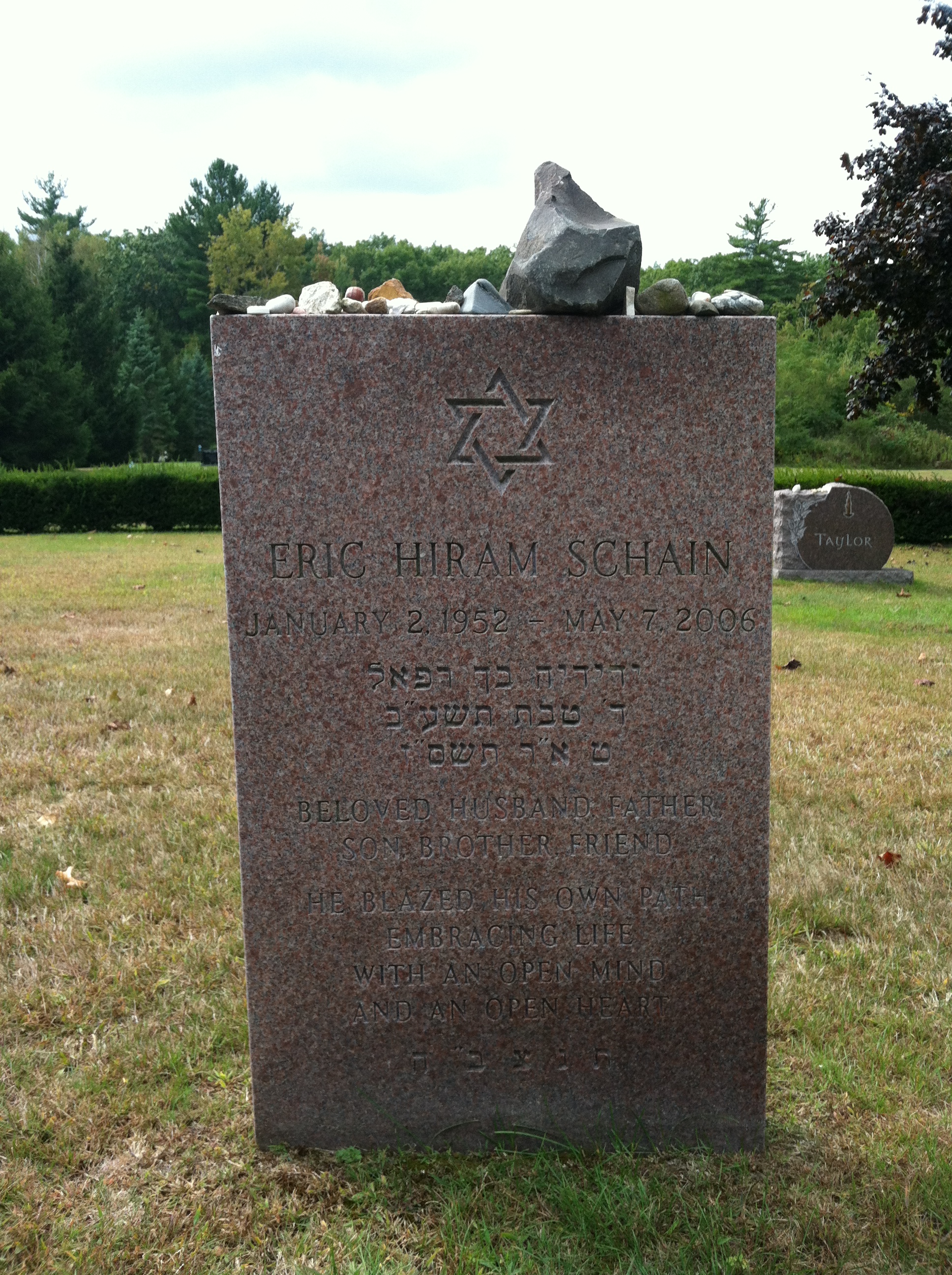
After my D’var Torah during Rosh Hashanah last week, a member of the Temple told me she’d gone to the Temple’s section of Blossom Hill Cemetery the day before.  Part of my D’var Torah talked about visiting Eric’s grave and leaving stones there.  He has a lot of rocks on his grave.  More than any other gravestone there.  “I had some young ones with me, and one boy wanted to know what the stones on the graves meant,” she told me.  “I explained that loved ones visit the graves and leave rocks as reminders of their visits.  Then he asked me how come some of the gravestones don’t have any rocks.  I explained the best I could, that maybe their family is far away, or gone.  Then the boy pointed to Eric’s grave and said, ‘Well look at all the rocks on that gravestone.  A lot of people must love him.'”

A New Year

Today is the fourth day of Rosh Hashanah, the Jewish New Year.  This year I was given the honor of delivering the D’var Torah during the second day services; it’s a tradition at Temple Beth Jacob for a member of the congregation to be the guest speaker on the second day.  A D’var Torah is a talk related to a portion of the Torah (first five books of the Jewish Bible), usually that week’s portion to be read during services, often including life lessons and commentary.  A sermon, in other words.

Eric was deeply involved with Temple Beth Jacob, and had written five different D’var Torah commentaries over the years, for different occasions.  I read them all, trying to plan what to say.  It was wonderful to reconnect with Eric in that way, to remember his commitment to Judaism and to sustaining a strong Jewish community.  I didn’t end up with a plan about how to focus my D’var Torah, but I did end up talking about the Yiddish saying, “One plans, God laughs,” and how planning can be laughable, in both a discouraging, and encouraging way.  Because our plans often get interrupted by unfortunate events, but we also often end up in fortunate places without any planning on our parts.

My talk went well, and those at services on Tuesday were uniformly positive in responding to my talk (I talked a lot, also, about Eric, and David, and the twists and turns of life and death and moving on — I’d put the talk up here, but it’s too long for a blog post).

But best of all is the herons I’ve seen every day since the beginning of the New Year.  Great Blue Herons were Eric’s favorite bird, and I see him when I see a heron.  The last two mornings, out for my morning run, a heron has lifted out of the brook I was running past and slowly flapped its long wings to cruise along the course of the water.  “Hey, Eric, Shana Tova,” I thought and heard Eric saying back to me, “Good job.”

Reading, Counting, Walking, Sliding

I did a lot of reading today, many books, over and over.  I read The Runaway Bunny, Spot Loves His Friends, Mommy Calls Me Monkeypants, Let’s Dance, Little Pookie, Goodnight Moon and B is for Bear.  I counted 12 “aminals” into their tin, over and over, “Zeba, Hippo, Rhino, Bear, Panda, EeEe (Monkey), Hawwee (Elephant), Beish (Giraffe), Gator, Tiga, Lepid, Gilla (Gorilla), lined them up on the floor, counted them again, put them back in the tin, lined them up on the table, put them back in the tin.  I walked around the block several times, slowly, slowly, turning around sometimes, looking at flowers and cars and trucks and the surface under my feet, splashing my shoes in puddles during the late afternoon, post-rainstorm walk.  I soaked my pants, going down a slide still beaded with raindrops, again and again, “Mimi too?  Mimi too?” until the slide was dry.

I spent the day with Emilio.  What a blast!