Hope and Weariness

cropped-img_24601

Waking up is a gamble.  Some days I open my eyes to a surge of excitement, my mind spinning with anticipation for what I’m going to do that day.  I get up and get moving. Other days I wake to a coil of anxiety in my gut.  Those days I try to stay in bed and breath relaxation into my body.  That doesn’t always work and if it doesn’t, I get up and get moving, as if it was a morning when I’m looking forward to what the day will bring. Moving always makes me feel better, but those dreary mornings can get wearing.

My sister Chris, whose blog I introduced you to over a month ago, has recently posted two new essays that speak to those alternating days of hope and weariness.  The essays are terrific.  I hope you’ll click over to A Cancer Journey With Chris and read them.

Puppy Love

Quinoa

At the end of the first week that David and I began seeing each other in 2008, I called him on Friday night.  We talked about the upcoming weekend when Adrienne and Matt, and Matt’s parents, were coming to see Church Landing on Lake Winnipesaukee, where we’d booked their wedding reception.  Matt’s parents were bringing their two West Highland terriers.

“They’re nice dogs,” I said.  “I like having dogs in the house.”

“Do you want a dog?” he asked.

“Oh, no,” I answered.  “I’m done with pets.  But you’d be astonished at how many people, close friends even, told me I should get a pet after Eric died.  They’d call and say, ‘I know what you need.  You need a dog.’ Or they’d tell me to get a cat, or something.  When I’d answer, ‘You do realize, don’t you, that even if I get a dog or a cat Eric is still going to be dead?’ that usually shut them up.  No, no more pets for me.  I travel too much for one thing.”

“Well that’s settled,” David said.

“What’s settled?”

“The question of whether we’ll have pets.  I’m done with having pets too.”

I was surprised he was already talking about whether we’d have pets, but I liked it.  It was a comfort to think there was a future where I’d be making decisions with someone else about how I lived.

I haven’t changed my mind at all about having a pet.  But this week, being a grandparent to a puppy has been a delight.  Quinoa is lively, spunky, affectionate and adorable.  His unbridled joy at seeing me when I take him out of his crate after being out doing errands, is so gratifying.  I’ve had dogs, and understand the attraction of having such a devoted companion.  But experiencing the devotion this week has made me feel the attraction again, not just understand it.

But it’s only puppy love.  When Quinoa goes back to Tennessee with Sam this weekend, I’ll be fine going back to my petless state.
 

Whipped Cream

90th weekend

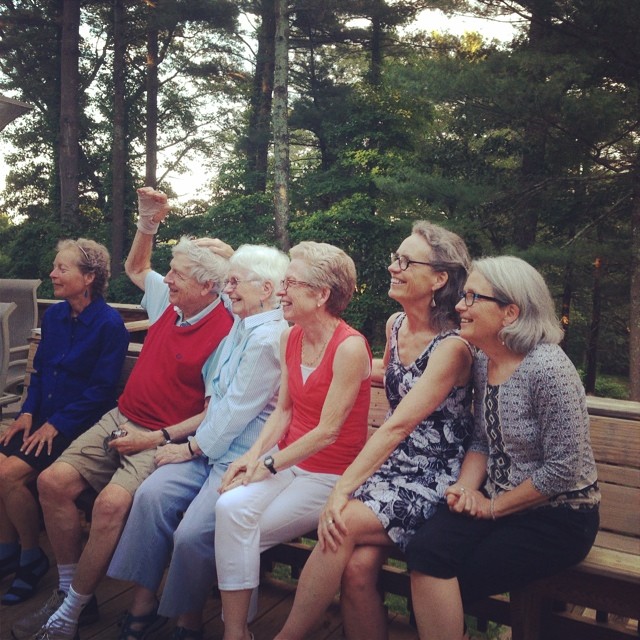
Coming up on the porch of the cottage my sister Chris is renting on the beach this week, I noticed there were four gift-wrapped packages, sitting on top of boxes, on a bench.  My parents were both sitting in porch chairs, and smiled at my sister Meg and me when they saw us.

“Those are for you,” my mother said, and Meg and I saw there was a gift for each of us four sisters.  Jeanne is visiting for the week, and we were all together over the weekend to celebrate both of my parents turning 90 this summer.  It had already been a great weekend, with all of my sisters and their husbands and most of the next generation there too.  Now we had gifts to open?

IMG_2316

Meg opened hers first, and I could see it was an album with old photos and papers from her childhood.  I opened mine eagerly.  There was my birth certificate.  There was a photo of my mother holding me as a baby, Jeanne and Chris, both older than me, standing next to her.  There were photos of my grandparents on both sides, photos of great grandparents I never met, photos of my sisters and me dressed up as young children and photos of us all goofing for the camera as teenagers.

Best of all were the pieces of writing my parents had chosen to include, from when I was a child.  In the boxes under the albums were more papers for us all to sort through and decide what to keep.  There are blank pages at the end of each album, so we can fill in with what we want from the boxes — report cards (my grades in high school weren’t as good as I’d remembered), newspaper articles, award documents, SAT scores?  I went through the box this morning, and there are treasures there, especially the writing I did in grade school.

But my parents had already picked out the best piece for the album.  It’s dated March 2, 1962 (I would have been nine years old), and was obviously written as a school assignment.

“Whipped Cream” is the title.  “Last Monday night we had whipped cream on our dessert.  My mother told my sister and father not to use much whipped cream.  After all that talk my mother took the most.”

IMG_2317

Telling Our Own Stories

cropped-img_24601

Regular readers of this blog know that I’m quite open about the struggles I face that arise from my own direct experiences.  If anxiety or grief or sadness comes from something that’s happened to me I’ll reveal what that something is.  It’s my story.  But sometimes I reference having a hard time without being specific about what exactly is going on, because what’s going on isn’t my story to tell —  I’m reacting to something that’s happening to someone I care about.  If it’s not my story, I don’t feel entitled to tell it.

One thing that’s been hard for me (and many others) for the past several years, and even more so the last 18 months, has been my sister Chris’ journey through a recurrence of breast cancer, and a spread of the metastatic disease.  Now it feels exactly right to write about it so I can direct you to Chris’ own story.  Over the past 10 months Chris has been writing a remarkable collection of essays about what it’s like to live with metastatic cancer and she’s eager to get these essays out into the world for others to read.  Today she launched a blog as way to share her story and her essays with as many readers as possible, so head to A Cancer Journey With Chris.  She has the first of the essays up and background of her cancer journey.  There’s more to come from her, so bookmark her blog, pass on the link, and stay tuned.

Views Far and Near

IMG_2296

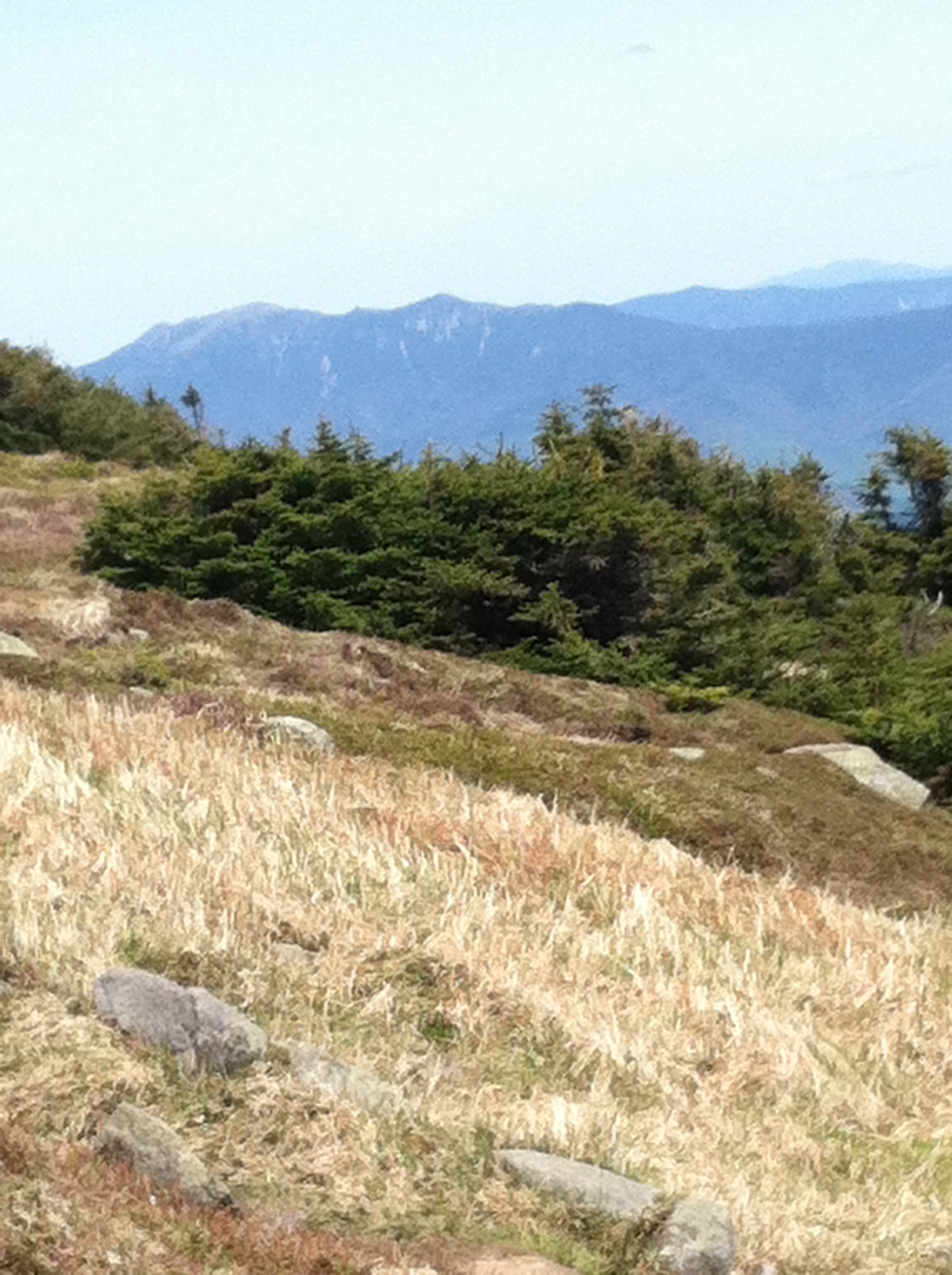
Yesterday was finally the day I got to linger and enjoy looking far into the distance from the top of Mt. Moosilauke.  The summit is broad and open, and sitting to the west of most of the White Mountains, has spectacular views of the Franconia Ridge and all the mountains beyond.  Every other time I’ve hiked to the top of Mt. Moosilauke there has been some sort of unfavorable weather to deal with — mist or scattered rain or snow, and most often hard wind that makes it too cold to stay at the top for long.

Yesterday was warm, sunny and bright, with little wind and no bugs.  This was the Moosilauke hike I’ve been waiting for.  I hiked with a group of friends and we spent a long time at the summit, enjoying the view, the fair weather and the satisfying stretch of our muscles after our first serious hike of the season.

But even when the views were near rather than far yesterday it was beautiful.  The rivers and brooks we crossed and hiked along were running clear over speckled rocks, glinting in the sun, and there were beautiful flowers along the trail — trout lily, tiny white violets and trillium. There was also a broad bush with lacy white blossoms we couldn’t identify.  When I look at the ridges of the White Mountains from any summit I can name the peaks.  When I look at flowers in the woods I want to be able to name them too, so I looked up the flowering bush — hobblebush viburnum.

IMG_2298

I’ve been thinking about view and perspective a good bit the last week, because I’m taking a break from working on the memoir.  Having spent three months working through several drafts, I can’t see it as a whole piece right now.  I can edit individual sections and see where a word or phrase or sentence needs to change.  But I’ve gotten too close to be able to see how the pieces work together and whether those pieces make sense as a book.  Time to step away for a bit and see if I can come back to it with a wider view.

Getting to the top of Mt. Moosilauke on a sunny day, enjoying the trailside flowers and tumbling water along the way, was a good lesson in perspective.


Journal Journey

IMG_2294

The journal is beautiful.  Covered with textured paper and bound with string, its large pages are thick and creamy, flecked with fibers.  When I couldn’t sleep one night almost six years ago, staying with David at a friend’s camp on Bear Island in Lake Winnipesaukee, I got up to write.  As I sat down and opened this journal, which David had recently given me, I thought to myself, “I’m going to write a book, in this journal, and only write it on islands.”  I filled that journal over the next eight months, always writing on islands, and have since filled many more pages on many other islands in other journals and on my computer.

When I started writing that night, I had no idea where my intention would lead and certainly never thought I would soon be recording another difficult life passage, as untimely cancer death bumped up close again within weeks of our time on Bear Island.  Turning that original island journal into a full story, into the book I’d imagined, has also meant going back to my life with Eric and how losing him reverberated in so many unexpected and disorienting ways.

That’s the memoir I’ve been working on over the last several months, starting with my time at Vermont Studio Center.  Several blog posts lately have talked about the difficulty of revisiting such turbulent times in my life, but there’s more to it than how hard it sometimes is.  It’s also necessary.

As one writer friend said to me, when I told her there are days I start to hate this book, “You have a story to tell and this is your story.”  She shrugged.  Another writer friend asked, “Why are you writing this book,” not to challenge me, but to understand why I’m engaging with a subject that’s clearly hard for me.  “It’s a story that resonates with people, that I want more people to hear,” I said.  “It’s about recovering and getting past something you feel you can’t get past and learning how to go on.”  She nodded.  She understood.

I understand too.  I need to do this, which is why I’m sticking with this book, even when it makes me uncomfortable.  How could I have known opening this lovely journal on a summer night six years ago it would lead me here?

A Good Week

IMG_2262

Last week was a good one for so many reasons I want to keep track.

  • My neighbor’s yard of riotous crocuses started to bloom.
  • The sun came out and it was above freezing.  I can’t overstate how sun-starved everyone I know is at this point.  It’s bad enough that there’s so little daylight in Northern New England in the winter (and I was in even northerner NE most of March), but when almost all of that daylight is cloudy and gray and it’s very very cold, people get cranky.
  • I not only met my Momentum Writing Goals for the week, I exceeded them.  And didn’t immediately turn that excess into new, harder to maintain goals.  A steady focus is what’s going to get this book I’m so engaged with done and I’m staying with my plan until I know a faster pace can stay as steady.
  • Three poems were accepted by the Chagrin River Review, a fine online journal I’m delighted to be part of.  Four of the five poems I sent out a couple of months ago have now been taken by journals.  Time to take another look at that fifth poem.
  • I was able to run for three miles twice.  Nursing a knee injury that’s kept me from running for months has not been easy.  Running is my go to stress reduction and standard work out.  Even I’ve been getting tired of listening to my knee complaints.
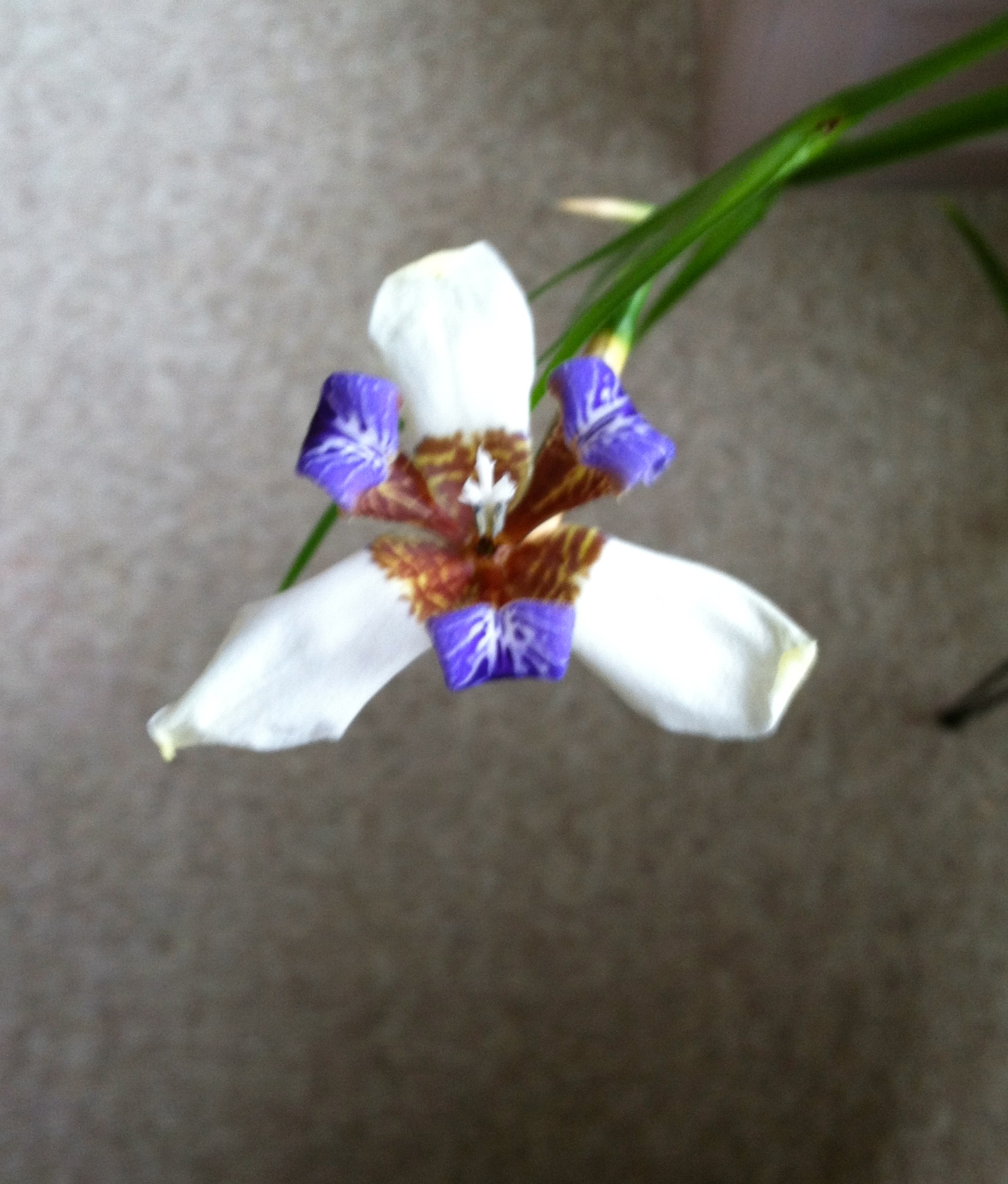
  • My houseplant that blossoms once a year for one day did its thing.  And a beautiful thing it is.

IMG_2260

I’m hoping for a repeat good week.

Momentum

IMG_2258

I’m home.  Sitting in front of the fire with a cup of tea on a raw Sunday afternoon, I’m feeling good about how I’m handling my Post-residency Stress Syndrome.  I was prepared for it, having read an article in a recent issue of Poets & Writers magazine about how hard the transition can be from the wonderfully creative and nourishing space of a residency center back to every day life.

A key point of the article is to plan how to “keep the momentum and sense of creative freedom you had at the colony.”  Vermont Studio Center has an abundance of creative freedom, which was evident at every visiting artist, sculpture and painter slide show and reading, and the slide shows and readings by residents.  The range of writing projects included free verse poetry and sonnets, novels, a book on the sound rhythms of everyday life, a book on Tibetan Buddhism, short stories, a book on food allergies, a few of us working on memoirs.  One woman was translating essays by the Austrian writer Robert Musil.  One writer was on an “emergency residency” to try to catch up to an approaching contract deadline for a novel; another was preparing publicity text and related essays for a memoir that will be published later this year, a memoir she wrote during multiple residencies over the past ten years.

And I can’t even begin to describe the diversity of the projects of the visual artists, from representational oil painting to tiny tempura paintings of single eyes and lips on individual ivory piano keys to closets constructed for an installation and filled with hanging extension cords and ropes and large empty aluminum cans and antique green ginger ale bottles.

But the most precious part of the residency was the time for my own project and how much momentum I built in focusing on my memoir.  I wanted to come home with the book fully occupying my mind, and I did.  Can I keep it up?

I have a solid plan for structured and dedicated writing time that I’ve stuck to so far.  Yes, it’s only been a couple of days, but I’m hopeful.  Instead of structuring my days around time in my studio and getting to meals, as I did in Vermont, I’ll structure my days around going into my study, shutting the doors and turning off the internet, for at least two hours at a time, at least five times a week.  And that’s just 10 of the hours a week I’m planning to devote to writing, and reading that nourishes the writing.  That total is going to be 20. And if I routinely exceed that minimum, which I hope to do, I’ll up it.

I came home from Vermont in the middle of writing a book.  Now it’s just a matter of getting from the middle to the end.

Word Count

IMG_2255

The memoir manuscript is currently at 101,800 words, though I already know a lot of those will be coming out once I get to the serious editing phase.  My word count of new writing each day over the past weeks, on days I’ve written rather than cutting and pasting what I’d already written before I came to Vermont Studio Center, and taking notes on that writing and then coloring those notes, has been 1,510, 2,508, 1,555, 1,017, 2,561, 2,034, 1,606, and 1,657.  I’m already at 2,153 today and there’s more to come. There’s a particularly painful passage in this story that I’ve been reading about in my journals and saved emails for several days now, and I want it out of my head and on to the page.  Today I care more about getting past this part of the book than I do about the word count.  But I’ll still record it.

Does this seem a bit obsessive, to be counting how many words I write a day?  I’m not alone, and that’s one of the wonderful things about being at a writing residency.  Over lunch yesterday I talked with another writer about how much we both like boxes.  She’s writing a novel in boxes.  I told her about the boxes of poems in The Truth About Death, my obsession with shaping the poems on the page to look like containers for the grief and disorientation I was pouring into them.

Then at dinner I sat with two other writers and we started sharing word counts.  One is writing a novel, another a nonfiction book.  Could we all cram another 500 words in during the hour we had between dinner and the poetry reading last night?  We did, and in fact we all went over.

Besides counting words, I’m counting the days I have left here.  Two after today. We’re all counting in some way, and we know we’re among others who count and keep track or let go and lose track.  Wherever our creative process takes us, we follow.  At least while we’re here.  That’s why we came.

Coloring A Book

IMG_2253

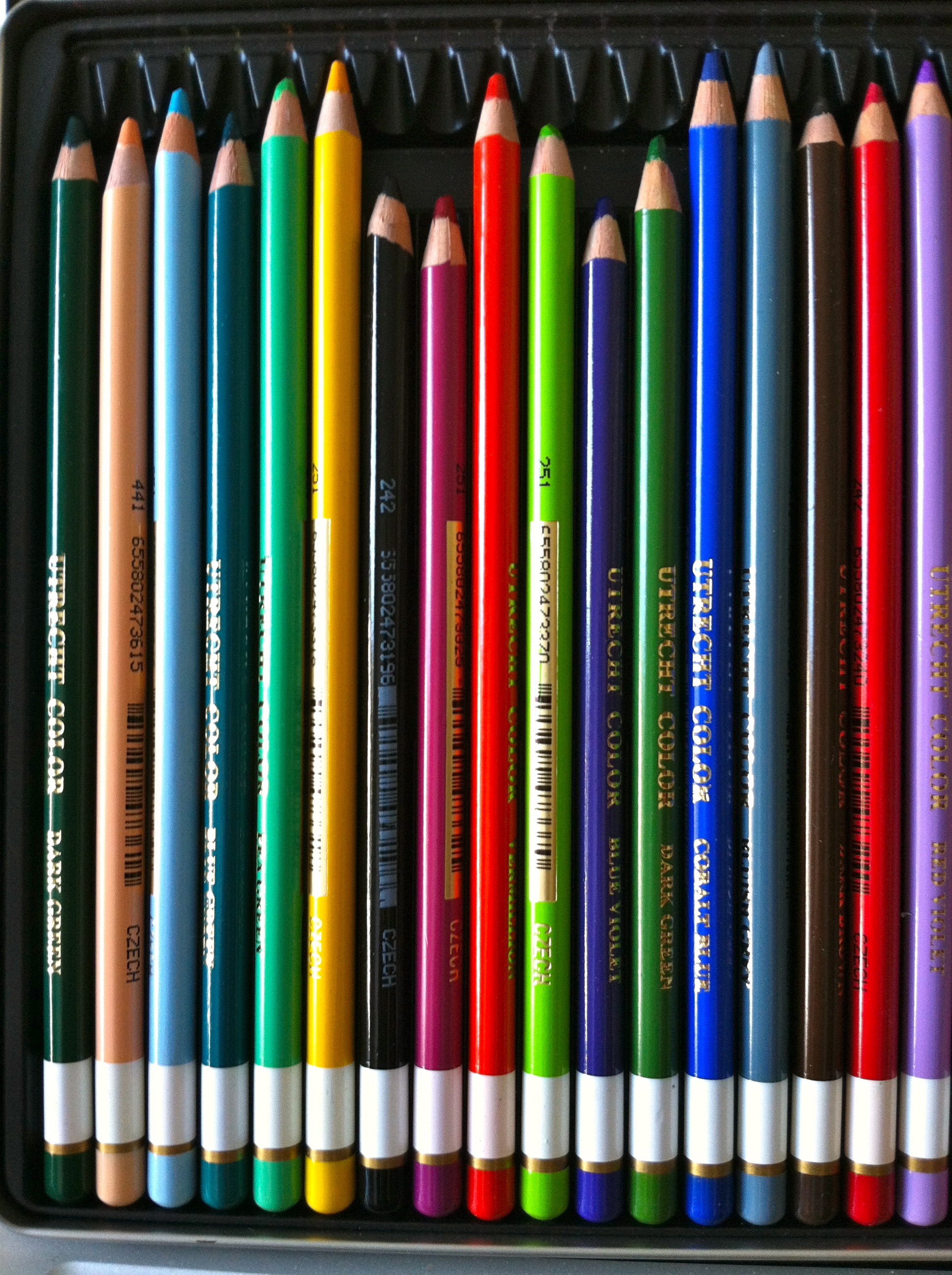
When I was at Vermont Studio Center in 2007 putting together the manuscript of The Truth About Death I created a map to figure out what I was doing.  My mind couldn’t hold on to the 271 pages of poetry I’d brought with me to shape into a book.  I was overwhelmed and stuck.  One morning I woke up and knew what I needed to do.  I read each poem and took notes on its images and ideas.  Then I bought colored pencils and colored — light blue for any kind of water, red for the demon, gold for death, purple for birds, a deep green for trees.  I’d been inspired by all the visual artists at VSC and understood that engaging the right side of my brain more directly would help me figure out how to shape my book.

I was right.  Once I’d colored all the pages of poem notes, I hung them on my studio wall and started drawing connections between the poems, relying on the colors to lead me to poems that would hold together in layers across the book.  It worked.  And it was fun.

So I’m doing it again.  I’m coloring.  I’ve taken notes on all the different pieces of the story I’m trying to make into a book and colored the notes according to a color key: Eric is Ice Blue, David is Vermillion, Dark Green is Anxiety/Secrets/Impatience, Blue Violet is Grief and Wildness, Time is Bluish Grey, Poetry is Orange, Love is Bordeaux Red.  I’m looking for balance — is there enough about each thread of the story I’m knitting together?  Too much grief, too little anxiety?

I put the colored notes up on the bulletin board in my studio and studied the colors. Then I started making a timeline map on a big piece of paper hanging on the wall, using the same color code to write out scenes and themes.   As I was putting the colored pencils back in their box I realized I could measure the balance of what’s going on in the book by their relative size.  The pencils I was using the most were smaller,  a natural graph. So far there’s an equal amount of grief and love in the book, a good sign I think.