France Sent Magnifique!


Above the Clouds on Mont Ventoux

English translation = France smells magnificent.

As soon as I walked into Anny’s yard in Lisores three weeks ago, I noticed the fragrance.  I couldn’t place the smell.  No wonder, I don’t live in France.  Anny’s gardens and house smelled enticing and exotic, smoky and salty and earthy, almost marine which made no sense, being more than 100 kilometers from the coast.  Was it the stream gurgling through a lavoir on her property (a public place in France set aside for washing clothes — I’ve seen many in villages since being at Anny’s house), the vegetation, the gardens, France itself?

The delicious smells of France have followed me to Provence.  Never having been here, but having seen many photographs of the hilltop villages in the Luberon area of Provence, I expected a French version of Tuscany.  It’s more like an Arizona version — high, dry hills and mountains and canyons and the smell of sun-baked cedars and scrub oaks and lavender. Lovely.

Domaine de Coyeux Winery in the Dentelles de Montmirail

We spent Monday doing a Cotes du Rhone wine tour, circling the Dentelles de Montmirail, a small but magnificently scenic range of mountains south of Vaison la Romaine.  Many of the vineyards we visited were tucked up against the slopes of the Dentelles, terraced lines of grape vines as high on the slope as possible until sheer rock faces made any further agricultural encroachment impossible.  We have a plan (drinking and packing with bubble wrap and clothes) to get all the wine that ended up in the trunk of our rental car to Tuscany (we have a flight from Marseilles to Rome on Saturday), and if there’s any left, back to the U.S.

Summit of Mont Ventoux

Yesterday we left Vaison la Romaine and drove south to Bonnieux, by way of Mont Ventoux, a 6,200 foot mountain that dominates the landscape of Provence, much higher than any of the surrounding mountains.  The summit is all white limestone, giving it a unique color on the typically green horizon.  We saw as many bikers climbing and descending the road over the mountain as cars.  In fact, the summit parking area was closed because a Netherlands film company was shooting a film about biking on Mont Ventoux.  The star (or the man at the center of the cameras’ foci) looked in his 60’s, which was consistent with the bikers we saw chugging up and zipping down the road.  This is not a trip only for the super-fit — there were many older men with substantial bellies popping out of their biking shirts.

Gorges de la Nesque
Gorges de la Nesque

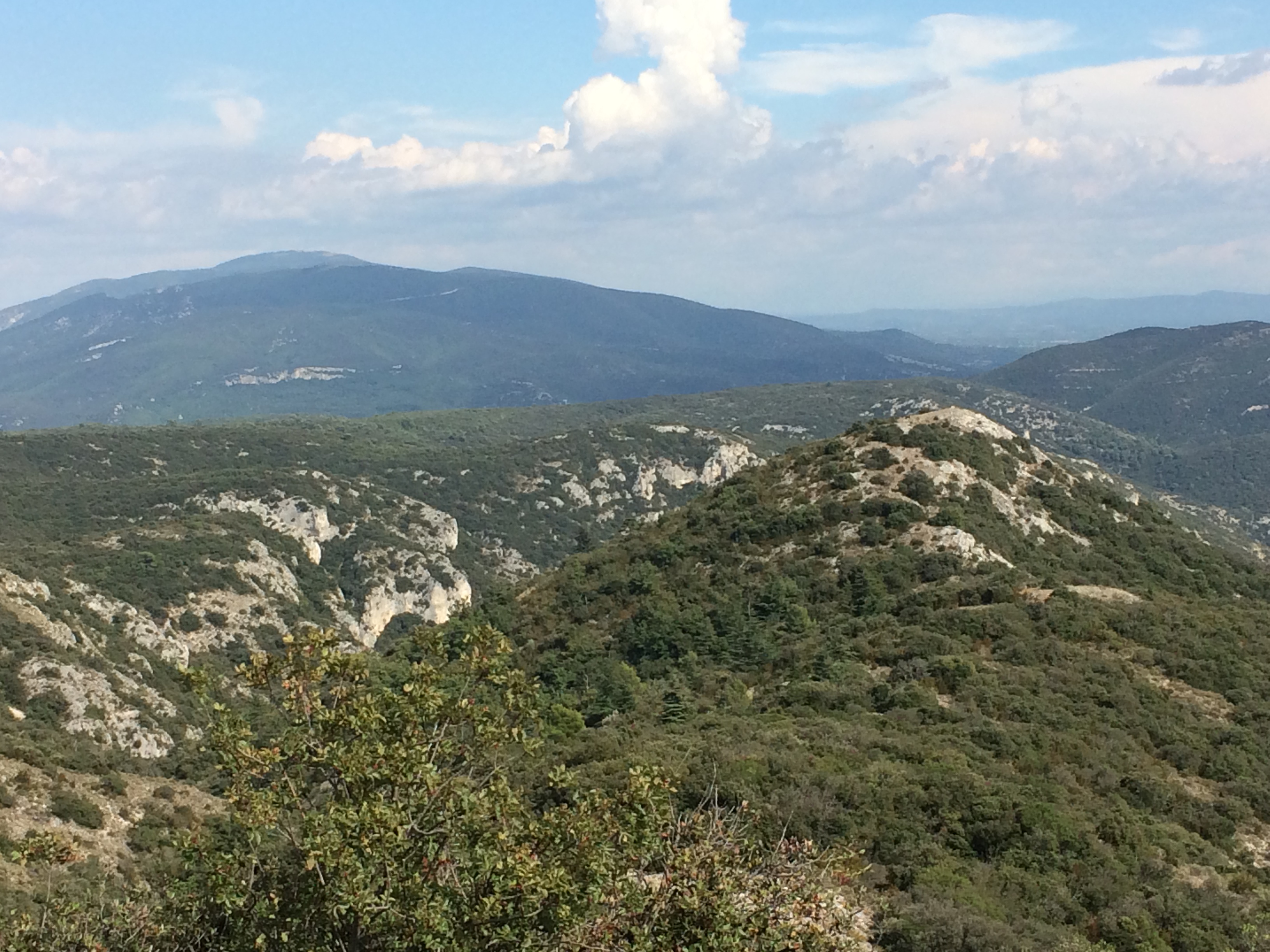
The biggest surprise was the Gorges de la Nesque, a spectacular canyon south of Mont Ventoux, where the River Nesque has cut through the calcareous rock of the Vaucluse plateau.  Today we found another canyon driving over to nearby Buoux to check on a restaurant and a hiking destination for later in the week.  This afternoon we walked through the ridge-top Foret de Cedres (towering cedars planted by a forester in 1860 for lumber), the town forest of Bonnieux, with striking views to the south.  We could see the Mediterrean coast in the distance, and perhaps Italy, waving to Alison and John who we’ll be joining next week in Tuscany.
IMG_2821
Foret des Cedres

And I kept sniffing the air, relishing the odors of a hot, dry and astounding world.

Vineyards and Mountains

Living in Provence (For A Week Anyway)

View From Upper Terrace

In the past when I’ve visited old stone cities in Europe, perched on hilltops, I’ve always imagined what it would be like to live in such ancient buildings, walking every day on streets paved with rocks or bricks, opening unscreened windows to the air with other houses tight up against my own walls.

View From Our Window

Now I know what it’s like, at least for a few days. David and I are staying in Vaison la Romaine, a small bustling city with a “new town” and an “old town,” both being very old by American standards. First settled in the 2nd century BC, Vaison la Romaine has a history of townspeople moving back and forth from the lower city on the north side of the Ouveze River to the upper side on the south, depending on what war was going on and who needed protection from whom. We’re staying in the medieval upper (as in further up the hill) city where the Count of Toulouse built a castle on a rock above the upper town in the 12th century.

Behind the Gate
Behind the Gate 

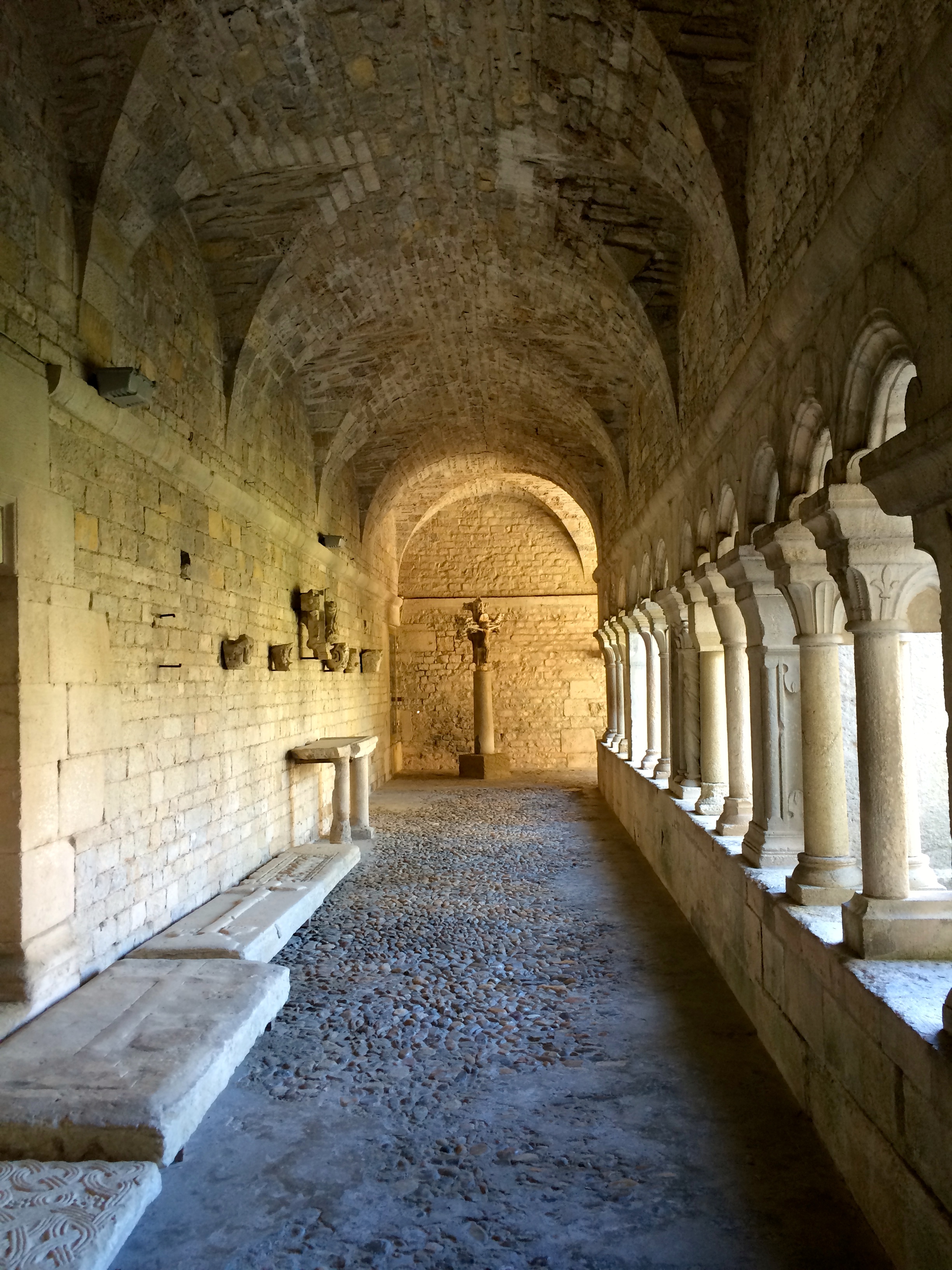
The lower town has impressive Roman Ruins, an outstanding Provencal Romanesque style Cathedral and Cloisters and streets busy with cafes and shops. The upper town is a maze of stone buildings (many built with stones from the Roman ruins during a particularly large exodus from the lower city to the upper) and streets with alleys and walkways circling in and out of squares centered around fountains.

Roman Ruins and Ancient Pot
Roman Ruins and Ancient Pot 

We arrived late on Friday night after a long day of train travel and negotiating our rental car out of traffic in Lyon to head south for Provence. The friendly owners of the AirBnB where we’re staying had made us a reservation at Le Bistrot du’O and we ate our delicious dinner (what dinner on this trip hasn’t been delicious?) and fell into bed. Our small flat is a long room with one window on the front facing out on Rue de Fours, the bedroom behind curtains at the back. It’s like sleeping in a cave, which suits me fine. But the owners have made it clear that their three level terrace off the back of their apartment upstairs is ours to use as we wish, and we’ve spent hours under the grape arbor, having lunch, reading, and drinking Cotes du Rhone wines that are impossibly inexpensive here.

Lunch Under the Arbor

Yes, we’re enjoying Provence immensely, spending a few days living in a medieval city, which is as delightful as I’d always imagined it would be.

Welcome to Provence
Welcome to Provence
Through the Ancient Gate
Old and New
Old and New
Cloisters
Cloisters
Cathedral From Cloisters

The Waldhaus Balance

IMG_2764

Our trip to the Swiss Alps was inspired by my sister Jeanne and her husband John. They’ve been coming here for over 10 years to hike, most years staying at the Waldhaus Sils, a grand and historic hotel in the Engadin Valley.  An independently owned hotel, it’s been operated by the same family for five generations.  It’s comfortable and gracious, without being too luxurious (though it is an incredible luxury to be able to stay here) and the stellar location is matched by the bountiful and delicious food.  We’re so happy we finally got here to spend time with Jeanne and John and understand why it’s a place they come back to again and again.

But there needs to be a balance when staying in a hotel with an enormous breakfast buffet (including plenty of food to take back to your room and pack for your hiking lunch) and a five course dinner every night.  That balance for us is hiking — working off some of the excess eating while relishing the grandeur of the Alps.

IMG_2763

Today’s hike was to an alpine lake, a direct 2,000 foot climb up from Maloja to Lunghinsee, then a long walk back along the descending ridge to the Waldhaus.  Much of today’s hike looked like England, with open slopes colored by heather and other wildflowers.  I enjoyed asking the hiking guide Cecile and Uda, a woman from Germany, what the German names were for the many flowers I recognized.

IMG_2769
The valley where the movie Heidi was filmed.

So hopefully today’s walk helped worked off some of what I ate for dinner, all delicious.

Iberico ham with preserved fig and crisp bread
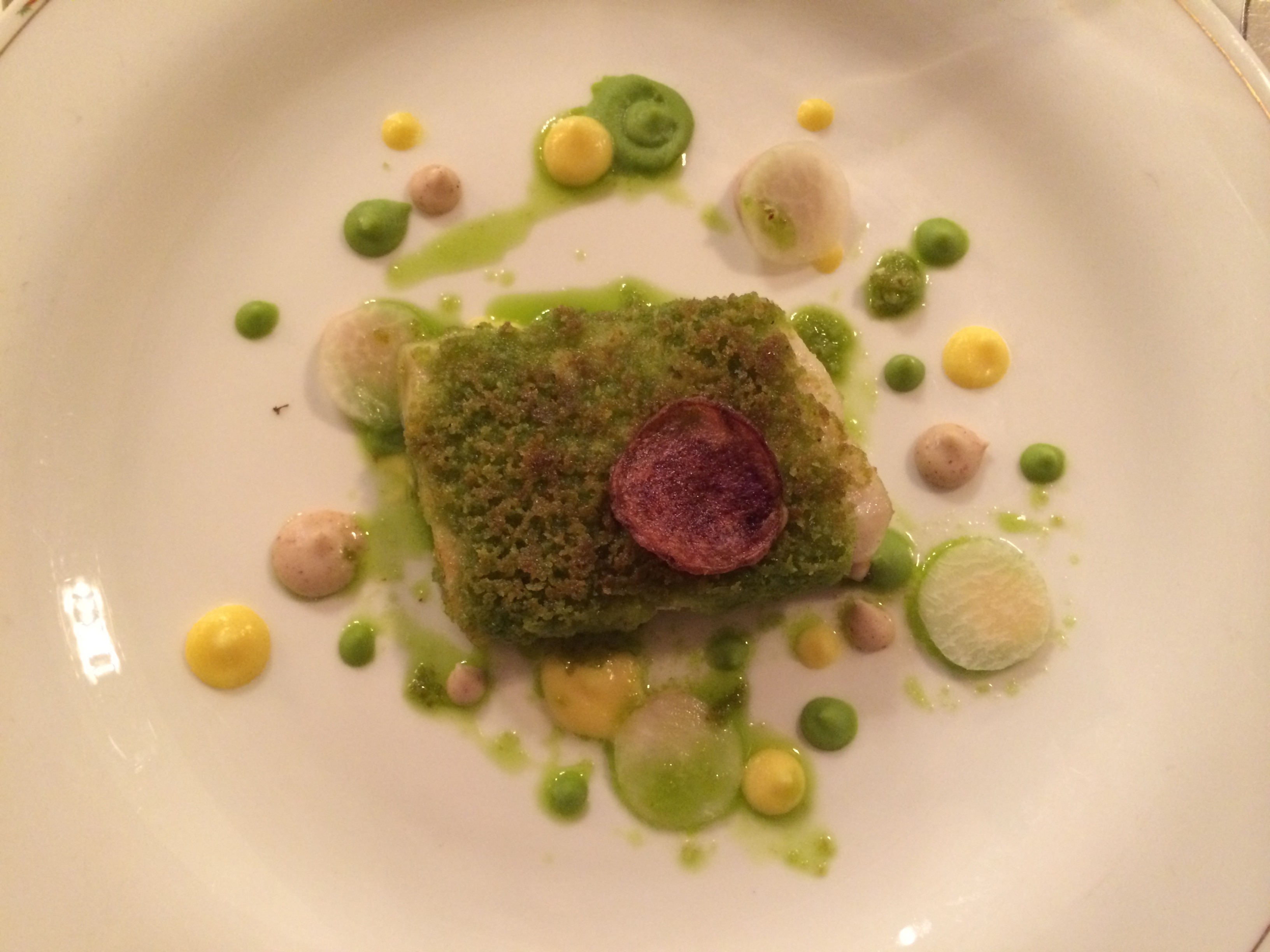
Fillet of pike perch with chervil crust, vegetable creams and kohlrabi
Poppy seed parfait and berry compote with rum


I Walked to Italy Today


IMG_2681
Bernina

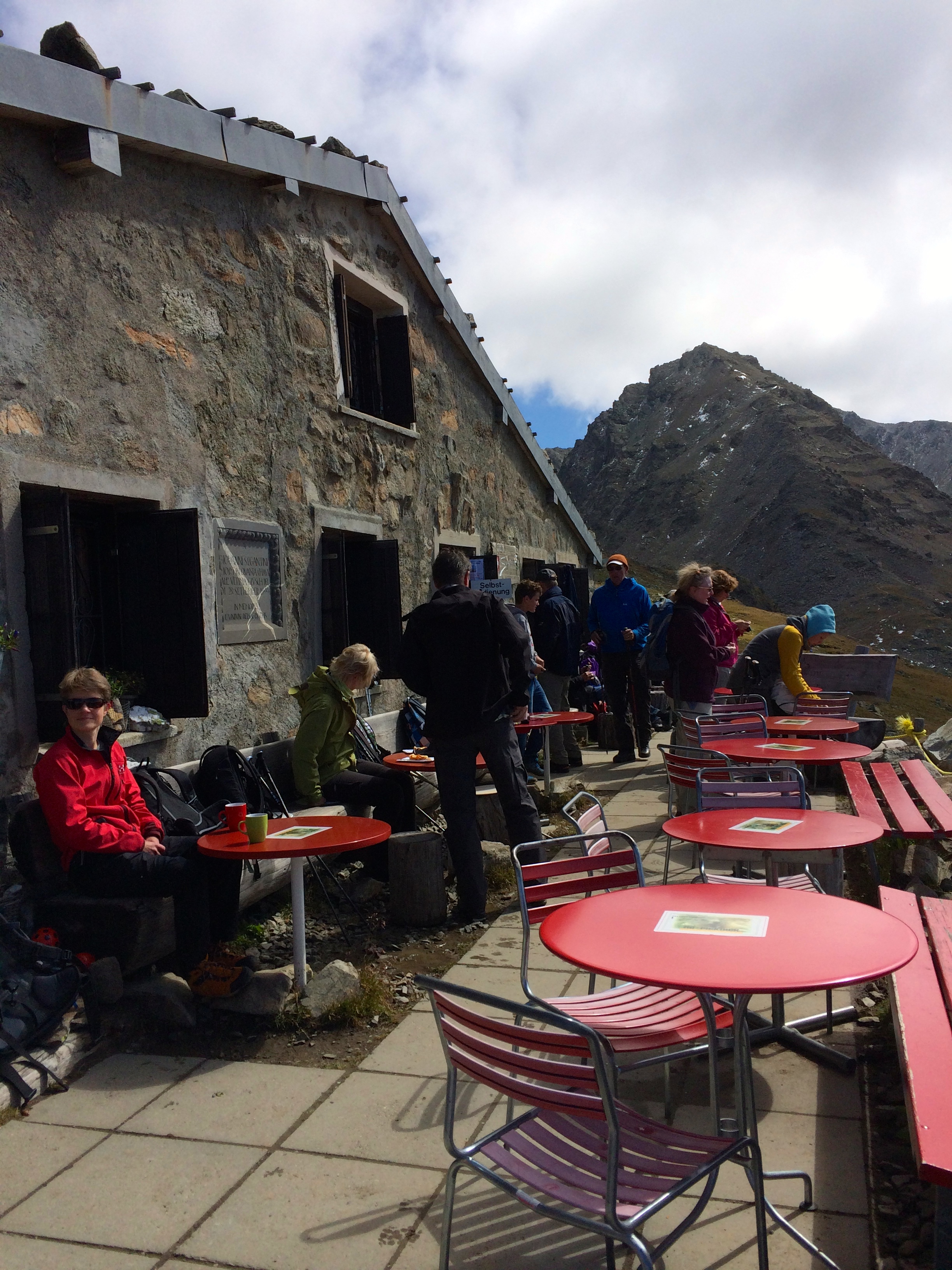
The sun is setting behind the western wall of mountains in the Engadin Valley, making silver patches on the Silsersee lake, one of four lakes that stretch out along the Inn River as it flows through this area of the Swiss Alps.  Yesterday we hiked up the eastern ridge along the shoulder of Mt. Bernina, the highest peak in this area, getting wonderful views of the Bernina Glacier.  The first 2,000 feet of the trip was in a funicular (a cable tram that goes up steep inclines), then we climbed another 1200 feet and hiked across the open mountains at an elevation of 7,500 feet.  We passed the Segantini hut (a hut used by the Italian landscape painter Segantini) with a cafe terrace serving hot and cold drinks and food.  A chairlift carried us back down after 8 miles of hiking, a fantastically fun way to end a glorious hike.

IMG_2686
Segantini Hut

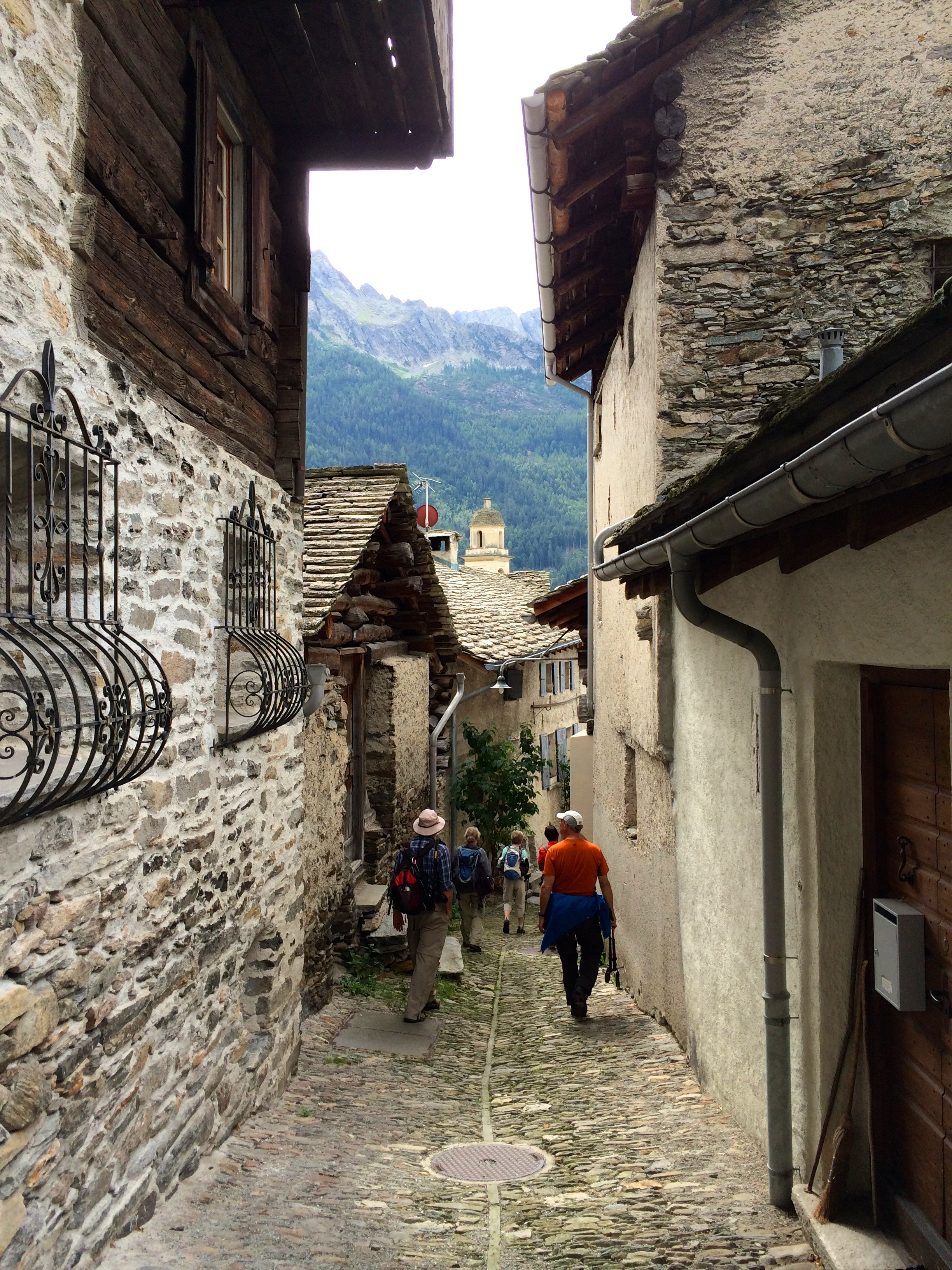
Today we headed south into the Bregaglia Vally, traveling through the town of Maloja at the top of the Engadin, where the elevation drops 2,000 feet.  The buses that shuttle hikers up and down the valleys deftly handle the long series of hairpin turns (and I mean truly hairpin) of the road.  The bus rides into and out of the Bregaglia, like the funicular and chair lift yesterday, were a great way to book end another incredible hike, that included walking through several villages hugging the sides of the narrower Bregaglia Valley, like Soglio, brimming with the charm of old stone houses and narrow cobbled walkways.  In Castasegna, on the Italian border, we walked into Italy and had espresso at a small cafe, enormous mountains surrounding us.

IMG_2701
Another View of Bernina
IMG_2711
Hiking in Bergaglia
IMG_2718
Soglio
IMG_2724
Soglio Flowers
IMG_2732
Today’s Hiking Crew

It’s a good thing we’re hiking so much, given how much rich and delicious food we’re eating staying at the Waldhaus Sils, a grand and historic hotel in Sils Marie.  But that’s another whole post, so stay tuned.

IMG_2734
View of Bregaglia Valley


Art is Therapy II

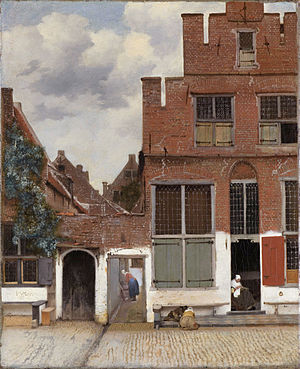
300px-Jan_Vermeer_van_Delft_025

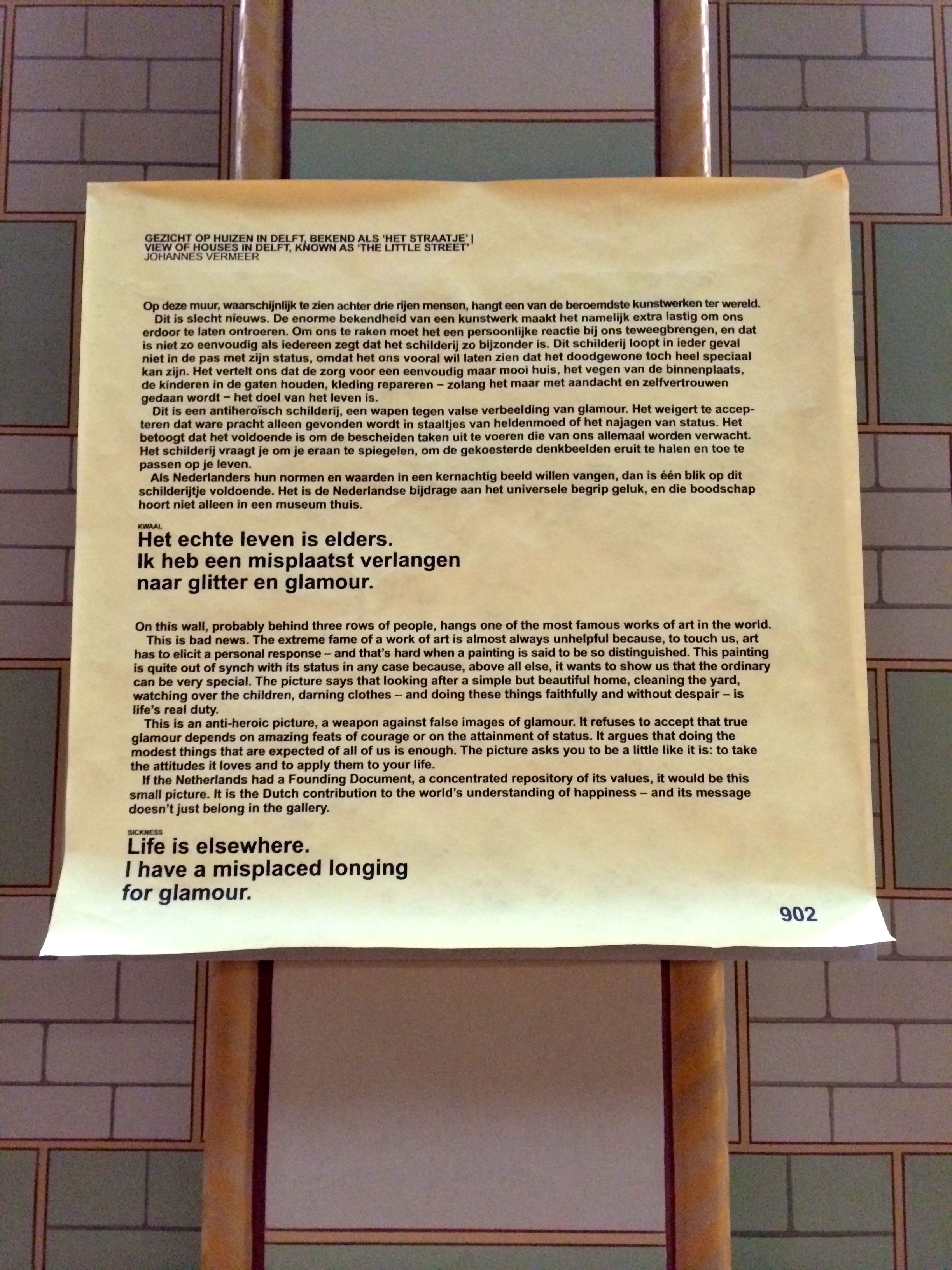
Below is what Alain de Botton and John Armstrong had to say, or thought we might learn, from Johannes Vermeer’s painting, The Little Street (1657-16580).  The last paragraph, about the values of the Netherlands, is very true to the modest accommodations to foster happiness that we experienced from the friendly and reasonable people we met in Amsterdam.

I had a small plastic bottle of water in my purse when David and I went in to the Van Gogh museum.  As I went through the security check, the woman checking bags saw my bottle of water.  “You can’t drink that in the museum,” she said.  “Okay,” I replied, happy that she did’t make me get rid of it.  “Well,” she went on, “you can drink it on the stairways, just don’t drink it near the paintings.”  Then when David and I got on the tram to catch our train at the Central Station on Sunday morning, the man collecting fares waved David’s money away.  “It’s only two stops,” he said.

On this wall, probably behind three rows of people, hangs one of the most famous works of art in the world.
This is bad news. The extreme frame of a work of art is almost always unhelpful because, to touch us, art has to elicit a personal response – and that’s hard when a painting is said to be so distinguished. This painting is quite out of synch with its status in any case because, above all else, it wants to show us that the ordinary can be very special. The picture says that looking after a simple but beautiful home, cleaning the yard, watching over the children, darning clothes – and doing these things faithfully and without despair – is life’s real duty.

This is an anti-heroic picture, a weapon against false images of glamour. It refuses to accept that true glamour depends on amazing feats of courage or on the attainment of status. It argues that doing the modest things that are expected of all of us is enough. The picture asks you to be a little like it is: to take the attitudes it loves and to apply them to your life.

If the Netherlands had a Founding Document, a concentrated repository of its values, it would be this small picture. It is the Dutch contribution to the world’s understanding of happiness – and its message doesn’t just belong in the gallery.


Art is Therapy

800px-Pieter_Jansz._Saenredam_-_Interior_of_the_Church_of_St_Odulphus,_Assendelft_-_WGA20619

David and I had tickets for the Rijksmuseum in Amsterdam, and every intention of spending Saturday afternoon exploring its significant collection, particularly of art from the Netherlands.  But it was an unpredictable day, and we ended up not getting to the museum until 4:30, just before it’s 5:00 closing time.  We quickly made our way upstairs so David could see Rembrandt’s The Night Watch.  As we went through the main gallery, I noticed posted signs on the walls.

IMG_2656The signs are part of an Art is Therapy exhibit at the museum.  From 25 April, British writers and philosophers Alain de Botton & John Armstrong will be showing in the Rijksmuseum what art can mean to visitors. And not so much from an (art-)historical point of view, but focusing rather on the therapeutic effect that art can have and the big questions in life that art can answer.

Here is what they had to say about the painting above, by Pieter Saenredam, Interior of the Church of St. Odulphus, Assendelft, painted in 1649.

The architects of the building depicted here, and the artist himself, were convinced about a challenging idea: if you want to get close to the important things, you will need a lot of calm, of whiteness, of emptiness, of peace. Serenity, concentration and order aren’t luxuries, they aren’t a superficial concern for a particular style of interior decoration; they are preconditions for a thoughtful, balanced life. The picture sends a slightly stern, but welcome message: you have to flight off distraction, it can ruin your life; you have to prioritize ruthlessly; entertainment is the enemy; simplify, get rid of what you don’t really need, don’t check your email all the time; focus is an achievement. Saenredam didn’t just paint a church, he painted an attitude to life.

A stern but welcome message indeed.


Six Centuries of Women-Only Space and A Magnificent Library

IMG_2600

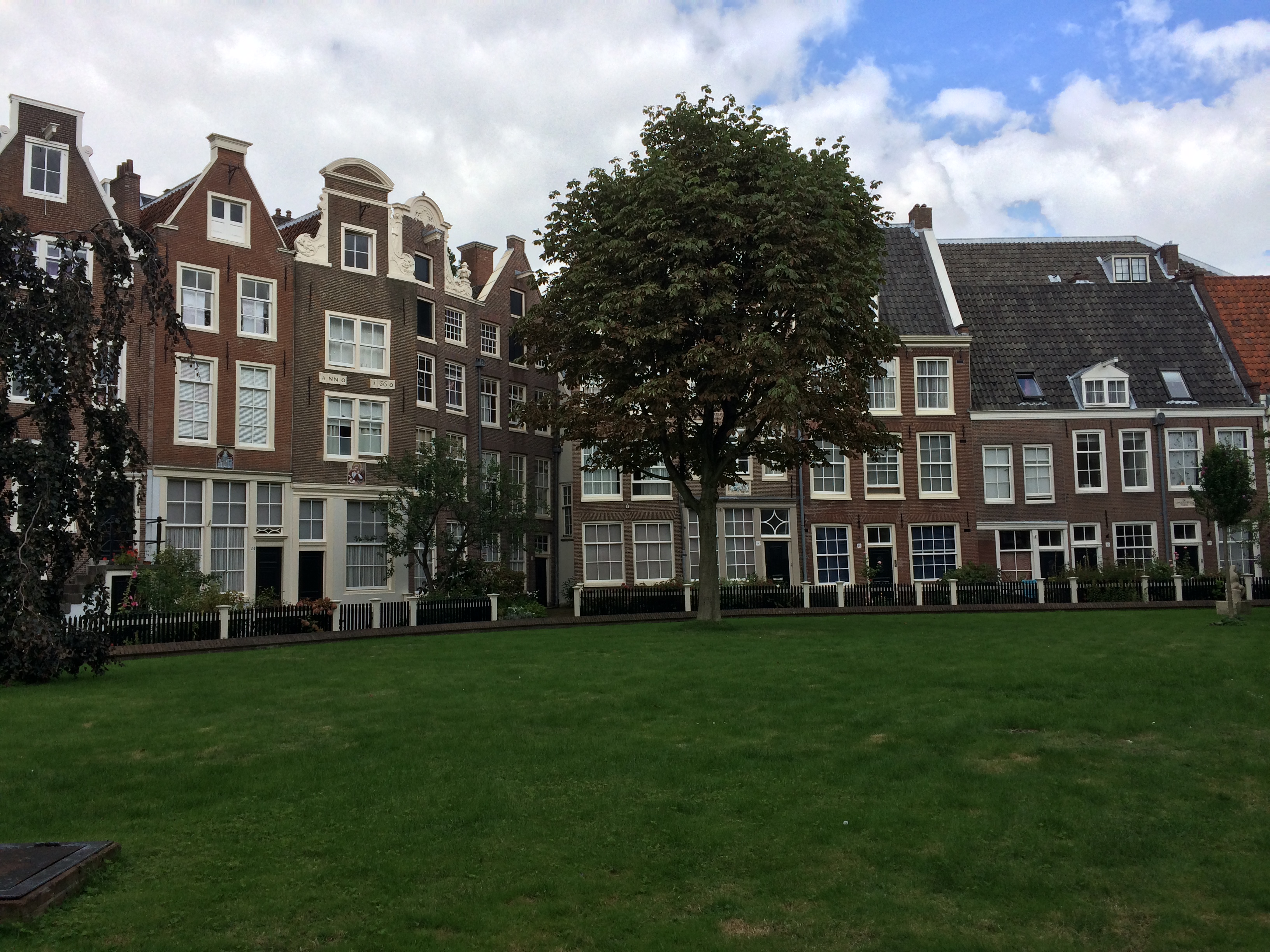
Imagine over six centuries of women-only space.  Then go see it at the Begijnhof in Amsterdam.  This quiet courtyard in the busy city center was first settled by Beguines, pious, single and Catholic women who wanted to do good works but didn’t want to enter a convent.  Women have been living here since 1346.  It was literally a “woman’s island” as the courtyard used to be surrounded by a canal.  Over the centuries, single women, including many widows, continued to live in the Begijnhof, committing themselves to lives of Christian poverty, simplicity and prayer.  They spun wool, made lace, taught and cared for the sick and poor.  The last Beguine died in 1971 but the Begijnhof still houses single women, mostly Catholic seniors and students.

IMG_2628

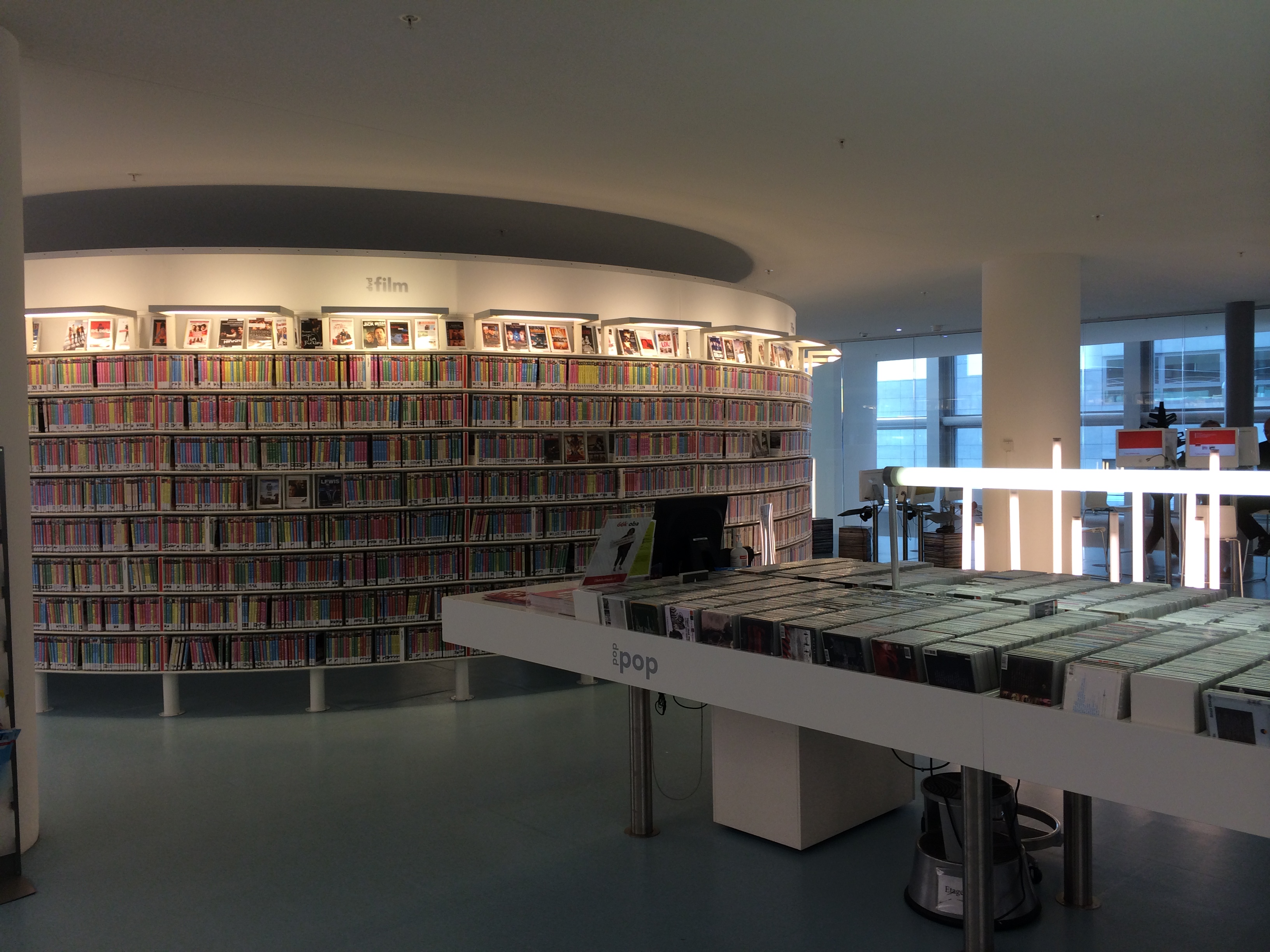
Now imagine a library built with modern technology and architectural sensibilities. Opened in 2007, the nine-story “tower of knowledge” as it’s called is the Netherlands’ largest library.  It’s bright and modern and full of free internet terminals and an entire floor that appeared, as we floated by on escalators, to be devoted to CDs and DVDs.  The cafe on the top floor has the best views in the city.

IMG_2622

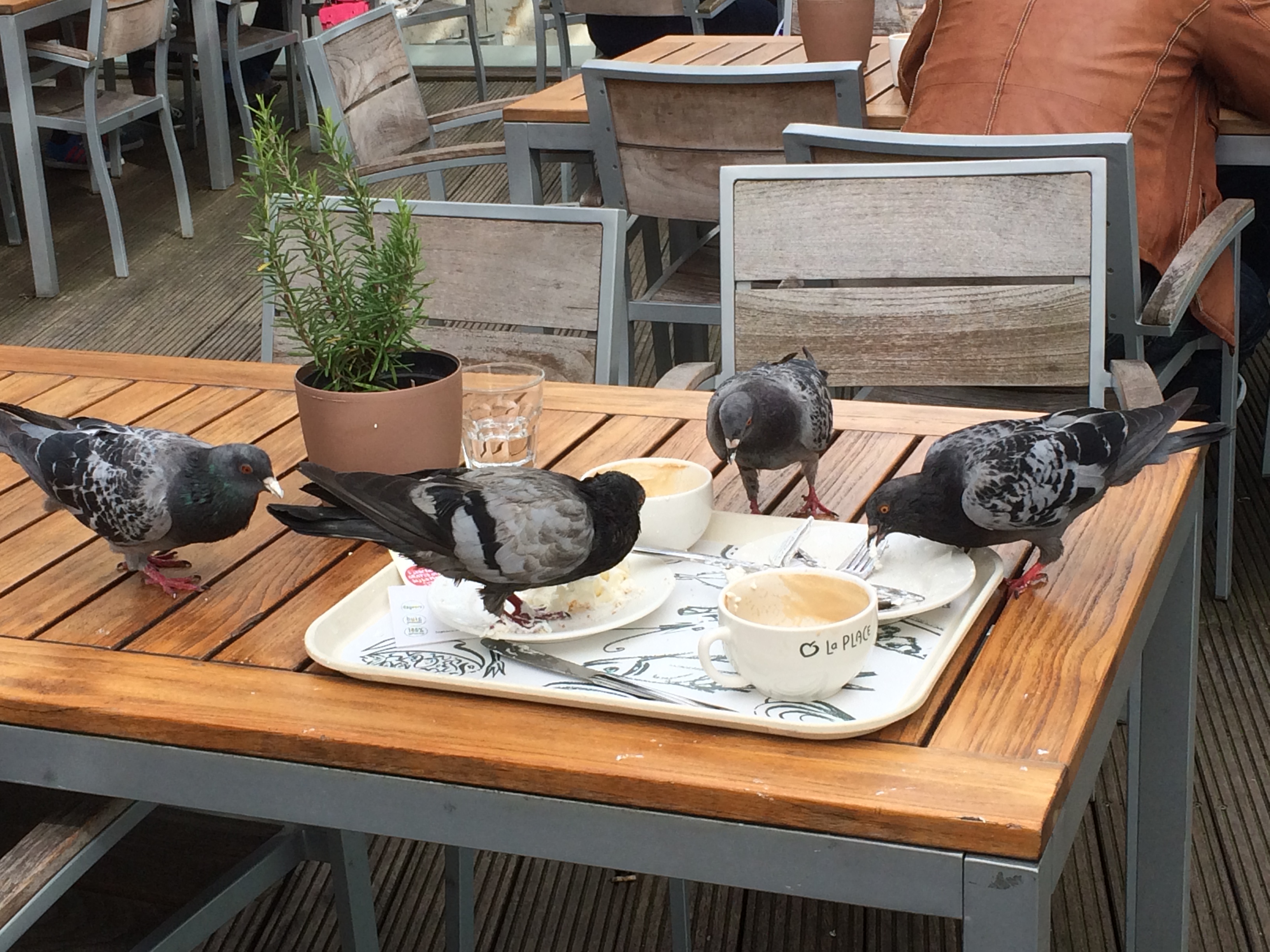
And is favored by pigeons too.


Put Amsterdam On Your List

IMG_2578

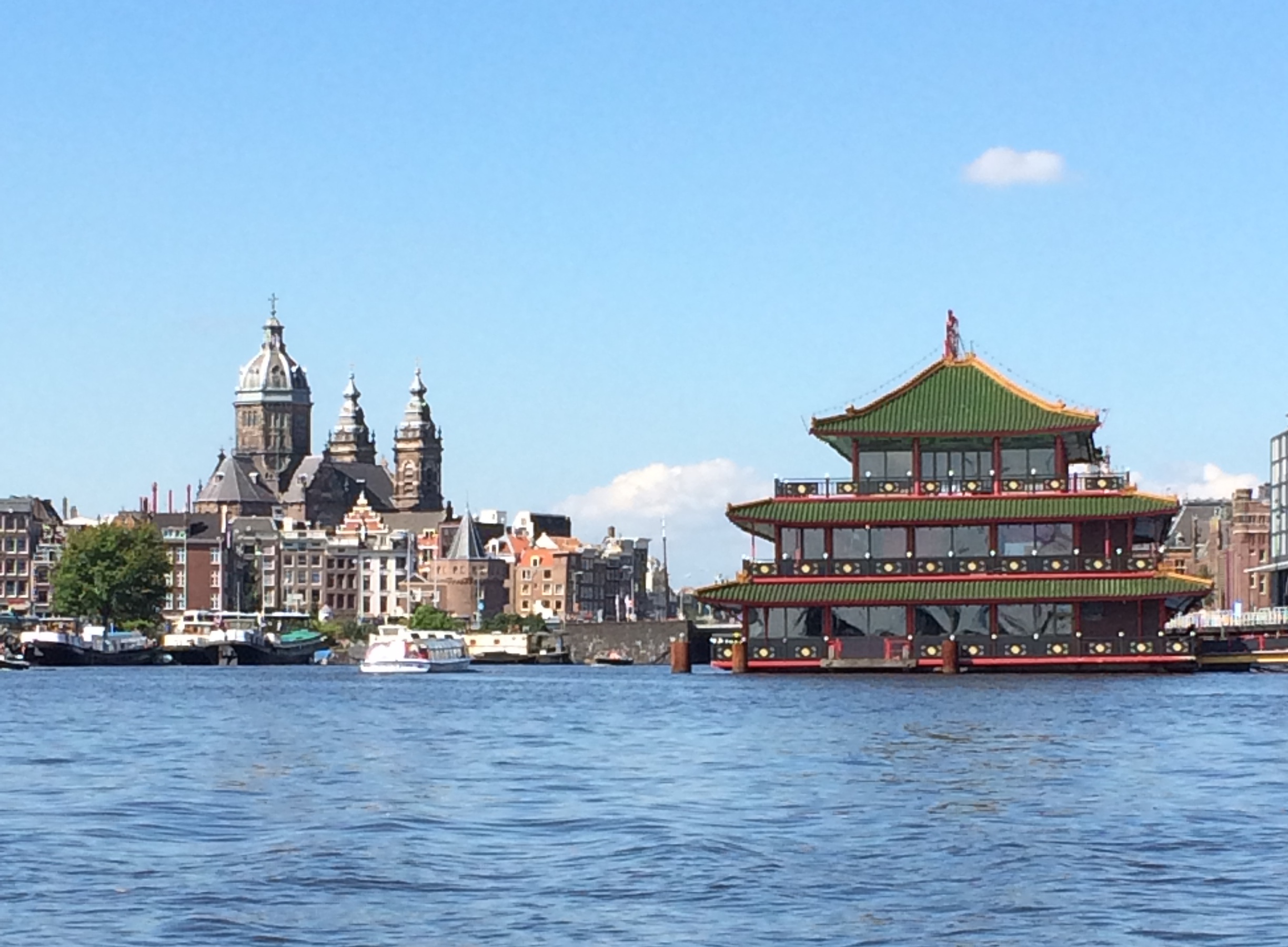
If you have a travel wish list, and Amsterdam isn’t on it, I’d suggest you add it.  At the top of the list.  With its canals and bridges and beautifully preserved if decidedly tilting houses and classic European architecture, it’s lovely.  Bells chime all day and night (in the Jordaan district, where I’m staying, anyway), the sidewalks and canal banks are full of cafes that are full of people eating and drinking, talking and smoking (whatever they want) and there is the excellent coffee and fresh, diverse and tasty food you’d expect of any city.

What’s so striking though, is the way the element of bikes, as a mode of transportation as common as walking and more common than cars, transforms the central city.  Here, on the narrow streets, there are three-way checks for oncoming traffic all the time — walkers check for cars and bikes, bikers check for walkers and cars, cars check for bikes and walkers.  The dance of transportation has the extra element of bikes, which completely changes the steps for everyone.  Not only does it give pedestrians more clout in the jostle for street space, it changes the sound — fewer motors, more talking.

Then there are the boats, which are in abundance also.  The hosts of our AirBnB flat have a small boat on the canal in front of the building, and took us for a ride on Wednesday afternoon, one of the first sunny days in what has been a cold and wet summer.  Everyone seemed to be out, and it was a treat to get introduced to Amsterdam by riding in a boat, getting dropped off at the other side of the city, then working our way back, via many wrong turns and at least one circular trek, to our place.

Today we visited the Anne Frank house which a friend told me was “the best museum in Europe.”  It is quite astonishing to stand in the rooms where 8 people lived in hiding at the back of a canal house for two years.  The world knows Anne Frank through her diary. At the Anne Frank house you get to know her as one of the threads in a web of courage and horror and fierce kindness on the part of the Dutch resisters who worked every day to keep the hiding Jews safe.

Then on to the Van Gogh Museum, another outstanding visit.  The curation of Van Gogh’s paintings in a simple structure and design make the museum accessible, both as a way to understand Van Gogh’s development as a painter, and as a museum that doesn’t leave you on art overload.

And to get to all of these places we walk along canals and cross bridges and more bridges and more canals.  It’s a city of waterfront galore.

IMG_2576

And more.

IMG_2587

Welcome to Europe

IMG_2519

We’re heading into our second week in Europe, and the first week has been so full of sights and stories and amazing food I hardly know which adventures to recount.  Anny has been a great friend and hostess, her door always open, both metaphorically and literally, because in Normandy during the summer windows and doors and shutters are open so there’s no barrier between the outside and the inside.  A stream runs through Anny’s yard with a hearty gurgling, and our last night there we slept with the windows and shutters open, even though it was cool.  We wanted to be able to listen to the water talk.

IMG_2540
A Garden Corner

I’ve been running a lot (marathon training is moving right along), gardening (Anny has extensive and wildly imaginative gardens at her home and it’s been so satisfying and fun to be part of her living creation), eating (so many outrageously excellent meals and so many chunks of crusty baguette slathered with local butter or creamy cheese), and wishing, yet again, that I’d taken my intention to become more fluent in French (because I’m about 0.5 on a 1 – 10 scale for fluency) seriously and maybe after this trip I will.

IMG_2521
Panoramic Normandy

Yesterday we took a train from Lisieux to Paris and this afternoon we leave for Amsterdam.  It was raining hard yesterday as we walked through Paris but that didn’t keep us from appreciating what a beautiful city it is.

A few more photos from our wonderful week.


This slideshow requires JavaScript.

A Normandy Birthday

birthday board

Today started with a long (only needed to do 6 but ended up doing over 7 miles) training run through the pastures of Normandy, green fields full of cows or apple trees rolling up and down small, sharp hills.  Normandy is famous for its dairy products — Camembert cheese probably being the best known, but there are innumerable local cheeses, excellent butter and some kind of yogurty delicacy that Anny gave us for dessert last night, topped with a dollop of creme fraiche and blackberries from her garden, all sprinkled with fair trade golden sugar from Britain.

Yes, we’re eating well on this trip, so I’m happy to be running a lot, working off some of the extra richness in my diet right now.  After running I helped Anny weed her gardens, which are abundant and amazing.  Then a trip to a small local museum for an exhibit on the history of childhood in this area of France.  Now a few moments at a cafe in Vimoutiers, the nearest wifi to Anny’s house.

And wow, lots of birthday greetings once I got online and opened up Facebook.  But the best was the message from Sam.  Look in the upper right hand corner.  Essential learning for any students in that classroom today, wouldn’t you say?