Al’s Gardens

This slideshow requires JavaScript.

Today was the annual Deerfield Arts Tour.  Eighteen artists and craftspeople in Deerfield open their studios for the weekend, showing their painting, photography, custom furniture and woodworking, ceramics and jewelry.  Last year David and I only got to two of the studios, my friends Kathy and Al.  I had talked about both Al and Kathy to David, as they’re both accomplished ceramic artists with unique styles, and I knew David would connect with their creative sensibilities. 

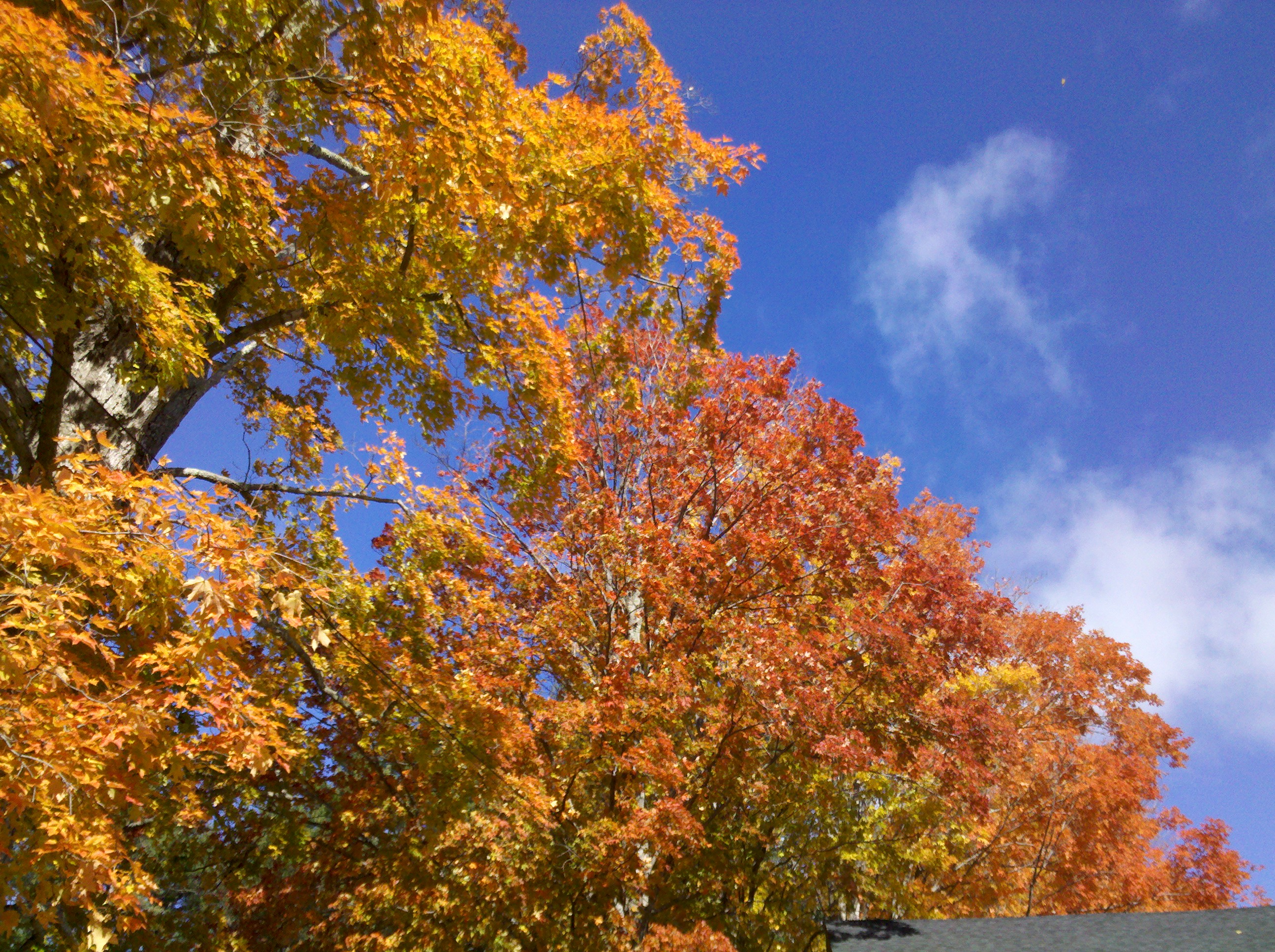
But last year it was a cold, dismal and rainy day so I didn’t get to show David Al’s garden.  Today was glorious — cloudless and crisp.   We drove under yellow and orange maples and russet oaks along the half mile woods road Al built to get back far enough into the woods to create his home.  Along the road are occassional ceramic houses and tiny castles that Al crafted, sitting atop granite outcroppings as the road twists and climbs up to his open land.  Decades ago Al cleared these acres, creating fields that ripple over the hummocked landscape.  He’s built two houses (the first one burned), a studio, numerous sheds, and now has a large kiln building.

But most spectacular is his garden.  With hand stacked stone walls reminiscent of the high walls in Wales, arches built from curved tree limbs and woven branch trellises, walking by and through Al’s garden is a delight.  Form, function, variety, and the obvious hand of long attention and eye for composition makes Al’s garden, yard, terraced walkways and plantings of trees a whole piece of art in itself.

“This is a life I didn’t live,” David said as we walked up towards the walled vegetable and flower garden.  When we arrived, David had stood on the slight rise where the cars were parked, looking over the expanse of slope down to the stone walls and then up to the house on a higher hill.  A maple tree was screaming red against the blue sky.  “This is what staying in one place can create.”

We opened the gate in the stone wall and walked along the central path of the garden.  A trellis heavy with grape vines created a green tunnel, led into the open, and then under the curved arch entrance on the other side.  We walked up the hill to the studio to find Al and look at his ceramics.  When Al saw me I got a big smile and a bigger hug.  Then he turned to David.  “You’re still together?” he said, smiling more.  “I’ve been wondering all year.”

“Yes,” I said, “and you?” 

“My David is downstairs,” he said and now I was smiling.  Last year when David and I arrived I introduced the two of them and Al said, “I have a David too, he just left.”  Al and his David had just met weeks before, and Al was obviously happy to have a partner again.  Like me.

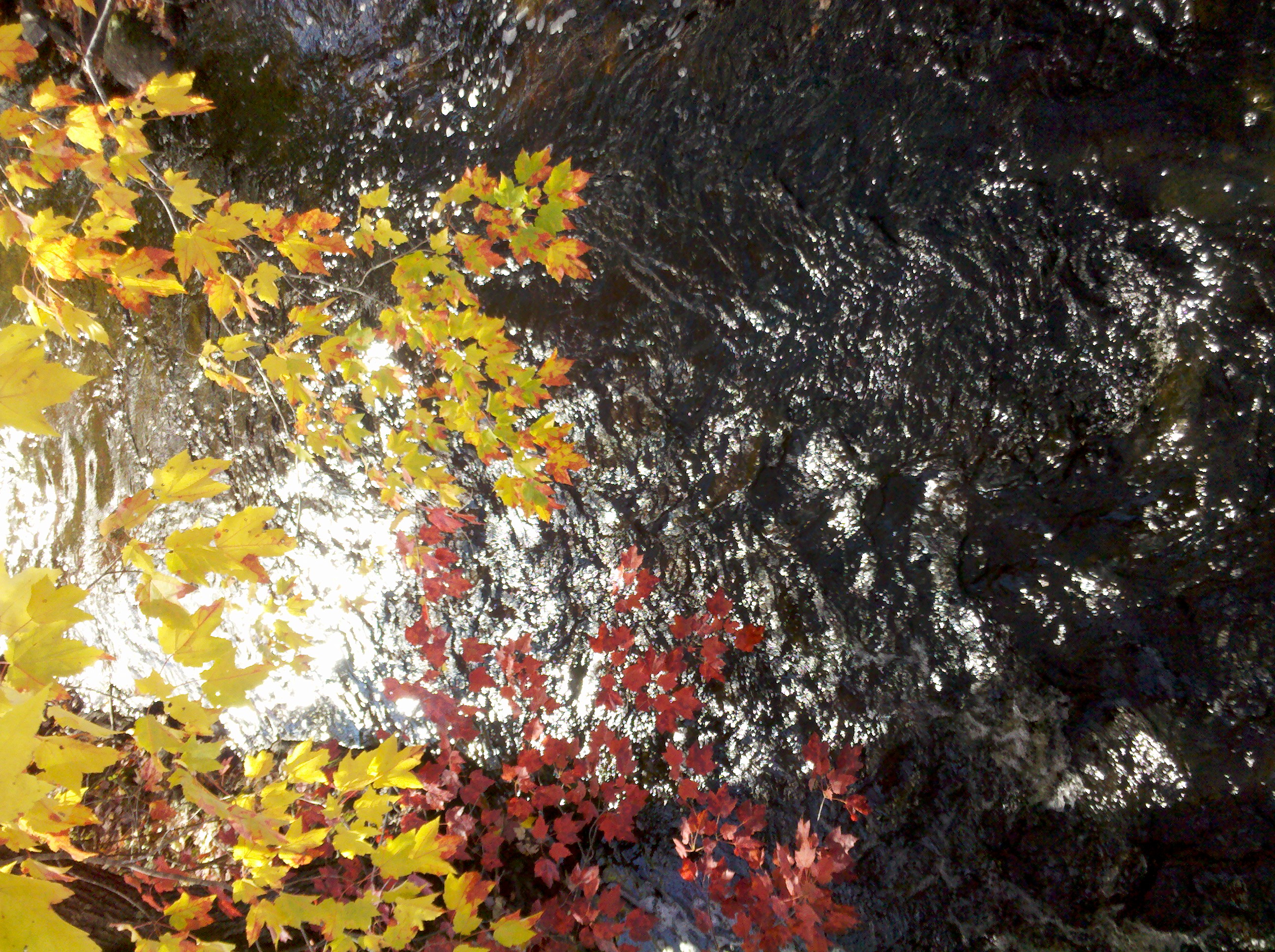
Today we all went out in the yard behind the studio so Al could show us the path to the high ridge on his land that looks down on his pond.  The shade was cool, the sun warm.  Al told us about the trip he and his David are taking in two weeks to Spain.  I stood in the sun, running my hand along the curved and twisted rim of a three foot clay vessel standing on a stump.  It had rain water in the bottom, colored leaves floating on the surface. 

Art, sun, leaves, another year of love and a life in a garden.  It was a good afternoon.  We bought two mugs for our morning capuccinno.

Girlfriends

“That meeting was so ridiculous,” Jill said, coming in late and heading straight for the bathroom. “We spent so much time talking about whether we were on the motion or the amendment to the vote on the motion and other stupid minutiae of the process instead of the issues themselves. We couldn’t get anything done. It’s those Rigley’s or Riley’s Rules or whatever.” She was standing in the bathroom doorway.

“It’s Robert’s Rules of Order,” Jen and I said, at the same time, laughing, which we do a lot of when the three of us are together.

Jill shut the door and called out to us as she peed. “I’m upset that you both knew the right name of those Rules and I didn’t.”

“It’s just all the boards we’ve been on,” Jen said, still laughing.

Jill came out of the bathroom and stood next to the couch. “Okay, I’m going to write a book.  Robert Sucks, Rockey Rules: How to Get Shit Done.”

If you know my girlfriends, you’ll get the joke and you know we get shit done.

Katahdin

This slideshow requires JavaScript.

Almost a week has passed and my body is still tired.  We had thought, and read trail descriptions that supported our thinking, that climbing Mt. Katahdin on the Hunt Trail, which is the end of the Appalachian Trail, would be a reasonable hike.  Not so. 

We started up the trail at 8:00 last Sunday morning, leap frogging with crowds of hikers, some thru-hikers finishing the AT, some families, some people who were cockily underdressed for the cold and wind.  We’d spent the night camping at 30 degrees, got up to make coffee in the cold and ate breakfast in the running car, seat heaters humming.

It was a beautiful trail, passing the roar and thrash of Katahdin Falls, then breaking out into sun on a long slope of granite ridge, fringed with blueberries bushes gone red.  We could see a jumbled pile of granite blocks peaking into the sky above us, but it would be hours before we got to the top of it and realized there was still another mile and a half to go to Baxter Peak, the summit of Katahdin.

Still hiking up through the birch and spruce forest, hikers started to pass us going down.  “Did you get to the summit?” I asked them all, even though it was still early in the day.  “No, it’s harsh up there, way too windy above tree line, we turned around,” was the essence of everyone’s answer.  Even given all that feedback, we were not prepared for what we encountered above tree line.

Almost immediately, we were hauling ourselves up and over rock ledges, using the iron bars and hooks hammered into the granite in particularly tough spots, while bracing ourselves against toppling winds.  Blinding sun in his eyes, wind whipping every backpack strap into his face and hanging off a climbing bar, David said, “I think I want to turn around.  This is too much.”  Just then a hiker came back down from in front of us, retrieving the poles he’d left behind thinking a friend was going to bring them up.  “It’s not as bad around the next corner,” he said, “it’s more sheltered.”  So David hoisted himself over the lip of ledge and we kept going. 

After a half mile of scrambling and bouldering, we reached an overlook behind a face of rock blocking the wind, where groups of hikers were sitting in the sun eating and looking out over miles and miles of Maine forest and lakes and mountains.  We stopped too, looking up over and over at the steep pitch of jumbled rock slabs we’d seen from the open ledge miles below.

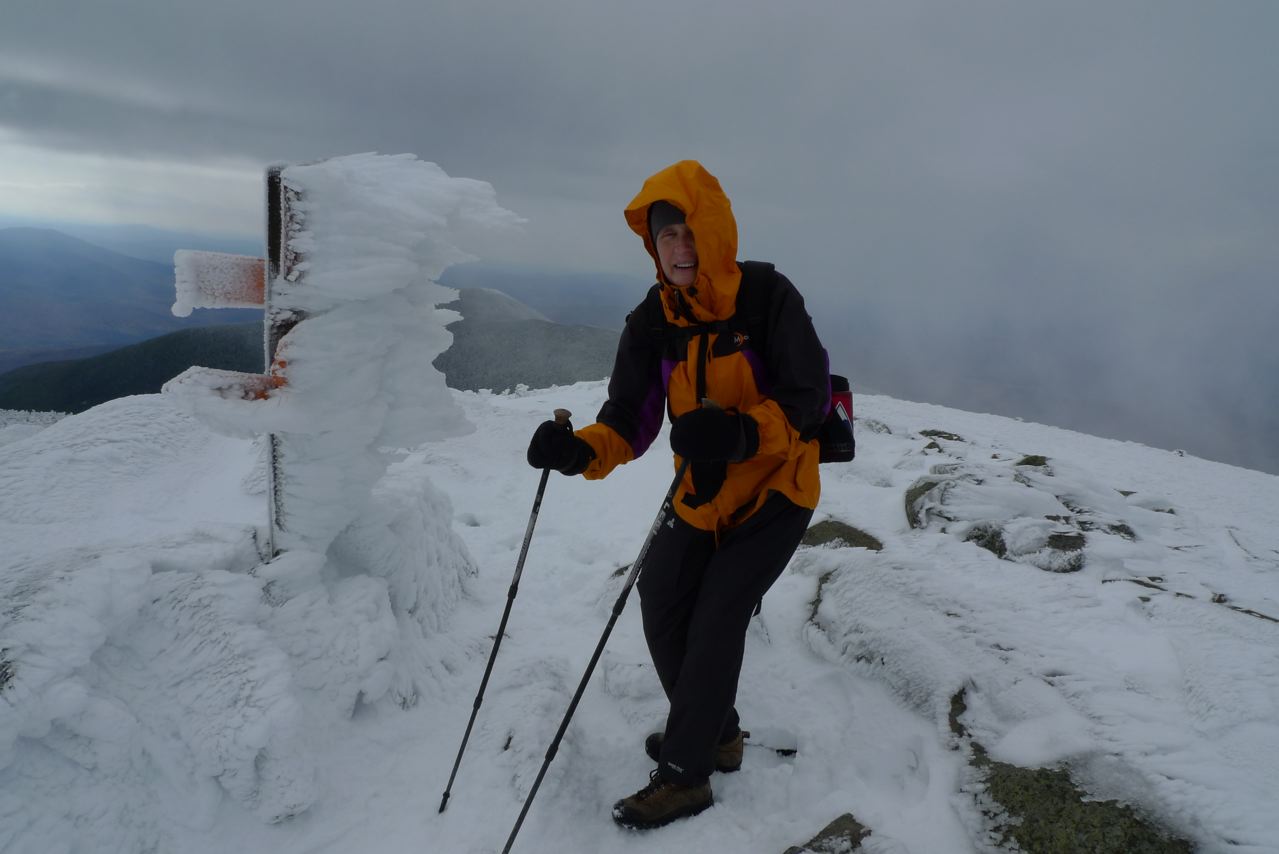
“Let’s do it,” David finally said, and we hoisted our packs back on, our poles collapsed and stuffed in my pack.  Poles were only in the way crawling on all fours across the open rocks, calculating each hand and foot hold, keeping low out of the wind.  When we got to the top of the pitch, we could see Baxter Peak over a mile in the distance, across the flat table lands of the Katahdin Ridge.  The peak was bathed in white — frost and ice and snow — and dotted with the small figures of AT hikers, finally at the summit, taking in the glory of their accomplishment.

We decided to hike a bit further, already knowing we wouldn’t reach the peak, but not wanting to leave that expanse of open alpine land yet.  We reached the junction of the Abol and Thoreau Springs trail after walking on ice for half a mile.  This was as far as Thoreau got trying to summit Katahdin, and he’d gotten lost in the fog and sprained his ankle falling out of a tree, which he’d climbed to get a view.

There was no fog for us, just the hard clarity of a wind whipped day, carpets of yellow and orange trees below us, wave after wave of green spruce, and the frosted summit of Baxter Peak ahead.

We turned back, already plotting our return.